“One of the pleasures of middle age — there aren’t many — lies in a growing appreciation for art that is urbane and refined. To be a man of the world is, in my mind, to be a courtly, music-loving intellectual living in Vienna or Prague during the final days of the Austro-Hungarian Empire. It is the last glimmering of a now vanished era . . .”
–Michael Dirda

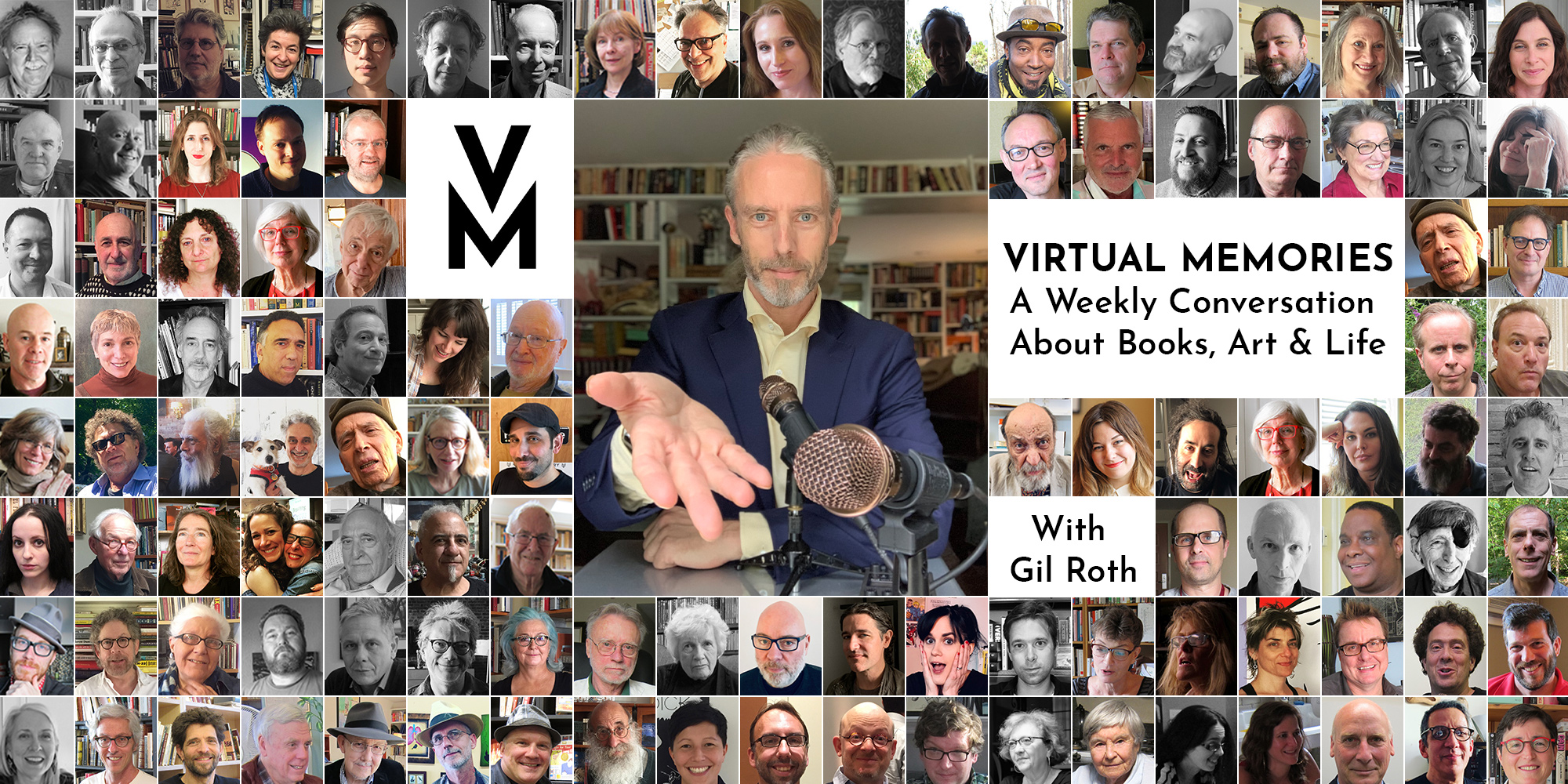
Click on the pic above to embiggen
It was another wonderful reading year for me, even if I sometimes feel like I’m an ape who’s trying to mimic the behavior of a cultured gentlereader. I know this isn’t the mode for everyone (esp. those of you who have social lives), but I’m awfully happy I get to live this way. Last year, I chronicled all the books I finished, but used a separate post to discuss 2011’s big reading project, Anthony Powell’s A Dance to the Music of Time: First Movement . I didn’t have a major project this year, so you’re going to get some commentary on everydarnbook on The List. (Speaking of . . .)
As with last year, this writeup doesn’t include comics that I finished. I should note that, while I’ve had Chris Ware’s Building Stories on my desk since late September, I’ve been too . . . intimidated? something else? . . . to start it. Maybe that’ll be the next big read.
Meanwhile, there are more than 50 to discuss, so let’s get started!
The Sun Also Rises : I had the thought last January of reading a lot of Hemingway, Fitzgerald, and Faulkner. I may’ve been a little influenced by that meh Woody Allen flick, Midnight in Paris. Clearly, not as effective as the way Another Woman turned me on to Rilke, but hey. This time around, I found Hemingway’s prose flatter and less effective than I recalled. Nowadays, we’d chalk it up to writing for a screenplay rather than the printed word, but I guess that wasn’t a consideration back then.
The Learners : A day after that, I was wiped out with the flu. I stayed home from work and started reading The Learners, the sequel to book designer extraordinaire Chip Kidd’s first novel, The Cheese Monkeys
 . The book follows our lead character, Happy, out of art school and into his first design job in 1961. Bizarrely enough, considering how out-of-it I must have been, I managed to read this book in a few hours. I enjoyed it, mainly for the depiction of Happy’s worklife as a designer in that era (not exactly Mad Men). I wasn’t as interested in the plot, centering on Stanley Milgram‘s authority experiments, but I’m hoping to see a third book from Kidd as Happy finds his way in the world (and figures out his sexuality, the suppression of which is a key component of this and The Cheese Monkeys).
Money: A Suicide Note: A week later, I read Martin Amis’ Money, which I’d heard referred to as his greatest novel. I think London Fields trumps it, but they’re both awfully good. They’re also very difficult for me to recommend to people; Amis’ language is like lightning (at his peak, I think his prose is up there with Nabokov’s), but his characters are almost uniformly unlikeable and normal people seem to care about that. In my podcast conversation with Michael Dirda, we talked about the pleasure principle in reading and criticism. He praised Harold Brodkey’s The Runaway Soul
 , but said it so unremitting and humorless that no one could finish it, and contrasted that with the evil wit of William Gass’ The Tunnel
 . He made a comment about writing a book in which none of the characters were likable, and I said, “We should ask Martin Amis for tips on that.” That said, it’s an amazing novel, capturing the money-hungry ’80s in New York and London. And it was fun to read the brothel scene that Amis researched with Christopher Hitchens (whose Hitch-22: A Memoir
 was the close-out to last year’s post). Also, it seems like Alan Moore was cribbing from this when he wrote A Small Killing
 , a comic illustrated by Oscar Zarate.
Brideshead Revisited : Reading at tangents, I went from Martin Amis to Evelyn Waugh, an influence on his dad Kingsley. I read Waugh’s Scoop
 in late 2011 (following Hitchens’ recommendation) before moving on to his best-known novel, Brideshead Revisited. I had absolutely no idea what this book was about. For some reason, I thought it was going to be a very staid, mannered book. I really wasn’t expecting the ebullience of Sebastian Flyte and, once introduced to him, I wasn’t expecting the Catholic-Anglican conflict between the narrator and Sebastian’s sister, Julia. I was happy to have so much of Anthony Powell under my belt before reading this, even though Powell’s prose and story were far less unified than Waugh’s.
Stories of Anton Chekhov : My first great discovery of 2012 was Chekhov’s short fiction (Pevear & Volokhonsky translation). I’d apparently read Three Sisters back in my freshman year of college, probably for an acting class, but never got to Chekhov otherwise. I have so many lacunae in my reading, it’s embarrassing. I devoured this collection and will likely get around to his short novels and his plays in 2013. I was floored by the intensity and vividness of his short sketches, like The Huntsman and the seriously creepy Sleepy, while the longest piece in the book, A Boring Story, is an utter masterpiece. I’m in awe of Chekhov.
Tropic of Cancer : Looking back over my list, I honestly don’t remember reading this book for the bajillionth time. I’m guessing I thought it would be a good palate-cleanser, some familiarly gorgeous prose for me to fall back into after being swept up in Chekhov for 3 weeks. It’s also possible I just read too darned quickly sometime. I try not to read for volume, but it happens to the best of us sometimes.
Travesties : I read Tom Stoppard’s play in anticipation of seeing it performed in Princeton. We never got down there, because of work travel or some other excuse, but I was glad to read it. It’s a toughie to characterize, because of the Leninist stuff, the Wildean mode, the slapstick, the dead-end of Dadaism, and more, but I was wowed by the ambition of it, and I’m a sucker for “all these famous figures happened to live in the same place at the same time, so who’s to say they never overlapped?”
Metropole : I read this one on a recommendation in Bookslut. It’s a forgotten novel about a linguistics professor from Hungary on his way to a conference who falls asleep, misses a connection, gets on a wrong airplane, and winds up in a strange city where he can’t understand the language. I had high hopes for this novel, but it draws out the drudgery of the professor’s life in a way that ground my interest into a nub. Going into it, my assumption was that the professor’s experience mirrors that of everyone who travels to Hungary from the west, since their language has virtually no connection to the Indo-European language groups. I spent a full week in Hungary a few years ago and managed to pick up only 5 or 6 words in that time. Anyway, I was hoping for more of the Kafkaesque out of this novel, I suppose, but I can understand how the time in which it was written (1970, during the endless days of the Cold War) dictated the sense of hopelessness that pervades it.
Inherent Vice: A Novel : I bailed on Thomas Pynchon’s last giganto-novel, Against the Day
 , a year or two ago. I was 50-60 pages into it and concluded that I wasn’t enjoying it and would never get around to finishing it. On a whim, I picked up this shorter novel last spring at a nearbyish new/used bookstore, Well Read. I figured this would be more Crying of Lot 49
 than Gravity’s Rainbow
 . Little did I know it would be most similar to The Big Lebowski. I mean that in a good way. It’s a stoner detective novel set in LA in the ’60s, and the plot doesn’t quite add up, but the atmosphere is what it’s all about. While I was reading it, it struck me that Pynchon generally alternates his novels between “big” and “SoCal”: V.
 (big), Crying of Lot 49 (SoCal), Gravity’s Rainbow (big), Vineland
 (SoCal), Mason & Dixon
 (big), Against the Day (big), Inherent Vice (SoCal). The fact that those last two are out of sequence is clearly the sign that They’re up to something . . .
Coriolanus : Two reasons to take up this one: to prepare to catch the Ralph Fiennes movie version (which I haven’t seen yet), and because I was going to take a trip to Phoenix for a trade show that month and planned to see a Diamondbacks game. See, I try to keep a decent gap between the number of Shakespeare plays I’ve read and the number of MLB ballparks I’ve visited. You know how weird I am, so don’t act like this surprises you. Anyway, the play was minor on the Shakespeare scale, but does help illustrate why military men don’t tend to make good statesmen.
“Family Happiness “: I read Tolstoy’s novella in anticipation of a St. John’s College alumni seminar in NYC. Sadly, I could only attend the pre-seminar coffee hour and not the conversation itself, due to a sick dog at home, but I did get to talk with the tutor who was running the show, and she followed up afterward to tell me how it went. It’s Tolstoy and it’s not religious, so you know it’s good. It’s about the ways in which one’s notions of love and romance change the longer one’s in a relationship. In this case, it’s a sad, 19th century version with a younger woman discovering the loss of romance as her marriage progresses. It’s a recurring theme, esp. with great European writers of that era, but it’s so artfully told, even in its inevitabilities, that Tolstoy makes it fresh.
The Living End : This was probably on an off-the-cuff recommendation from Harold Bloom, and was probably the book I least enjoyed in 2012. I stuck with it, violating my maxim, “life is too short for shitty novels,” because it was only 130 pages of large type, but I could’ve given this one a pass. It starts off well, depicting the comic life of a Jewish liquor store owner before he’s murdered in a hold-up. From there, it transforms into a story of how grotesquely unfair the afterlife is, how vengeful God (the scriptural God) is, and why the end of the world can’t come soon enough. It was pretty relentless in its sections in hell, which is the point, I get it, but I just found it an unworthy book, especially after starting off so well. I’ll try one of Stanley Elkin’s other books sometime to see which part was the aberration.
Darkness Visible: A Memoir of Madness : William Styron’s memoir about depression and suicidal ideation was probably not what I should’ve been reading in a generic hotel room in Arizona during a business trip. Turns out he was having a bad reaction to Halcion. I understand how terrible that is, but when I was having an ugly CNS reaction to an antibiotic I’d been prescribed, it only took 3-4 days for me to realize that that’s what was happening and that my wife and coworkers were NOT actually trying to poison me. Either I’m more self-aware than Styron, or I spent a lot more time than he did reading about adverse events from prescription drugs.
Uncle Vanya : I thought the movie Cold Souls was terrible, but it led me to read Uncle Vanya, so I guess that’s not too bad. More Chekhov, again revolving around the country life and the sense of wasting one’s life in that setting. The only good scene in that Giamatti movie was when he rehearses a scene from the play after having his soul extracted, and attacks it with a joie de vivre totally inappropriate to the tragic setting. Seriously, avoid that movie, but read this play.
Solaris : This was the first Stanislaw Lem book I’ve read. I’d seen the Steven Soderbergh film version, and it was interesting to see how some of the book’s “rules” for the mysterious apparitions were removed or softened for the sake of the drama. Ultimately, I found it a bit too frustrating, in terms of the Macguffin, but it’s a beautiful piece of writing about the ineffability of experience. Just as we can’t understand what Solaris is “thinking,” we also fail to understand those closest to us.
Meditations : I bought Marcus Aurelius’ book after seeing The Silence of the Lambs back in 1992 or thereabouts, and only got around to reading it 20 years later. There were moments when I thought, “Well, it’s kinda easy to adopt Stoicism when you’re the emperor of Rome and not one of its subjects or slaves,” but I figured that was sour grapes. It’s written as self-advice (not self-help), and not all of us are going to address the Roman senate or lead an army, but his lessons, and his general vibe about leading a good life, are pretty useful. I need to reconsider him in relation to all that Montaigne I was reading a few years ago.
Austerlitz : The only W.G. Sebald I read before this year were a few essays in On the Natural History of Destruction
 . I don’t recall much of that reading, beyond the issue of trying to reconcile the desire for revenge against Germany after the war with leaving children to suffer. Austerlitz is the first of two Sebald novels I read in 2012. I was unprepared for his curious method of writing, that combination of compelling first-person travelogue and not-quite-documentary images, his peculiar mingling of the real and unreal. The story within the novel, which Jacques Austerlitz relates to the narrator, is haunting, in the same way that both characters haunt the Continent in the decades following the war. I bought the rest of Sebald’s novels after this, but his premature death (car accident in 2001) may be the greatest literary loss of our time.
Selected Stories of Flannery O’Connor / Wise Blood
 (re-read): That brings me to the life-changing moment I had at the beginning of summer. I read a number of O’Connor’s short stories for the 4-day Piraeus seminar at St. John’s College. I wrote about the Piraeus in last year’s write-up, in my entry on Wise Blood (which I re-read before the seminar). O’Connor’s fiction was a grotesque revelation, and would’ve been reward enough, now that I can see her threads weaving through modern American fiction and storytelling, but the long weekend in Annapolis re-energized me, brought a new focus to my reading, introduced me to new friends, and reminded me of the value of The Conversation. (The stories we read for the seminar were Good Country People, A Good Man is Hard to Find, The Artificial N*****, Everything That Rises Must Converge, The Lame Shall Enter First, and Parker’s Back. I oughtta read The Violent Bear It Away
 in 2013.) Check out the podcasts I recorded during that trip with David Townsend and Tom May!
Rabbit, Run : My first Updike. As I wrote on Facebook, “My big hangup was the sheer poetic beauty of the prose and how it didn’t really fit with any of the characters’ perspectives. That is, Rabbit wouldn’t have seen the world as beautifully as the narrative describes it, but the narrative often lapses into the limited perspectives of its characters. It’ll drop into the more immediate tones of Rabbit’s wife, Ruth, or Rabbit himself, and all the gorgeous prose drops away. It felt like Updike was showing off with those more poetic passages, or he didn’t yet know how to integrate that with his characters’ limited visions.” I later expanded on that in a note to a pal of mine, “There are some beautiful sentences in there, but the narrative voice makes little to no sense. Sometimes it’s immediately in the characters’ heads, but it begins making poetic descriptions of phenomena that the characters themselves couldn’t possibly formulate. So it felt like cheating/showing off: ‘I’m going to get inside these characters’ heads, but then I’m going to make intensely beautiful observations because I’ve got a bunch of them in my notebook and want to get them out.’ Presumably, he got better as a writer, but I was shocked by the clumsiness of that first book.” So now you know where I stand. I have the whole Rabbit Angstrom
 4-book omnibus, but will I ever get around to those when there are so many other books with more promise?
Housekeeping : I may be the only person who read Marilynne Robinson’s Gilead
 without having read her first novel. Enough people have praised it over the years (including my first podcast guest, Ann Rivera) that I decided to give it a read. They’re right. It’s fantastic. Robinson’s beautiful prose evokes the fragility of home life, the disintegration of family. It also has its roots in Flannery O’Connor, although I’m sure a smarter writer than I could explain how Robinson’s Calvinism leads to a different style than O’Connor’s (southern) Catholicism.
O, How the Wheel Becomes it! : This was another one-day read (“one-evening,” to be precise). It was Anthony Powell’s first novel after he finished A Dance to the Music of Time. It’s slight, but it parodies/slags the literary fiction and academia scenes in the UK. And I was happy to see the guy who created X. Trapnel return to goofing on the publishing world.
Take Time for Paradise: Americans and Their Games : Americans and Their Games: I don’t read a lot of nonfiction books; I prefer long-form articles instead. I guess you could count Darkness Visible and Meditations as nonfiction, but this is the first one on the list to deal with a non-memoir subject. One of my fellow Piraeus members suggested I read this book by the late baseball commissioner Bart Giamatti. It’s about the nature of sport, what it says about America and Americans, and, um, numerology. That part only comes up in the final section, but Giamatti sorta ascribes a kabbalistic significance to some of the numbers in baseball. As a whole, the book was a bit dry, in an Aristotelian way, but I enjoyed his reminiscences about playing baseball with his family, as well as the seriousness with which he could approach play.
The Aeneid (tr. Fagles): And this is where I went into overdrive. After that Piraeus weekend at St. John’s, I asked one of my tutors for a mini-curriculum of the Romans. I’d given them short shrift, deriding them as pastiches of the Greeks. Within a few minutes of my return to Annapolis, I realized what an unfair characterization this was. So I started educating myself in Roman literature and history, beginning with Virgil. Y’know what? The Aeneid IS a pastiche of Homer’s two epic poems, but Virgil’s a great enough artist to create something new out of that. The comparison that came to me after finishing the poem was Homer::Virgil as Jordan::Kobe. I don’t think Kobe could have been so successful without having MJ’s history behind him, but he managed to reach some pretty lofty heights once he incorporated that example.
Yeah, the Aeneid is propaganda for the Roman Empire, but Dido’s suicide left me breathless (the retroactive justification for the war with Carthage), Camilla’s Final Hour had one of the funniest images I’ve ever come across (her father, when she was an infant, sent her to safety by tying her to his spear and throwing her across the Amasenus river so he could pick her up after escaping the Volscians), and everybody needs a creation epic, right?
The Stranger (re): I re-read this after finishing the Sartre chapter in Clive James’ Cultural Amnesia (coming up soon). I gave Camus’ fiction pretty short shrift over the years, too, ever since making a dumb comment about him back in college. Reading him now, and trying to get an understanding of Algeria, I find him much more compelling. I’m always glad to find out how dumb I’ve been.
I Totally Meant to Do That : This is the first book I read specifically for my podcast, as I was interviewing the author, Jane Borden. It’s an enjoyable memoir about a North Carolina debutante, her transformation into a Brooklyn hipster, and how she came to understand home. Check out the podcast!
The Early History of Rome (Books I-V) / Rome and Italy
 (Books VI-X): After Virgil, I took up the first 10 books of Livy’s history of Rome. Seriously, I knew very little about this, so it was both informative and ridiculously entertaining. Livy covers Rome’s founding through 293 b.c. in these books (2 volumes from Penguin). It’s a cliche to say that knowledge of history informs the present, but the transition from kingdom to republic, driven by the growth in inequality between the high-born and the “peasants,” is awfully pertinent. As with all good histories, it’s replete with examples of our unchanging nature, demonstrated by our politics and (including the original story of the aforementioned Coriolanus). I’d put this in my must-read list (and I plan to read the subsequent surviving books in 2013).
Cultural Amnesia: Necessary Memories from History and the Arts : It took me four years to work my way through this collection of biographical sketches/essays by Clive James. Finishing this book made me happier/prouder than any other book on the list. It’s about 800 pages long, and here’s the structure: biographical sketch, quotation from the subject, essay by James that may or may not be about the subject. The book focuses on the culture that was destroyed by the great wars and dictatorships of the 20th century, with Vienna as its locus point. James strives to remind us of all that we once had, and was lost. But to describe it like that is to miss the point. This book is an encyclopedia of one of the last cultured men, and its biographical subjects range from Viennese Jews like Stefan Zweig to Coco Chanel to Miles Davis. I read the book sequentially — which means, alphabetically — but it’s really intended to be dipped into anywhere that catches your fancy. My problem is that I’m sure I would have glossed over some interesting sketches/essays had I read it that way. And in fact, the piece that I think provides a key to the whole book is the essay about Paul Muratov, a Russian art historian who is (almost) utterly forgotten. If there’s any one book I’d recommend above all others in this post, it’s Cultural Amnesia. Treat yourself.
The Sense of an Ending : This short Julian Barnes novel was a Kindle loan from my public library. It relies on some really obtuse behavior by a couple of characters in order to keep its mystery going and deliver on its main themes, that memory is unreliable and people can be real pricks in college.
Sea, Swallow Me And Other Stories : This is a short story collection by a guy I knew in college, Craig Gidney. I enjoyed some of them far more than I wanted to, because I am of course jealous of any of my contemporaries who have been able to finish writing anything, much less achieved publication. The book’s firmly in the fantasy genre, and many of the stories come from a gay black male perspective. Having published Samuel R. Delany’s books once upon a time, I didn’t have any squeamishness about that, but I thought you’d like to know. Her Spirit Hovering, about a man who can’t get over his mother, is a blast. (But I really didn’t like the final story, Catch Him By the Toe, which felt like a Twilight Zone / comic book origin story.)
An Open Book: Coming of Age in the Heartland : I read Michael Dirda’s 2003 memoir in preparation for our podcast interview. Having (his version of) the details of his early life under my belt helped to keep me from falling into any “I’m not worthy!” moments during our talk. Not that Mr. Dirda’s intimidating in person, by any means, but I’ve enjoyed his book reviews and columns for decades and feared I would ask him something like, “Why are you so awesome?” a la Chris Farley with Paul McCartney in that SNL skit. The book was pretty enchanting, even though I hoped for a bit more of the “how I became so awesome” material about his time at the Washington Post, rather than “this was the girl I liked in college,” but I was happy to learn more about someone whose work I’ve dug for so long. Check out the podcast!
The Metamorphoses of Ovid (tr. Mandelbaum): Then it was back to the Romans! As I wrote earlier, there are awful, gaping holes in my reading. It’s one of the main reasons why I read so little contemporary fiction; there are too many great works of the past for me to catch up on. As I look over the list, it seems that, of the 51 books I finished in 2012, only 14 of them (27%) were published from 2000 on, and only 7 came out since 2009. I’m kicking myself for not getting around to Ovid until now. It’s like a kaleidoscope viewing of the Greek and Roman myths, with transformation as the common thread running through them. Does it, like the Aeneid, become propaganda when Julius Caesar gets woven into the end of the poem? Sure, but it’s forgivable, when so many of the other myths are of tribal self-identification. Anyway, it’s a glorious work, and I wish I had read it in my teens, rather than the pulp science fiction and comics I was raised on.
The Good Soldier : Michael Dirda praised the living heck out of this Ford Madox Ford novel from 1915, so I gave it a read soon after our conversation. The narrator, an who was seemingly unaware of the affair going on between his wife and a British captain, tells the story of passion and suicide in a very disjointed manner. It’s not right to say he’s an unreliable narrator, but his elliptical way of getting to the heart of the story and his willful blindness to what’s going on around him never seem like cheap plot devices; rather, they’re both essential his character and indicative of a certain sense of propriety in that era. The narrator’s casualness and disjointedness are actually intensely worked out by Ford, so that mere asides turn into harbingers of what the narrator calls “the saddest story I have ever heard.” It’s a wonderful novel, which I’ll likely return to in a year or two to catch the significance in all the seemingly insignificant details.
King Lear (re-read): It was a re-read for seminar at St. John’s homecoming weekend. And if you haven’t read King Lear yet, then why are you wasting time reading my bazillion-word blog-post? Most of the seminar group was from the same class, so I was an outsider, but we had a good conversation about the nature(s) of madness, the impossibility of retirement, and where there’s any cause in nature that makes these hard hearts.
Capital : I’m a fan of John Lanchester’s novel, The Debt to Pleasure
 , and the financial writing he’s been doing since the crash, so I gave his mega-novel from 2011 a shot during a business trip to Madrid. It tells the story of a number of people living on a street in London where property values have been skyrocketing. There are multi-generational long-timers, executives from the City, Pakistani shopkeepers, a rising star soccer player, and the various people with whom their lives intersect, including a Banksy-like artist, an illegal immigrant working as a meter maid, a Polish handyman, and more. It’s ambitious in its attempt at showing how insane money has gotten in our financial centers, and how it warps the lives of the rich and poor. The need to drive the plot over 600 or so pages means that the prose isn’t as gorgeous as in Debt to Pleasure, and it may not reach Bonfire of the Vanities-level zeitgeist-ery, but it’s still a good read.
Chess Story : And that brings me to Stefan Zweig. I first read about Zweig at the end (naturally) of Cultural Amnesia. Clive James largely dismissed Zweig’s fiction and instead focused on his biographical essays and his memoir, The World of Yesterday. As with many artists in James’ book, I made a note to get to him “later on.” Then I read an appreciation of Zweig in the New Yorker by Leo Carey that focused on his fiction (both writers also focus on Zweig’s 1942 suicide in Petropolis, Brazil) and decided to give his last novella a shot before the flight home from Madrid.
I sat in the airport terminal completely riveted by this slim book (80 pages). As with The Leopard in 2011, I began re-reading the book almost immediately, in awe of the storytelling, the ease of language and symbols, the utter tension of the work. I must have given out half a dozen copies of this to friends to read. The story is about a veritable idiot savant of a chess master who travels on a steamer from New York to Argentina. Our narrator wants to see him play, and contrives to get him into a match with a high-stakes amateur on the ship. A mysterious passenger offers some help during a match, and that’s when things really take off.
It’s so mind-blowingly good and compact, that I found myself buying up a number of Zweig’s other works (he only wrote one novel, otherwise sticking to the novella for his fiction) to see how they measured up. (Keep reading; you’ll find out.) But if you’re looking for a great (and quick) read, go buy Chess Story right away. Skip the introduction, because it gives away some things that it’s better to uncover in the novella itself.
I have a million more things to say about Zweig, but this isn’t the place for them, because I’ll never finish otherwise.
Bartleby & Co. : The New Yorker also tipped me off to this book by Enrique Vila-Matas. It’s ostensibly a novel about “Writers of the No,” authors who quit writing or never finished their work. I thought that would be right up my alley, never having started, but the book was disappointing. The concept was fine, but there’s not enough novel-ing going on in it. The scenes from the narrator’s life, the hints at the bigger world around him, just drop away and the book we’re left with isn’t substantial enough to make up for not knowing “what happened.”
Seven Pleasures: Essays on Ordinary Happiness : I read this book by Willard Spiegelman in preparation for a pending podcast interview. (There’s a story about that, of course.) On the face of it — a book with the chapters, Reading, Walking, Looking, Dancing, Listening, Swimming, and Writing — I thought I was getting a literary self-help book. It turns out to be a Montaigne-esque series of essays: more meditation than memoir, and certainly not self-help. I enjoyed it a great deal, perhaps because I could relate to so many of Mr. Spiegelman’s experiences, even if I’m too chicken to learn to dance.
The Emigrants : I read this W.G. Sebald book over the course of the first day of the Hurricane Sandy blackout. It’s written in the same mode as Austerlitz; a first-person narrative (with photos) about the lives of four people driven away from Germany. It’s like a precursor to Austerlitz, but I found it a little less haunting, if only because one of the titular emigrants traveled to America and some of the narrator’s travels overlapped with highways I’ve traveled.
Fifth Business / The Manticore
 / World of Wonders
 : The blackout was 8 days long, and I managed to read much of Robertson Davies’ The Deptford Trilogy
 in that time. It was pretty great to have no power, no way of getting in touch with the office, and nothing to do but read and sit by the fire. I read Fifth Business more than 20 years ago, but remembered almost none of it. It’s hard to describe the story without sounding prosaic. In a sense, it’s a melodrama about the magic behind our lives. See? The first book is the best of the series, but the whole trilogy is a joy, even the weird Jungian analysis of The Manticore. It’s about life in a provincial Canadian town, and saints, and magicians, and stage-craft, and childhood guilt, and a million other things. Based on my experience with it, I recommend this as a great wintertime read by a fire.
The Narrative of Arthur Gordon Pym : I can only hope that Poe’s one novel was intended as a parody of sea-faring fantastic tales, because I couldn’t make heads nor tails of this.
World War Z: An Oral History of the Zombie War : Awesomely entertaining. Max Brooks’ novel about a zombie apocalypse and the living’s response to it is told as an oral history, 10 years after major hostilities have ceased. The history is told by survivors from around the world, and the International Relations aspect of it is part of why it’s so great. The story telescopes from the personal to the international/global. Some of the chapters are heartbreaking, others are terrifically creepy, and it all adds up to a really good book. Sadly, it’ll be a movie next year, and that’ll ruin everything; it’s a slow zombie menace, not a fast zombie one as the movie trailer seems to show, and that runs counter to what makes the book so darned creepy. If we’re still dividing literature into genres, then this is my zombie/thriller/horror recommendation of the year.
Journey Into the Past (New York Review Books Classics) : My second Stefan Zweig novella wasn’t as good as my first, but that’s okay. This one’s more of a romantic melodrama, while Chess Story was a heavy-duty psychological crucible built around a chessboard. This one’s about the impossibility of fixing love in time, or of recapturing love we once had. While the emotional states are convincing, the story itself simply wasn’t compelling to me. Also, no zombies.
How the End Begins: The Road to a Nuclear World War III : I read this in preparation for a podcast with one of my favorite contemporary writers, Ron Rosenbaum. (That’ll post shortly.) Ron’s written great articles over the years, and his previous books, Explaining Hitler: The Search for the Origins of His Evil
 and The Shakespeare Wars: Clashing Scholars, Public Fiascoes, Palace Coups
 , are both worth reading. This one focuses on The Bomb and just how close we are to deliberate or accidental nuclear destruction. It’s a bit policy heavy, but Ron makes it readable and pretty darned engaging. He brings some literary meditation to the topic, but this one’s first and foremost about the threat of nuclear war, not Ron’s usual approach, which is (he said, reductively) to analyze our interpretations of a phenomenon and see what they say about us, rather than go after the heart of the phenomenon itself. It’s an important book, but given the head-in-the-sand nature of our civilization, we’ll likely ignore it until it’s too late.
Selected Stories : A bunch of these cleaned the meh taste of Journey Into the Past. They’re all novellas, almost all told to our narrator by another party, and several of them will break your heart. I nearly plotzed over the story of Buchmendel, the Galician Jewish book dealer who gets into trouble during WWI by not having any idea that WWI is going on. The romantic melodramas of Letter from an Unknown Woman, Fantastic Night and Twenty-Four Hours in the Life of a Woman show that Zweig can employ pitched emotional states while still delivering a devastating story. After Chess Story, pick this one up.
The Silence of Trees : I read the debut novel by Valya Dudycz Lupescu in preparation for another podcast interview. We tried recording in mid-December, but she had just done the planes, trains and automobiles circuit to get from Chicago to Philadelphia and wasn’t at her most coherent. We’ve rescheduled for my next Chicago trip. It’s a novel about a Ukrainian-American matriarch who has suppressed her pre-American life from her family, and how she deals with that as she grows old. It opened my eyes to some of the non-Jewish victims of WWII, and how terrible the conditions were after it ended. There’s a certain lack of psychology to the narrator, which I THINK is a symptom of the character’s suppression; I’ll ask Valya about it in April when we record.
Night Train : Martin Amis tries to tell a police procedural about a suspicious suicide. The narrator, a boxy female detective, has to have a literary background in order to accommodate some of Amis’ prose, but he reins it in somewhat. It’s . . . not great. I mean, “great” is London Fields and Money. This one has some interesting observations in it, and the cloud of unknowing around the suicide/murder is a neat literary device, but I assume he was trying to make some sorta gender statement by naming his female narrator Mike Hoolihan. Give this one a pass, unless you’re on a serious Amis binge.
1984 : I ended the year with Orwell’s final novel, which I’d last read 20 years earlier. It’s a lot more vivid to me now, but that’s the nature of re-reading as a grown-up, I suppose. I don’t think I really got the perils of Communism/Totalitarianism when I was younger. Reading it now, I think the real horror isn’t the Thought Police or Room 101, but the crumbling cigarettes, the artificial gin, the dull razors and all the other minutiae of colorless life on Airstrip One. (I was also struck this time by the awkwardness with which Orwell introduced some of the concepts of the book, but I think that’s typical of a non-science-fiction writer trying to work in that genre.)
So there we are: 52 weeks, 51 books! I’m in the midst of Bleak House right now, and am putting together a selection of stuff I’d like to get to in 2013. Most of those pulls are longer works, so don’t expect another giganto-post like this one next year!
In case you want a ranking, here are my top 10 of new reads I finished in 2012:
- Chess Story – Stefan Zweig
- Cultural Amnesia – Clive James
- Short Stories – Anton Chekhov (tr. Pevear & Volokhonsky)
- The Aeneid – Virgil (tr. Fagles)
- A whole ton of Flannery O’Connor
- Austerlitz – WG Sebald
- History of Rome, books I-X – Livy
- Selected Stories – Stefan Zweig (Pushkin Press ed.)
- World War Z – Max Brooks
- Money – Martin Amis


 . In 2007, he published
  . We spoke one day after the Sandy Hook Elementary School massacre, so our conversation began with a discussion of gun culture(s) in America.

 , the 1980’s art scene in NYC, the sea change in the acceptance of comics as art and entertainment, the (un)importance of having an individual drawing style, and more!


 , about his girlfriend’s death from cancer.

 and of four collections of essays:
  ,
,  ,
,  , and
, and  . His most recent book,
  , received a 2012 Edgar Award for best critical/biographical work of the year.Mr. Dirda graduated with Highest Honors in English from Oberlin College and earned a Ph.D. in comparative literature (medieval studies and European romanticism) from Cornell University. He is a contributor to
