It’s time for your weekly dose of links, dear readers!
Continue reading “Unrequired Reading: Oct. 17, 2008”
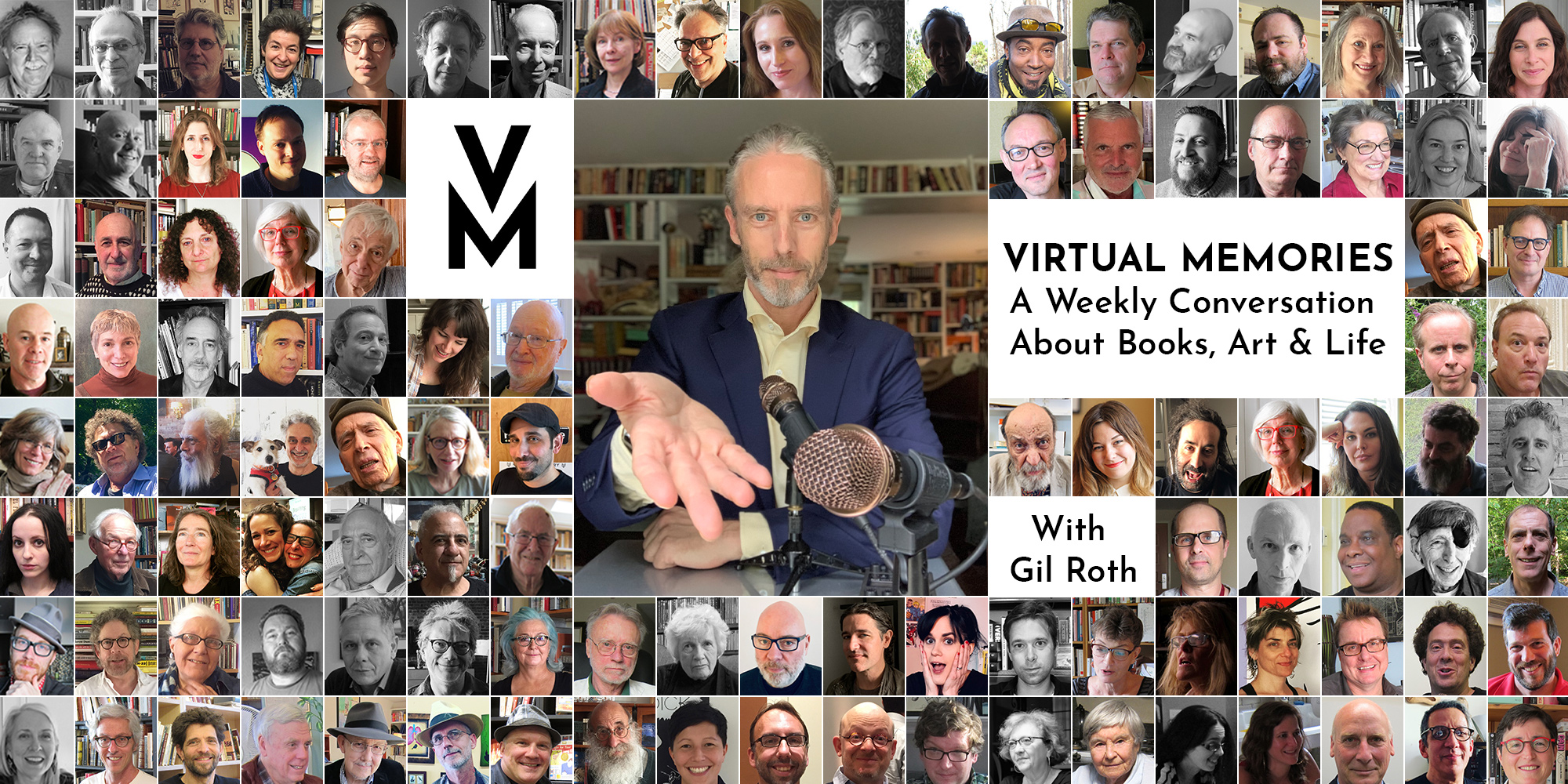
A podcast about books, art & life — not necessarily in that order
It’s time for your weekly dose of links, dear readers!
Continue reading “Unrequired Reading: Oct. 17, 2008”
I was bored at lunch today, and flipped through the funny pages of the local crappy paper. Not only did I discover that “Love is . . .” is an ongoing comic strip/panel, I also discovered that it’s gotten pretty risque!

So, I offer up a new Caption Contest! Submit your entries in the Comments section below!
I’ll kick things off with, “Love is . . . realizing you’re the only girl at a swingers’ party.”
Hmm. Maybe I should have pushed my Montaigne-as-blogger idea, floated a few weeks ago when I wrote up Of presumption in my Monday Morning Montaigne series. Here’s a piece from Andrew Sullivan’s article “Why I Blog” in the new ish of The Atlantic:
But perhaps the quintessential blogger avant la lettre was Montaigne. His essays were published in three major editions, each one longer and more complex than the previous. A passionate skeptic, Montaigne amended, added to, and amplified the essays for each edition, making them three-dimensional through time. In the best modern translations, each essay is annotated, sentence by sentence, paragraph by paragraph, by small letters (A, B, and C) for each major edition, helping the reader see how each rewrite added to or subverted, emphasized or ironized, the version before. Montaigne was living his skepticism, daring to show how a writer evolves, changes his mind, learns new things, shifts perspectives, grows older — and that this, far from being something that needs to be hidden behind a veneer of unchanging authority, can become a virtue, a new way of looking at the pretensions of authorship and text and truth. Montaigne, for good measure, also peppered his essays with myriads of what bloggers would call external links. His own thoughts are strewn with and complicated by the aphorisms and anecdotes of others. Scholars of the sources note that many of these “money quotes†were deliberately taken out of context, adding layers of irony to writing that was already saturated in empirical doubt.
From the biotech interview that I’m transcribing:
We can never say that there’ll be sufficient analytics to declare that one biotech product is equivalent to the other. That’s why they’re called biosimilars and not biogenerics. It’s the stuff you can’t measure that can kill you. Sometimes.
Last Thursday was Yom Kippur, so Dad & I made our return to the Chabad Jewish Enrichment Center in Chestnut Ridge, NY for Yizkor, the prayer for one’s departed parents (and other family members). I wrote all about the JEC last year, so go check out the details and get back here.
Last year on Yom Kippur, I was on antibiotics that were causing me to have paranoid delusions, so I skipped the ritual fasting (no food, no fluid, no nothing for 25 hours). In relatively better health this year, I decided to give it a go. I hadn’t reckoned on how much I increased my dependence on coffee in recent months; Dad came by to pick me up around 10 a.m., and I was already thrumming and out of it. And I had another 9+ hours to go.
Fortunately, Dad made the drive “entertaining” by
When we arrived, we stayed in the back of the rec-room/shul. There were 25-30 men present. The rabbi saw us and walked back to greet us in kittel and Crocs (no leather footwear on Yom Kippur), while the chazzan was conducting a prayer. He remembered us from last year and even recalled Dad’s father’s Hebrew name. I’m sure he has to have a good memory for the once-a-year Jews like us.
After shaking my hand and wishing me a good new year, he said, “I’m glad you’re here! We need you to open the ark and bring the Torahs out!”
The lack of caffeine and my blood-sugar wackiness were taking a toll on me. Addled and thick-tongued, I said, “Uh, um, I don’t have to do a blessing, right?”
“No! We just need your muscles!”
“. . . In that case, you might be better off asking me to read Aramaic,” I said, following him up the narrow aisle to the pulpit/reading table.
He directed me to open the fireproof safe on the wall, remove the first Torah and hand it to the chazzan. I took each velvet-covered scroll out carefully, avoiding any contact with the ark/safe as though I was playing Operation. The chazzan, in white socks and flip-flops, carried his Torah into the congregation. I followed him through the shul. Each congregant touched the Torah cover with the corner of his tallis or his prayerbook, then touched that corner to his lips.
We finished our circuit, crossing the partition so the women and children could also receive the Torahs’ blessing, and the chazzan put his on the reading table, while I was instructed to sit down in the front row and hold the second one. The top handles of this Torah were covered by decorative ornaments (rimonim) that had little silver bells dangling from them. I kept trying to find a sitting position that was comfortable, respectful, and didn’t cause constant jingling noises, in ascending order of importance.
While I kept the noise down, congregants were called up to perform aliyah, the blessing over the Torah. Dad was the second or third one called up, and performed admirably. I even began to feel a little of The Resonance, watching my dad recite the blessing. Holding the other Torah against me, I thought about atonement, and what we were supposed to be doing that day. I feel like I’ve already atoned for most of the wrongs I’ve committed against people in my life, but that’s not what this day is about. This is about atoning toward God, and I don’t know how to do that.
Following (I think) six aliyah over the first Torah, and then another over the second Torah, it was time for the Torah reading, followed by a sermon from the rabbi. Now, the JEC’s high holiday schedule indicated that Yizkor was supposed to be at 11:45 a.m., but it was around half-past-noon when the rabbi was wrapping up his sermon. I don’t think this so much an instance of Jewish Mean Time as it was a matter of making sure that less observant congregants didn’t pray and dash.
The sermon consisted of the rabbi telling a story of the Baal Shem Tov telling a story, and in a reverie I wondered if the layers would keep growing, with each storyteller launching into another story of a storyteller, all carrying the theme of Jews’ obligations to each other and God. The rabbi, feeling less postmodern than I was, elected to keep it relatively simple, although his story did rely heavily on the prospect of reincarnation and explicitly mentioned Purgatory as an afterlife destination. His message: live up to the Torah, because you may be in this world in order to “get it right this time.”
After he finished, those of us who haven’t lost our parents went outside, while the others stayed in for Yizkor. The rabbi was lucky enough to be among our number, so we shot the breeze in the backyard. He asked me, “So what do you do when you’re not praying and studying Torah?”
I filled him in on my day job. He asked for details about the nature of business magazine publishing, how we’re adapting to the internet, and why he only sees me once a year. “Because I’m not a very good Jew,” I told him. I thought about some of the others I’d seen that morning in shul, who were even less educated in Judaism than I am, but were still there to pray.
“But you’re here today!”
“I guess I’m a half-decent son.”
“That’s a start!”
We walked over to the main group of people, and the rabbi’s wife told the story about how she once passed out in the middle of Yom Kippur in an overcrowded shul. It turned out she was pregnant with their first child. Someone pointed out that it’s good to keep smelling salts on hand during the day. The rabbi said that they usually do, but he couldn’t find any this year. I mentioned how disappointed I was that there was no snuff circulating the services this year. He laughed and told me to come back next year, and maybe they’ll have some.
Once the prayer was complete, we returned to the shul. The rabbi collected the names of all the dead from the congregants, so he could lead a prayer for them. When that was done, we noticed that others were getting up and heading outside, so we took our cue to leave. The rabbi caught us and took my arm, saying, “No! We need you to put the Torahs back in the ark! It’ll only be another five minutes!”
As he led me back up the aisle, one of the congregants said, “That’s ‘five minutes’ in Jewish time!”
I told Dad that he could wait in the car, figuring that he might be light-headed from sugar-crash and would need to snack on the banana that he brought along, but he stayed. And so we prayed further, and I lifted the first Torah from the reading table. About to place it in the ark, I said to the rabbi, “It’s a 40-day fast if I drop this, right?”
“Right! So don’t drop it. You don’t want that much atonement!”
I’ve decided that my local supermarkets offer so many strange that it’s time to launch a new weekly feature: Lost in the Supermarket! Every Tuesday morning, you can expect to find another of my more oddball finds.
Our inaugural product:

Hulk Cakes: ‘Cause hulks gotta eat too!
See the whole Lost in the Supermarket series
I’m going to cover four shorter essays this week, because it’s my party.
* * *
Our first essay, Of giving the lie (pp. 611-615), actually continues the conversation from Of presumption, to my gratification (see last week’s post to get an idea of how overwhelming that essay is). Montaigne begins it by discussing the nature of his Essays and the purpose in writing a book of himself, despite his lack of “achievementâ€. After all, it’s natural for people to want to read the words of great men, but why would the public be interested in the essays of a minor noble who retired from public life at the age of 38? He offers a few defenses for his book, essays for his essays, as it were. First, it’s not for everybody:
This is for a nook in a library, and to amuse a neighbor, a relative, a friend, who may take pleasure in associating and conversing with me again in this image. Others have taken courage to speak of themselves because they found the subject worthy and rich; I, on the contrary, because I have found mine so barren and so meager that no suspicion of ostentation can fall upon my plan.
Maybe it’s for posterity (but probably not):
What a satisfaction it would be to me to hear someone tell me . . . of the habits, the face, the expression, the favorite remarks, and the fortunes of my ancestors. . . .
However, if my descendants have other tastes, I shall have ample means for revenge: for they could not possibly have less concern about me than I shall have about them by that time.
Okay, maybe I’m writing these essays for myself:
And if no one reads me, have I wasted my time, entertaining myself for so many idle hours with such useful and agreeable thoughts? In modeling this figure upon myself, I have had to fashion and compose myself so often to bring myself out, that the model itself has to some extent grown firm and taken shape. Painting myself for others, I have painted my inward self with colors clearer than my original ones. I have no more made my book than my book has made me.
Hmm: “It’s meant as a quiet(ish) conversation; it’d be nice if people could refer to it in future to get some idea of who I am/was; the act of writing it has helped me define myself.†Those sure sound like the top three reasons I write Virtual Memories. If only he added, “I’m looking for a three-book deal and a movie option.â€
Anyway, M. lets these defenses of his self-writing lead into the topic of lying. “But whom shall we believe when he talks about himself, in so corrupt an age [. . .]? Since mutual understanding is brought about solely by way of words, he who breaks his word betrays human society.â€
Lying (and lying about lying) inverts our values, M. contends, by demonstrating contempt for God and fear of men. We — the French of his time, who treated lying like a virtue — take more offense about being accused of lying than of any other sin. He touches on the subject only briefly, but promises to return to the topic sometime to cover “the varied etiquette of giving the lie, and our laws of honor in that matter, and the changes they have undergone.â€
So the alleged topic of this essay is undertreated, in favor of M.’s discussion of his own aims and purposes. I didn’t mind that particularly, but the discussion on lying did contain a brief aside that left me hoping for more. In a comment about “certain nations of the new Indies,†M. mentions the “monstrous and unheard-of case†of their conquest, the desolation of which “has extended even to the entire abolition of the names and former knowledge of the places.†Even though he’s discussing their use of blood sacrifice, he’s clearly coming down heavily on the the practice of genocide in the New World. I sure hope he gets back to this topic, even if it’s only in brief allusions like this one.
* * *
The next essay, Of freedom of conscience (pp. 615-619), discusses the damaging effects of hyperorthodoxy. M. contends that, among those who were on the “right” side in France’s civil war, there were many “whom passion drives outside the bounds of reason.” Further, he argues, early Christians who destroyed pagan library “did more harm to letters than all the bonfires of the barbarians.”
The center of the essay is the life of Emperor Julian, the Apostate. M. characterizes Julian as a great man who “[i]n the matter of religion . . . was bad throughout,” and doubts the story that Julian returned to the faith in his dying breath. M. describes him as a harsh enemy of Christianity, “but not a cruel one.”
M.’s question is this: Why do some regimes allow freedom of conscience? Julian permitted this to create general dissension “in the hope that this complete freedom would augment the schisms and factions that divided them and would kepe the people from uniting.” However, the kings of M.’s time used it to reduce dissension; by permitting freedom of religion, they give the people one less thing to fight over.
I prefer to think, for the reputation of our kings’ piety, that having been unable to do what they would, they have pretended to will what they could.
* * *
In We taste nothing pure (pp 619-623), M. explores the way all our sensations alloy to their opposite. He brings up le petit mort in a way that makes me doubt that he enjoyed sex:
Our utmost sensual pleasure has an air of groaning and lament about it. Wouldn’t you say that it is dying of anguish? Indeed, when we forge a picture of it at its highest point, we deck it with sickly and painful epithets and qualities: languor, softness, weakness, faintness, morbidezza: a great testimony to their consanguinity and consubstantiality.
Despite that, M. takes his essay in an interesting direction when he gets away from the alloys of abstractions and explores one of my favorite topics: how we can be too smart for our own good:
[One’s] penetrating clarity has too much subtlety and curiosity in it. These must be weighted and blunted to make them more obedient to example and practice, and thickened and obscured to relate them to this shadowy and earthy life. Therefore common and less high-strung minds are found to be more fit and more successful for conducting affairs. And the lofty and exquisite ideas of philosophy are found to be inept in practice. . . You get lost considering so many contrasting aspects and diverse shapes. . . .He who seeks and embraces all the circumstances and consequences impedes his choice. An average intelligence conducts equally well, and suffices to carry out, things of great or little weight.
Which puts me in mind of That Damned Hegel Quote, and the smart guy’s tendency to overthink and miss out on life.
* * *
Against do-nothingness (pp. 622-626) turned out to be a lot less interesting than its title led me to hope. It basically says that, if you’re a king, you should accompany your soldiers in war. Kind of a letdown, even if its key example was the death of “Moulay Moloch, king of Fez.”
What I’m reading: Samaritan
What I’m listening to: Body of Song

What I’m watching: 30 Rock, season 1
What I’m drinking: Sierra Nevada Pale Ale. I’m still on my one-drink-a-week routine, weirdly enough. Which means I haven’t had a G&T in more than 2 weeks.
What Rufus is up to: Attempted rape at the paws of a savoy down at the local farmers’ market on Saturday. Oh, the shame! He also got to take a short hike to Ramapo Lake, and stopped in at the Garden State Barkway to get his nails clipped, so on balance it was an okay weekend for him.
Where I’m going: Nowhere this week. I really oughtta get into NYC sometime.
What I’m happy about: My mom’s busted wrist healed well enough for her to go on her hiking trip to Utah this week. And that official VM pal Paul Di Filippo had his new book launch with comics legend Jim Woodring out in Seattle!
What I’m sad about: Only three weeks left in the presidential campaign! No!
What I’m pondering: Why this
To paraphrase David Letterman, I believe this profile of Linda McMahon marks the first time professional wrestling has been referred to as “intellectual”.
Ready for this week’s serving of links? Just click more!
Continue reading “Unrequired Reading: Oct. 10, 2008”