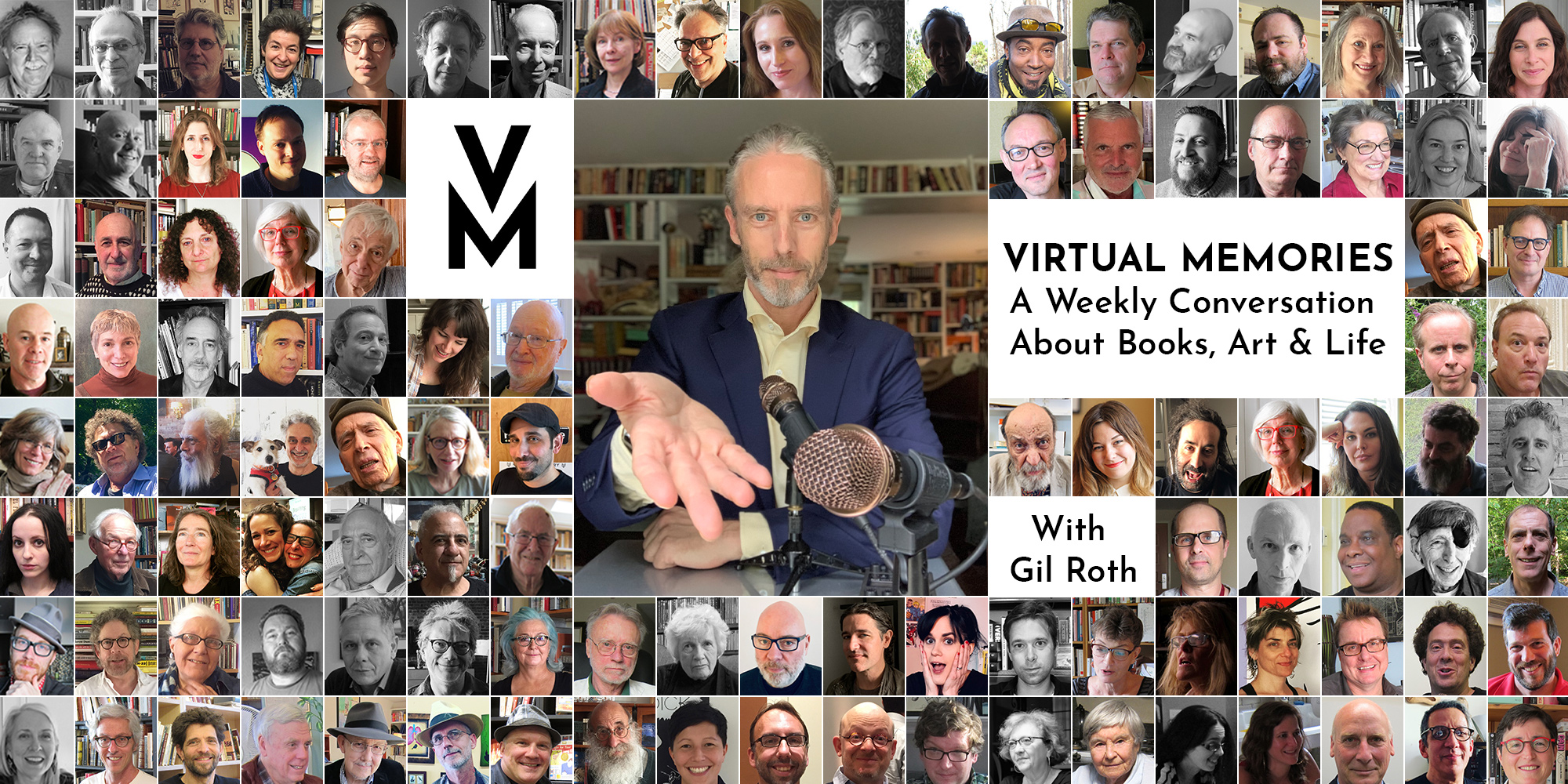
Down and Up

It’s been an up and down day.

Up: Easy time driving out to the Brooklyn Comics & Graphics Festival (BCGF), found a parking spot half a block from the site, and had no line for gas on the way out of NJ.

Down: The panel discussion with Chris Ware, Art Spiegelman and Richard McGuire was too crowded to attend.

Up: We took the L train out to 14th & Union Sq., went down to the Strand, and I actually found a whole bunch of books I was looking for!

IMG_0657

(L-R: The New Adventures of Jesus (Frank Stack), The Complete Short Novels (Anton Chekhov), Confessions of Felix Krull (Thomas Mann), Journey Into the Past (Stefan Zweig), Officers and Gentlemen (Evelyn Waugh), Lucky Jim (Kingsley Amis), and three Library of America editions of Philip Roth)

Down: After we left the Strand, the Sartorialist walked right by us on 5th Ave. and didn’t look twice at my wardrobe. (He didn’t have his camera with him, but I still felt deflated.)

Up: I had the lardo pizza for lunch at Otto.

IMG_1950

Down: Back at BCGF, the exhibit halls were way too hot, so I had to go back to my car and drop off my jacket.

Up: Got to meet Richard McGuire, whose 1989 6-page comic Here changed the vocabulary of comics and the understanding of how time and space can be represented on the page. Learned that he’s working on a full-length book of Here. He was friendly and said he was interested in being a guest on the podcast.

Down: Left my business cards in my jacket, so I couldn’t give him one as a reminder.

Up: I had a good conversation with David Mazzucchelli, which I skillfully started by talking about one of his obscure short comics, not his superhero work from the 1980’s. (I later told him that his Daredevil comics were pretty awesome when I was 15 or 16 years old. He was happy that I grew up along with his art.)

Down: He has no interest in being on my podcast.

Up: Gary Panter and Anders Nilsen both said they’d be on the podcast. (I went out to get my business cards, so I could give them reminders.)

Down: Art Spiegelman gave me the cold shoulder while he was talking to a pal of mine outside the show.

Up: Bought an awesome little book by McGuire, and a new edition of Nilsen’s Don’t Go Where I Can’t Follow, about his girlfriend’s death from cancer.

IMG_0662

Down: Nilsen drew an empty chair for his sketch on the book’s frontispiece.

Up: Met Anne Ishii and Jillian Tamaki and had a nice conversation with them and my pal Tom Spurgeon.

Down: Made them really sad when I told them about Anders Nilsen’s follow-up book, The End, which has a 2-page spread that makes me want to cry.

Up: No one I talked to had any too-terrible stories from the hurricane and nor’easter. That makes it a good day.

Podcast: The Correction of Taste

The original version of this episode had terrible audio quality, so I went back and remastered it! Enjoy!

(And go listen to the followup episode we recorded in July 2014: Bookman’s Holiday!)

Michael Dirda

Season 2 episode 13 – Michael Dirda – The Correction of Taste

“My personal crusade has been to urge people to read books they might otherwise not think of reading. . . . There are a lot better books that have been forgotten than are being published today.”

Are you ready for a new beautifully remastered episode of The Virtual Memories Show?

“Some very self-confident writers feel they are among the chosen, the ones that will last forever, but they’re like deluded Calvinists.'”

This time, Pulitzer Prize-winning book critic Michael Dirda talks about his lifetime of reading and career in writing, the essence of book reviewing and the role of negative reviews, breaking free of genre ghettoes and the pretense of literary immortality, how the internet has changed the reviewing ecosystem, and why Mao would have loved the collective wisdom of the internet.

“I think of it all as ‘literary fiction,’ if it’s well written.”

We also get in some literary kibitzing, touching on John Crowley, Neil Gaiman, Marilynne Robinson and a host of other writers and books.

“One of the things I’ve lamented in the course of my lifetime is the changeover in the English curriculum in the universities. English majors will really only know the literature of their time. They will know the same 40 or 50 authors and books. Anyone off the obvious track of the times, they won’t know. They’ll know Gary Shteyngart, but they won’t know Mikhail Bulgakhov, or Gogol. It’s that narrowness, that feeling that anything not of the moment is irrelevant. That worries me.”

Listen to the conversation: Virtual Memories – season 2 episode 13 – The Correction of Taste  

(BONUS: Go listen to the followup episode we recorded in July 2014: Bookman’s Holiday!)

About Our Guest

Michael Dirda, a weekly book columnist for The Washington Post, received the 1993 Pulitzer Prize for criticism. He is the author of the memoir An Open Book and of four collections of essays: Readings, Bound to Please, Book by Book, and Classics for Pleasure. His most recent book, On Conan Doyle, received a 2012 Edgar Award for best critical/biographical work of the year.Mr. Dirda graduated with Highest Honors in English from Oberlin College and earned a Ph.D. in comparative literature (medieval studies and European romanticism) from Cornell University. He is a contributor to The New York Review of Books, The Times Literary Supplement, the online Barnes & Noble Review, and several other periodicals, as well as a frequent lecturer and an occasional college teacher.  

About Our Sponsor

This episode is sponsored by Out of Print Clothing! Visit their site and check out their great selection of T-shirts, fleeces, bags and other gear featuring gorgeous and iconic book cover designs.

The Virtual Memories Show is on iTunes! If you’d like to subscribe, visit our iTunes page! If you’d like to check out past episodes, you can find us on iTunes or visit the Podcast page for all our back episodes, as well as e-mail signup and tip jar! And why don’t you friend the Virtual Memories Show at our Facebook page? It’d make my mom happy.

Credits: This episode’s music is Desert Prayer by John Sheehan. I recorded the intro on a Blue Yeti mic into Audacity, and the conversation with was recorded in Mr. Dirda’s home in Silver Spring, MD on a pair of Blue Encore 100 mics, feeding into a Zoom H4N recorder. All editing was done in Garage Band, with some post-processing in Audacity. This is a remastered version of the October 2012 episode, with better sound quality. Photo by Amy Roth.

The musicalized, heat-filled dream of possessing his beloved

I went to Homecoming at St. John’s College this weekend. I got my master’s degree there, but I consider it my alma mater much more than I do my undergrad institution. I had a good time; it wasn’t as transformative as the Piraeus seminar I attended this past May/June, but it was a great opportunity to reconnect with other students, tutors, and an old pal who came to visit on Saturday. I didn’t get to record any podcast conversations during the trip, but did reach out to a few potential guests.

It’s been a busy few weeks for me. Two weekends ago was the Small Press Expo in Bethesda, MD. The next weekend we had a wedding in Dawson, PA, about 375 miles from home. This weekend was Annapolis. Next weekend I leave to Madrid and hope that the riots settle down enough for me to get to my conference safely.

I took a half-day from work on Friday, after pounding out pages and sending PDFs to the contributors of the new ish, so they can send me their corrections in time for me to get the new issue out by Wednesday. I left for Annapolis around 2 in the afternoon and had to deal with a little traffic on the ride down, but got in safe and sound, albeit unfed.

I checked in at my hotel, then drove to campus, got my registration packet, picked up a powerbar-sorta thing for dinner, and headed over to the Homecoming lecture, The Musical Universe and Mozart’s Magic Flute, by Peter Kalkavage. Peter was the tutor for my preceptorial on Hegel’s Elements of the Philosophy of Right. His 1991 essay on the role of Ulysses in The Divine Comedy was one of the things that convinced me to attend St. John’s. (It’s in this PDF.)

The lecture was way over my head, breaking down Tamino’s aria in technical ways to reveal its beauty. I’m not an opera guy and have no musical training to speak of, but I still enjoyed Peter’s exploration of the structure of the music and the effects Mozart achieved from his notes, tones, etc.

I seriously don’t have a vocabulary for this. In the Graduate Institute (the GI), we don’t receive a lot of the instruction that the undergrads do. They have music, languages (ancient Greek & French), and laboratory science. Because of our truncated schedules, we make do with a lot less. (Not that I’m complaining.) I sat with another GI during the lecture. We laughed when everyone in our section flipped the page of their sheet-music handout at the right moment, while we kept looking at the first bar. It’s always fun to be the uneducated one.

Early on, Peter put on a recording of the aria, which he would later play selections of on a piano (and sing particular segments to demonstrate certain progressions). While the recording played, he swayed a little at the lectern. That’s when my reverie began.

I thought of everything that I’ve experienced in the past few weeks. First, I thought about Jaime Hernandez, the cartooning genius, choking up while telling an SPX audience about a scene from a Tyrone Power movie, The Eddie Duchin Story.

I started recalling moments from SPX: meeting people in autograph lines, arguing (gently) with Chris Ware over how “Gill Sans” is spelled, buying art from Jaime and his brother Beto, sitting at a barroom table with the Mt. Rushmore of modern cartooning (the Hernandezes, Ware, Dan Clowes, and Charles Burns were on hand), trying to talk Kevin Huizenga into recording a podcast next time I’m in St. Louis.

From there to Michael Dirda’s house on the way back to NJ. Looking over his bookshelves, noting the UK hardcover of A Frolic of His Own, discovering that third Nabokov collection of lectures on literature, spying the brick of Kingsley Amis’ letters on the shelf behind Dirda while I interviewed him.

A week in NJ followed, with Rosh Hashanah and then the annual conference I help host. Six or seven hundred people come to a hotel to participate in the show, and it always leaves me exhausted, but at least it didn’t leave me in the emergency room like last year’s anxiety-sleeplessness-caffeine feedback loop did.

Right after the conference finished, I drove home, unpacked, then repacked, and Amy & I drove out to Dawson for a wedding: Six-plus hours in the car on 78 and 76, culminating in a dirt road (Lucky Lane) in the dark before arriving at the hotel. Touchscreen cheesesteak at a truck-stop Wawa; a little local bookstore daring enough to have William S. Burroughs’ Queer and Junky on end-cap display (picked up a used copy of The Two Cultures by CP Snow); meeting gin freaks and elderly computer bazillionaires at the wedding; finishing The Good Soldier, on Dirda’s recommendation; watching eight or nine of the male wedding guests gathering in the middle of the dance floor for a bizarre choreographed haka-polka hybrid set to Bachman Turner Overdrive’s “Taking Care of Business”; passing on karaoke.

Sunday morning, we drove out to Fallingwater, about 40 minutes away, before heading back to NJ. It was impossible and gorgeous and everything I hoped it would be, and it made me feel a little sad to be returning to the standard nine-room bi-level of our neighborhood. I thought about the engineer in Local Hero telling Peter Riegert and Peter Capaldi, “Dream large.” I got another touchscreen cheesesteak on the drive home.

Worked frantically through the next week, punctuated with a 25-hour break for Yom Kippur. In addition to the standard fast (no food or drink), I decided I’d really get out of myself and not look at a screen for that span: no iPhone, no computer, no TV. It was as liberating as I expected. By the time I checked my e-mail after breaking my fast Wednesday night (at Greek City in Ramsey), I had 35 messages on my personal e-mails, only a few of which I wanted to respond to, and none of which were imperative.

I prayed Tuesday night and Wednesday afternoon with the Chabad that I visited in past years. They’ve always been accommodating, no matter how slack of a Jew I am. Some of the older gents in the congregation either recognized me from past years or just wanted to introduce themselves and make new acquaintances, which was nice. I’m so bad about joining community; I’m much better with afflicting myself.

At the end of mid-day prayers, we received a blessing from a kohen. I’d never been present for that before. We were instructed to look in his direction, but not to make eye contact during the blessing. It’s customary to cover one’s eyes with one’s tallis during this. The man in front of me set a good screen, however, so I was able to look forward without looking on the kohen’s face.

When I wasn’t at Chabad, I passed the time by re-reading King Lear, since I’d signed up for a 90-minute seminar in it for Homecoming. I hadn’t read it in years, and this reading may have been skewed a bit by the fast, since I was going without caffeine for this stretch.

After mid-day, I drove out to Nyack, NY to walk around and pass sometime. I discovered my favorite bookstore there was gone, replaced by a dry cleaner. I visited another store, the fiction department of which was filled with stacks of trade paperbacks. I tried looking at some back Paris Reviews in a stack, but it started to tip, then bumped another tower of books. I caught both of them and struggled to get them stable again without anyone at the front of the store noticing. A day of affliction can always use a little levity.

And then it was back to work, and then on to Homecoming, where this reverie began. I scrawled these reminiscences all over the backs of the sheet-music handouts. I also wrote down some details of a wonderful dream I had the night before, where I read the profile of an author who wrote a book that, according to a hybrid of Chip Delany, Michael Dirda and Junot Diaz, I would love. The book and the author don’t exist, but I retained the title of the novel, and woke up and wrote it down. I used to dream a lot more about fully-formed works of art, but it hasn’t happened in a while. I’m afraid of what that means.

Among all these notes Friday night, I wrote, “Made PDFs for contributors; put on conference.” Then I wrote, “It’s funny how unimportant those things are, and how necessary for me to live this beauty. How little of work will I remember as I grow old, and how much will I hold onto from everything else?”

Thanks for sticking around. Here are the books I bought at the college store on Saturday:

St. John's College bookstore run

An Embarrassment (Of riches? Maybe?)

The library downstairs is nearing completion! All that remains is painting the ceiling and the wall under the shelves, and then putting in the floor (I know, that last part could take forever, but hey).

Last month, I got the idea to inaugurate the new library with some special/new books. I’ve noted before that I’m on a bit of an austerity plan this year. I’ve cut back most of my discretionary purchases, let some expenses go, and basically done some evaluating of what makes me happy and what just distracts me.

I decided our new library could use a nice set of A Dance To The Music of Time paperbacks. I was saddened to discover that the U of Chicago press edition of the four-volume set with slipcover isn’t available (I mean, you can find that set on ABEbooks for like $250, but eh), so I settled for the four paperbacks themselves. I ordered them through my local-ish indie bookstore, Well Read, since they offer a decent online special-order discount and I always try to toss some business their way.

I even had them delivered to the store, rather than my home, so I could stop in and look around the store. And look! Here they are! For only $81.01, with shipping and tax!

IMG_0352

(Yes, my wife bought me a pair of greyhound bookends. No, it wasn’t her idea. I actually looked around online trying to find a nice set for the library, but she’s better at that than I am.)

Well, mission accomplished! I found the books I want to celebrate the new library! I can go back to austerity mode!

Or can I . . .?

A day after I picked up these Powell books, I got an e-mail from bookcloseouts.com, a book remainder site. I noticed they had some Arden Third Series editions of Shakespeare in stock, so I checked out my books downstairs and realized that there were a dozen of them that I could order to (nearly) give me a full set of Shakespeare’s plays! And with the remainder discount, it would only cost me $93.72 (shipping, no tax).

IMG_0357

(No, I don’t want everything in a single volume; these need to be portable.)

There’s a reason I didn’t already have most of those histories, since they’re supposed to be lesser plays, but now I have ’em! The book-buying can end!

Well, there is that Roman “mini-curriculum” that Tom May sent me last weekend. But I can pick those up in drips and drabs. In fact, I took a half-day today to celebrate (there’s a lot of that) finishing my big Top Companies issue of my magazine, and stopped at the Barnes & Noble on Rt. 17 to see if any of Mr. May’s suggestions were in the used books section in the back of the store. I found a copy of Horace’s Odes for $2.50 (score!) and then I noticed . . . the first twelve volumes of the original Love & Rockets collections, for a little under $5 each!

Since I promised David Townsend back in June that I’d initiate him into the world of Los Bros. Hernandez (as part of my plot to get comic books on the curriculum at St. John’s College), I decided to grab the whole lot of them, write him a little guide for what’s worth reading and what he can skip, and start him on the roads to Hoppers and Palomar!

IMG_0349

(Yeah, they even had the 3×3 gridded square edition, Love & Rockets X.)

Which is to say, stop me before I book-buy again!

Podcast: Manga-loids and Steampunks

Virtual Memories – season 2 episode 8
Diana Renn and Paul Di Filippo – Manga-loids and Steampunks

The July episode of The Virtual Memories Show is ready to go! This time around, you get two interviews for the price of one!

During my June trip to Boston for the BIO annual meeting, I recorded conversations with Diana Renn, a writer who just published her first book, a YA novel called Tokyo Heist, and Paul Di Filippo, a science fiction writer and critic who’s celebrating his 30th year as a freelance writer.

I thought of posting them as two separate podcasts, but it made more sense to have the perspectives of the first-time novelist and the life-time writer in a single episode. Diana has lots to say about working through the novel-writing process and how her history with comic books informs her, while Paul has a ton to say about the current state of science fiction, how he carved out a role in it, what it’s like to be the “King of Steampunk,” the allure of Providence, RI, and whether he’d have taken an assignment for the Before Watchmen series.

Paul and me

Follow The Virtual Memories Show on iTunes, Twitter, Facebook, Tumblr, and RSS!

Credits: This episode’s music is Rewrite from Paul Simon’s recent record So Beautiful or So What? I recorded the intro on a Blue Yeti mic into Audacity, and the conversation with was recorded on a pair of Blue Encore 100 mics, feeding into a Zoom H4N recorder.

Podcast: My Old School

Virtual Memories – season 2 episode 6
David Townsend – My Old School

The June episode of The Virtual Memories Show is ready to go! Around Memorial Day, I took a little vacation to my alma mater, St. John’s College, for a seminar on Flannery O’Connor, and got to interview two of my favorite tutors: David Townsend and Tom May.

Because they both had so much to talk about, I decided to split this month’s show into two parts. This episode has my conversation with David Townsend, and it’s a remarkable take on education in America, the nature of good conversation, and the poetry of the Koran (among other topics)!

Check out the followup episode, in which tutor Tom May talks about a dizzying array of topics. There are also episodes with tutors Peter Kalkavage (2014) and Eva Brann (2013)!

Follow The Virtual Memories Show on iTunes, Twitter, Facebook, Tumblr, and RSS!

If you’re interested in seeing some of Annapolis, check out my photoset from that trip!

Spa Cove

Credits: This episode’s music is Steely Dan’s My Old School. I recorded the intro on a Blue Yeti mic, and the conversation with was recorded on a pair of Blue Encore 100 mics, feeding into a Zoom H4N recorder.

More Bookbuys

Waiting for Amy’s train this afternoon (long weekend: woo!), I stopped at the Barnes & Noble on Rt. 17 South in Paramus. That store has a used books section, which also includes reviewers’ copies that are usually marked down half-price from list. There was a 50-75% sale on, so I, um, pillaged.

Used & Reviewers

Here’s what I got, for a grand total of $43:

That last one’s a gag gift for a pal of mine. No, really.

I make no excuses about Born To Be Brad, except to say that it makes my Simon Doonan collection look butch.

Escape (from) artistry

I’ve said it before and I’m sure I’ll say it again: “Life is too short for shitty novels.” Years ago, I tried to read The Amazing Adventures of Kavalier & Clay, and found myself bored silly. I gave up at the 100-page mark or thereabouts, and said, “If you write a novel about comic books, Jewish immigrants, golems, and escape artistry and you lose me, you’ve seriously fucked up.”

However, a pal of mine mentioned it as a book she came back to and learned to appreciate a lot. Since I’m interviewing her next month for another podcast, I thought I’d give Chabon’s novel another shot. After all, maybe I was just being overly critical way back when; maybe I was jealous that someone else had tackled a bunch of topics that I’d love to have written about.

Alas, no. I made it around 40 pages further this time, nearly a quarter of the way through the novel, before giving up. The writing is still boring; the story structure makes no sense, with its nested flashbacks without triggers for the sake of building a symbol; the characters are uninteresting; the four-page exposition about the early history of comics may have been necessary, but it was a tedious info-dump. The final straw? A mere footnote, an asterisk that led to a 4-line aside.

Why did that push me over the edge? Because it served no purpose that couldn’t have been achieved within the third-person narration. Even if it was meant as an homage to David Foster Wallace, all it did (for me) was demonstrate that Chabon’s writing sucks and his editor was stealing paychecks.

And really, that latter point could be proved simply by looking at the page count: 640 pages! Was it meant to be a Great American Novel or something? How do you write 300 pages longer than, say, The Leopard, but say so much less?

(Don’t get me started on the chapter-long origin story of the superhero that Kavalier & Clay create. A long paragraph in that story begins with the lead character standing at the door of his mentor, then explains exactly why none of the mentor’s entourage would knock on the door, before explaining that the mentor’s mistress is the one who compelled the lead character to knock on the door. Which he was about to do at the beginning of this lengthy parapgraph and gets around to at the end. Mind-bogglingly shitty, cumbersome writing.)

I felt like I was cheating myself every time I read a few pages, like it was some sort of burden. Good thing this one only cost me $2.62.

NOTE: If you’re interested in a good novel about escape artistry, go read Carter Beats the Devil instead. You’ll thank me once you’ve come up for air.

Another Year, In The Books

The year began with a novel about a dying newspaper and (just about) ended with a novel about the eternal sleaziness of newspapers.

According to the list of All The Books I’ve Read, I finished 32 books in 2011; several were re-reads, one was a Kindle Single, one was a play and another was a novella. I’ve decided that my year-end post should be a look back at those books, what I made of them, how I came across them, and any other recollections or observations I can make about ’em.

First, I oughtta note that 32 books isn’t that much. I mean, all told, the Great List shows that I’ve finished around 600 books since I began keeping the list in the fall of 1989, when I started college. That puts me a little above the “average” of 27 books a year, and it sure makes me regret that 2-year run in 1997-98 when I couldn’t finished a goddamned thing. But with math like this, even if I up the pace to an even 30 books a year, there’s still no chance I’ll ever work my way through my library.

Which is why I’m glad I came across this page in Kevin Huizenga’s latest issue of Ganges last week; shows I’m not alone in thinking about The Math:


The year’s big reading project, as I wrote about earlier, was Anthony Powell’s A Dance To The Music of Time. I’d rather not write about those books individually in this post, since I’m still a bit muddled about the first half of the series. It took me a while to get into the rhythm of Powell’s writing, and I think the three WWII novels (books 7-9), plus their immediate successor (Books Do Furnish a Room), mark the high point of the cycle. But, like I said, I’m going to leave off writing about them, except in terms of where they fall in sequence, and focus on the other 20 books for this post.

Also, because of my prose-bias, I won’t go into the comics that I read over the year. However, there’s one comic I read in 2011 that trumps this entire list: Jaime Hernandez’s conclusion to The Love Bunglers, in Love & Rockets #4. I wrote about this a little during my heart scare in October, and I want to reiterate: what Jaime achieves by the end of that comic, capping off 30 years of stories of Maggie and her world, is a perfect piece of art.

On with the show:

The Imperfectionists – The year began with Tom Rachman’s 2010 novel about a dying, Rome-based newspaper patterned after the International Herald Tribune. Each chapter follows a different character in or around the paper, and it does a great job of delineating the various occupations and beats of that workplace. However, the only people I knew who’d appreciate that backdrop would also be terribly depressed by the newspaper’s demise, so I didn’t pass it on to anyone. I think it was recommended via Amazon, and the Kindle edition was only $5.00, so hey.

Shortly after finishing that book, I turned 40. I also began A Question of Upbringing, the first book in Powell’s series. I read one each month, so just mentally slot those in between the other titles listed here. I’ll put the full list & chronology at the end of the post.

The Age of Innocence – I decided to read this after New York magazine ran a “Greatest New York Ever” feature, and Sam Anderson selected Wharton’s book as the greatest New York novel. I was intrigued and gave it a shot (free on my Kindle). I had no idea Wharton was this good. Scorsese’s decision to adapt it made perfect sense to me, although I couldn’t bear more than 10 minutes of his adaptation, since it relied so heavily on voice-over of Wharton’s prose, rather than, y’know, adapting it into a visual medium.

Anyway, I loved it, thought it did a wonderful job working through the social mores of post-Civil War New York, and felt it would’ve been more awesome if Archer, at that pivotal moment, went hardcore, killed May and went on the lam with Countess Olenska in Europe. But then the book would’ve had a much different reputation. I got at least one other person to read this, and she enjoyed the heck out of it, too.

1959: The Year Everything Changed – I met the author, Fred Kaplan, at a book party in NYC, and told him how much I enjoyed his columns on Slate. I mentioned that I hadn’t read his 1959 book yet, and he was much less angry about that than Greill Marcus was when I once told him that I hadn’t finished reading Lipstick Traces. (I still haven’t.) After that evening, I picked up his book on the Kindle. I enjoyed his version of that history, even if it did trick me into giving On The Road another shot. (It still sucks.)

A lot of this literary year was spent trying to get out of my own historical moment. The Powell books, of course, cover a chunk of the 20th century, and Kaplan tries to get at the ways in which 1959 shaped who we became in the succeeding decades.

Arcadia – The next couple of books play fast and loose with the notion of time and history. In March, I read Tom Stoppard’s play for the bazillionth time. This reading was preparation for seeing it performed on Broadway (which I wrote about here). It’s such a beautifully constructed work, I can’t begin to do it justice.

Time’s Arrow – Martin Amis’ story of a Nazi war criminal who doesn’t realize that his life is unspooling backwards. It’s narrated by a nascent consciousness in the head of a man who is coming to life and being delivered to his house by an ambulance. It’s a sick experiment in how to write about atrocities and innocence, and Amis, of course, is up to the job. It’s a difficult feat, clueing the reader into what’s going on while the narrator itself has no idea. I can’t say I recommend it, but it kept me enthralled. I assume he wrote it after someone offhandedly remarked that you can’t write in a sympathetic voice about a doctor who worked the concentration camps.

(I once passed on Amis’ London Fields to a coworker who generally likes my pass-alongs. She gave it back to me unfinished and said that she hated all the characters and didn’t want to read about them anymore. I can understand that entirely. I think I’m going to read Amis’ Money sometime in 2012, and I’m beginning to wonder if he’s ever had any likeable characters.)

Slaughterhouse-Five – I figured Time’s Arrow‘s not-so-Bloomian precursor was Vonnegut’s novel about the bombing of Dresden, in which the reality of the war is so horrible that the lead character retreats into nonlinear time and a science-fiction world of alien abductions. I hadn’t read this in years, and didn’t enjoy it too much, this time around. I’m betting it falls into my category of Lowest College Denominator.

The Leopard – Then I read the book that I would trade all the other books on this list for. I bought Lampedusa’s novel around 10 years ago on God knows who’s recommendation. It was the reverse of a wine cellar; while the book stayed the same, I matured enough to read it. I read a lovely recommendation of Lampedusa’s work in The Wall Street Journal and decided it was time to give it a shot. When I finished the novel, after wiping away some tears, I thought, “I’m so glad I got to read this book before I died.” Perhaps I’m just mistaking literary achievement to my growing sensitivity to stories of men watching their lives pass by, but I think The Leopard has some eternal qualities to it. I reread it 3 months later and keep it on my nightstand as a fallback for when I’m not interested in reading my current book.

It’s “about” a prince in Palermo in the 1860s, when Italy is in the process of unification and the merchant class is on the rise. The prince understands that the nobility’s days are numbered, but must negotiate his family’s wellbeing as long as he can, while he comes to grips with the younger generation’s ascent. And he’s SO so human. Lampedusa evokes this entire world, with its nobility, its clergy, its militia, its tradesman, its upstarts, its cosmos. I hope you get to read it sometime.

Here’s what I read from it last night, before turning in:

Between the pride and intellectuality of his mother and the sensuality and irresponsibility of his father, poor Prince Fabrizio lived in perpetual discontent under his Jovelike brow, watching the ruin of his own class and his own inheritance without ever making, still less wanting to make, any move toward saving it.

A River Runs Through It – Maybe I spoke too soon about trading all the other books for The Leopard. I’d probably keep Arcadia and I think I’d also keep this one. This is another countless reread for me. I don’t remember why I decided to read it this past summer. It had just been made available on the Kindle, so perhaps that prompted it. More likely, I wanted to read something beautiful and familiar and see if it, too, affected me differently at 40.

(I don’t think any book changed for me so dramatically as my 2010 reread of the Iliad. It’s a little embarrassing that it took me four journeys to Troy before I finally developed a sympathy/understanding for Achilles, but there it is. This time around, I was transfixed by that notion of the epic hero, caught in the fate of being the center of the poem, giving up family, future and love to become the world’s first great literary subject. I wish I’d kept up with my idea of writing about Achilles & the Iliad throughout the past year, but I always let myself get sidetracked. Like now.)

Weirdly, Maclean’s novella about fly-fishing and grace didn’t change too much for me this time around. In some respects, it’s the book that helped shepherd me along into my “boring old fart” mode. Which isn’t to say that it’s a boring book; rather, its assuredness of voice and lovely-yet-stark depictions of the lives of the two brothers and their family helped me appreciate silence and the absence of literary pyrotechnics.

(It also helped me form some sorta background for trying to understand Terence Malick’s Tree of Life. Emphasis on “trying”.)

Nemesis – A short Philip Roth novel about a polio outbreak in Newark in the 1940s. Roth belatedly tied this one to his recent short books and called them The Nemesis Quartet. I’m a huge mark for the first book in that run (which we’ll get to shortly), but the other 3 all feel like sketches more than real novels. But then, Roth’s nearly 80 and has achieved enough over the years that he’s earned the right to perform some minor variations.

What’s most interesting about this one is the narrator, who starts off as a first-plural “we,” but eventually shows up and plays a role in unspooling the later aspects of the tale. He also undercuts a lot of the simplistic thinking of the earlier pages, in a conscious reflection of the lead character’s mental limitations. It’s a neat trick, demolishing the lead’s earnestness and self-seriousness like that.

Bespoke: Savile Row Ripped and Smoothed – I read this memoir of Savile Row tailor Richard Anderson in one day. It was the first time I’ve read a book that quickly in years, and sure, it wasn’t Proust, but it was pretty fascinating. I’ve become interested in menswear in the last year or two, and one of the blogs I follows recommended this one. Anderson does a great job of conjuring up his apprentice days, while lamenting the lack of training in the contemporary scene. The best parts, as with many of the UK memoirs and novels I read this past year, involved the strange characters he worked with, and the oddball initiations he underwent.

One of my resolutions for 2012 is to have some shirts made for me by a tailor. I have the cash to do this, but I also have a bit of anxiety about sitting down and talking about fabrics, cuts and styles with someone who knows a bazillion times more about them than I do. Of course, that’s preferable to working with a tailor who doesn’t know that stuff better than I do, but I have Novice’s Worry. I’ll tell you how it works out.

The Most Human Human: What Talking with Computers Teaches Us About What It Means to Be Alive – I wrote about this one earlier in the year, and my thoughts about it haven’t changed, so just check out that post. As noted there, I discovered it via an author interview on the Monocle Weekly Podcast. Sadly, Monocle changed its format a few months ago, as part of a move to 24/7 audio broadcasting, and I found the weekly podcast unlistenable. I’ll try to get back to it next year, since it did turn me on to some neat books and music, including the incomparable sound of W&Whale.

Everyman – Last summer, the dad of one of my best friends died suddenly, so I felt the need to return to this short Philip Roth novel about an old Jew and his illnesses. I wrote about it pretty extensively in my Man Out Of Time piece about my favorite books from the previous decade. I fear I’ll return to this one again and again, as death grows in stature around me. I only have it on my Kindle, but should probably get a print copy. You know, for the permanence.

Zero History – I saved William Gibson’s oddball new novel for my first trip to his stomping grounds in Vancouver. It was enjoyable enough, but seemed to eschew any real plot or stakes until maybe 25% from the end. It’s gotta be tough to integrate a plot with the sorts of observations and atmospheres that Gibson’s so good at making/evoking, but this one really felt like he forgot about the plot until he came up with a big synchronized set piece of a caper, then perfunctorily snapped it into place. Vancouver sure was pretty.

The Junket – This was a Kindle Single, a short e-only piece. It was written by Mike Albo, who co-wrote The Underminer, a kinda black comedy novel I read a few years back. This single was hyped by The Awl, a blog I follow, so I gave it a shot. In it, Albo chronicles the bizarre circumstances by which he was fired from the New York Times, where he was a freelancer writing the Critical Shopper column. The incident highlighted the Times’ self-serving, contradictory, disposable treatment of freelancers, and Albo’s relative poverty reminds me that I made a good decision to stick with trade magazine editing all these years.

I like the idea of Kindle Singles, in terms of being able to publish long-form (but not book-length) work at a lower price point. Non-fiction books often feel to me as though they’re padded to reach a certain page count, so I’m in favor of writers knowing when to stop.

The Leopard – I read it again, 3 months later. Still on my night-stand.

The Finkler Question – I’m dismissive of conspiracy theories about Jews controlling the media, but I’m hard-pressed to come up with another reason for this book to have won the Man Booker Prize in 2010. I mentioned in an earlier post about the circumstances in which I bought this one for my mom. It was only $5 on the Kindle, so I got it for myself. I know I’ve told people — and you, dear reader — on numerous occasions that “life’s too short for crappy novels,” but I really did think this was going to improve. It’s sad that I was so wrong.

Wise Blood – Who knew that droll comic Norm MacDonald and St. John’s College would have an overlap? Thanks to Twitter, I discovered that Norm is a voracious reader who holds contemporary fiction in even greater disdain than I do. For the book club that he hosts in the 140-character medium, Flannery O’Connor’s Wise Blood was a recent selection. I’d never read her, and didn’t think I’d have time to read that one before the club started its discussion. Still, I filed her away with hopes of getting to her sometime in 2012.

Then I got a mailer from St. John’s about next year’s Piraeus continuing education program. Here’s the opening page:

The ancient port of Athens, the Piraeus, is a lively juncture of departures and homecomings. As in the days of Socrates, it represents the pulse-point of the community. A reunion, a chance encounter, a new beginning, an opportunity to reinvent one’s self — all these possibilities exist at the Piraeus.

Join Us.

St. John’s College, in cooperation with the Alumni Association, is pleased to offer Piraeus 2012, a continuing education program for alumni. We invite your participation, and we strive to awaken the curiosity that stirred Socrate to venture down to that port and led to journeys that shape our thoughts and lives today.

Among this year’s offerings? A four-day course in Annapolis on Wise Blood and six of O’Connor’s short stories, led by two of my favorite tutors (no professors at SJC) from the school. The brochure read

Flannery O’Connor’s southern gothic stories and novels have the power, character, and plot of Greek tragedy. In Wise Blood, her first novel, and these six stories, which are poignant, often hilarious, and always disturbing, her characters have life-changing experiences that raise profound questions about grace, trust and the nature of the good. O’Connor is sensitive to the appearance of spirit in the world as she pursues the meaning of life, love, and destiny. [And serial commas.] Join us in reading this singular writer, as she searches the recesses of the human heart.

Yes, that’s my idea of a great mini-vacation. (There’s also a six-day course in Santa Fe in August on Thucydides, but I doubt I could get away long enough for that.) I stopped at that new & used bookstore where bought The Finkler Question and ordered the Library of America hardcover of The Works of Flannery O’Connor. I’m trying to be nice to that store and order a book every so often. I see it like this: if they’re brave/stupid enough to open a bookstore in this retail environment (it recently celebrated its first anniversary), then they deserve some sorta patronage from me.

That said, it’s like shopping with one hand tied behind my back, compared to using Amazon. I get to pay full price, wait several days for the book to arrive at the shop, and then drive 15 miles each way to pick it up.

So what did I make of Wise Blood? Well, I liked it more than Norm did, and think it was a much more accurate approach to life-with-religiosity-and-without-God than The Finkler Question. Can’t wait to talk about it next May/June!

This took me into December. After I finished the last book in the Dance, I thought I’d take it easy for the rest of the year. Then Christopher Hitchens and Vaclav Havel died, and I got drawn right back into devouring books.

Scoop – Hitchens had praised Evelyn Waugh’s 1938 novel of muckraking London tabloids several times, so I gave this a read shortly after CH’s death. I’ve long regretted that I had no journalistic background before I became an editor. I think it would’ve helped my news/feature writing immeasurably, instead of the nondescript style I’ve employed for years. It probably also would’ve helped me to ask the right/tough questions during interviews. But here I am, a 17-year vet of the trade rag biz, so I must be doing something right.

In Waugh’s book, a “country life” columnist who lives in quiet seclusion (in a typically demented old money mansion) accidentally gets sent on assignment to darkest Africa to cover a civil war. When I write “darkest Africa,” I mean that Waugh comes off racist as fuck. If you can see past that, it’s a very funny novel, and Hitchens maintained that the behavior of reporters hadn’t changed in the decades since Scoop was published. Given the phone-hacking scandals embroiling Murdoch’s newspapers, we can see that the behavior just adapted for new technologies.

The Trial – I’m embarrassed to admit that I hadn’t read any of Kafka’s novels before this, just some of his shorter stuff. I cribbed some of my knowledge of his work from Introducing Kafka, a primer written by David Zane Mairowitz and illustrated by Robert Crumb. Crumb’s adaptations of Kafka were gorgeous, but Mairowitz’s interpretations were a bit . . . pedestrian, I think.

I was prompted to start The Trial after I read this quote from Vaclav Havel in a New Yorker writeup:

“I am the kind of person who would not be in the least surprised if, in the very middle of my Presidency, I were to be summoned and led off to stand trial before some shadowy tribunal, or taken straight to a quarry to break rocks,” he told a startled audience at Hebrew University, in Jerusalem, less than six months after taking office. “Nor would I be surprised if I were to suddenly hear the reveille and wake up in my prison cell, and then, with great bemusement, proceed to tell my fellow-prisoners everything that had happened to me in the past six months. The lower I am, the more proper my place seems; and the higher I am the stronger my suspicion is that there has been some mistake.”

As someone who’s always considered himself a fraud and is so convinced that he’s going to be ground down by larger forces that he’s saved them the trouble by grinding himself down, I appreciated Havel’s position. What I didn’t get from past readings of shorter Kafka (A Hunger Artist, The Metamorphosis, et al.) was the sheer humor of his writing. Midway through The Trial, I thought, “Charlie Kaufman’s screenplays make so much more sense now.”

Sure, The Trial is an “unfinished” novel, just like The Castle, but their very nature shows that no conclusion is possible. These all-encompassing bureaucracies perpetuate an unknowable notion of power, because knowledge would strip it of its authority. So, instead of rooting for a persecuted character to triumph, the reader is left to laugh uncomfortably at the increasingly bizarre tableaux in which he’s placed.

Hitch-22 – Which brings us to the end of the of the year. I’m glad I wrapped up with this one. Hitchens’ memoir came out shortly before he was diagnosed with the esophageal cancer that would lead to his death. Like many of the other books I read this year (including Keith Richards’ memoirs, which I have to get back to), it details post-war British life. Given that my mom was born in London during the war, I suppose there’s something meaningful about my interest in this period.

The book is written more loosely than Hitchens’ columns and book reviews. There’s more personal flair, more impression, more “I guess you had to be there”, less argumentation and less circumspection to the prose. It’s a refreshing style for the man who’s final essay collection is entitled Arguably.

The exception is the Iraq chapter, in which he brings his journalistic instincts to bear, likely to try to counter the impression that he was wrong about the invasion. He admits to not even thinking that the logistics of the post-war planning parameters, implications and possibilities would be so bungled by the Bush administration, and stands by his notion that it was correct to take Saddam Hussein out of power.

What I wonder about, and what I don’t think he wanted to address, was whether it would have been possible for this to be done “cleanly.” Just as he came around to understand that Stalinism was not an accident but a necessary result of Communism, is it true that any “regime change” operation by an outside power is necessarily going to become a godawful mess like we have in Iraq and Afghanistan? (The latter being more justifiable, since there wasn’t a real regime to change anyway.) Was it in the nature of Hitchens’ Trotskyism to believe in the viability of “imperialism for democracy”? I wish he’d have gone into this, because I do believe that the “Arab Spring” doesn’t happen without people seeing Hussein dragged out of a spider-hole and brought to “justice.” (Hitch-22 was written before aforementioned “Arab Spring,” of course.) But I also believe that other dictators saw that and doubled down on their own repressive forces, to try to keep such a thing from ever happening to them.

ANYWAY: outside of that chapter, I thought the book was fantastic. I enjoyed the literary scenesterism, the parlor games with Amis, Rushdie, Fenton and the like. The chapter about his late (1988) discovery of his Jewish roots was fascinating, inasmuch as he found himself somehow adopting Jewishness as a tenacious culture while remaining atheist and contending that Israel is essentially an outlaw state. (Which returns to those issues of religiosity, God/godlessness, and ethics, via Wise Blood and The Finkler Question, but in yet another direction.) I’m simplifying, but he doesn’t exactly get into the question of where Jews were supposed to go after the war. Except for the part about how Jews were co-opted into the ethnic cleansing practices of post-war Poland.

I found myself quite sad by the time I finished Hitch-22 (and this year), rent by the fragility of life, the voices that are stilled, the books left unwritten, the books left unread. I haven’t made any firm reading plans for 2012, certainly not on the scale of that Powell project, but I’m confident I’ll come up with something.

I hope you enjoyed this rambling recap, dear reader. I have a mild interest in other fields (sports, menswear, technology) but really, the only question I can ask to show that I care is, “What are you reading?”