Yeahyeah: “Make with the links, Gil!” Fine. Just click “more”!
Continue reading “Unrequired Reading: Jan. 15, 2010”
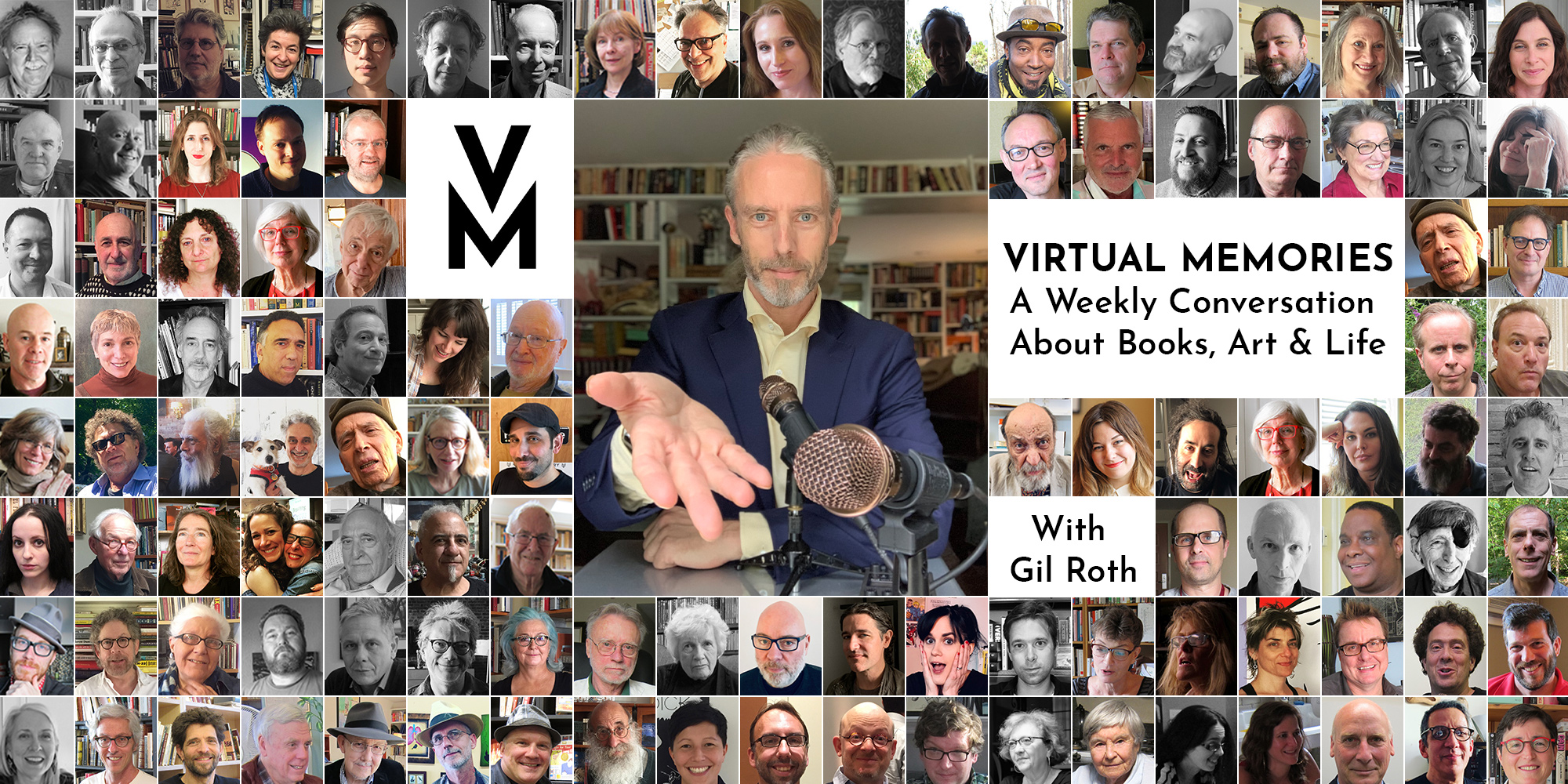
A podcast about books, art & life — not necessarily in that order
Yeahyeah: “Make with the links, Gil!” Fine. Just click “more”!
Continue reading “Unrequired Reading: Jan. 15, 2010”
Sorry this is late. After Sang’s death, I’ve been all over the place emotionally, and trying not to let grief cloud any long-term decisions about my writing priorities. So, uh, just click “more”!
Continue reading “Unrequired Reading: Jan. 8, 2010”

On Monday, my friend Sang was found dead in his apartment. He had suffered a heart attack at some point last weekend, at the age of 43. We were introduced in 1999; my friend Vince Czyz met him and Chuck Bivona at a writer’s group in Montclair, NJ. Sang became the unpaid graphic designer for our micropress, Voyant Publishing.
Less than an hour before I got the news about his death, in an e-mail from Vince, I was looking at the cover he designed for our 2000 release, a collection of letters by Samuel R. Delany
I’ve been failing to write about Sang since then. We hadn’t seen much of each other in recent years, and all I have left are these fragments. The thing is, our conversations were intelligent but low-key. We were casually insightful, and thus the flavor of our friendship lingers, even though I can’t write anything of great importance about him.
If you want to get a better idea than I can muster of who he was, then go check out his blog and make sure to spend some time reading Chuck’s. I lost a good pal, but Chuck lost his best friend.
Here are some of those fragments. I’m sorry that they feel like trivia notes, but somehow they add up to my experience of a man’s life:
 was terrible. The second one was perfection.
 , by Karen Armstrong, for her birthday back in 2001 (or so). I spoke to her for the first time in 7+ years to tell her that Sang had died. She told me her cat Charlie (b. 1994) is still alive. Sang would’ve been floored by that.
 last month, because I enjoyed it and because he made an off-hand comment about wanting to get published in The Paris Review. I’m glad I didn’t get him a subscription to the magazine.
 . I don’t know if he ever read anything I sent him. He was always so busy.
 and Little Doors
 . That photo’s somewhere in my house, but I can’t find it. I’m hoping Paul still has a copy. (UPDATE: Found! See below!)
 from Amazon set last week; it showed up yesterday.
I’m not sure why we drifted apart. I certainly had less hang-out time once I’d settled down with Amy (we met at the beginning of 2004), but even before that, we’d stopped getting together so often. I think the gaming company consumed a lot of his time, but maybe it was something else. Life has its mysteries, and death tends to leave them unrevealed.

From Readercon 2003: Sang flanked by me and Paul Di Filippo. Photo by Deb Newton.
Introduction | Music | Movies | Comics | Sports | Books
There are three major problems I have with writing about comics for this “favorites of the decade” post:
See, I love Chris Ware’s book, Jimmy Corrigan, The Smartest Kid on Earth,
Because it really was a hell of a decade for collections of pre-2000 work. There were massive volumes of the Hernandez Brothers’ great Love & Rockets comics, Winsor McCay’s Little Nemo Sunday comics


So I’ve tried to confine this list to comics that were mostly of this decade, but this would’ve been a much easier task at the end of the previous decade. Then I could have just recited the litany of usual suspects — Dan Clowes‘ Eightball, Pete Bagge’s Hate, Beto & Jaime Hernandez, Chester Brown’s Yummy Fur, Ware’s Acme Novelty Library, Seth’s Palookaville, R. Crumb’s Mystic Funnies and Self-Loathing Comics, Woodring, Panter, et al. — and seemed smart enough. Perhaps I’d have tossed in a somewhat obscure short story by David Mazzucchelli (Discovering America), to look even smarter!
But I’ve fallen off in my comics reading in recent years. It seems that the comics I most want to read are also the ones that take the most time to read. With my work and entertainment priorities, I really have to shut everything off to make time for good comics. I don’t think there’s a dearth of good new work; rather, there’s definitely a ton of new, likely worthy comics this decade that I simply haven’t read: Art Spiegelman’s In the Shadow of No Towers


It’s sad, because comics have been part of me since I was a little child; they’re my first language, and I wish I could keep up with their conversation more than I do with novels, music or film. I have dreams occasionally about wandering through unreal malls or shopping plazas, and visiting the comic shops. I don’t recall if I ever find Hicksville-esque Comics That Should Have Been on those dream-walks, but there have been enough good ones for me to offer up another list:
Wimbledon Green
New Yorker
cartooning style (which he employed very well, but had become too much of an identifier, in my opinion). The fragmented storytelling style presaged his next book . . .
George Sprott: 1894-1975
Ice Haven
The Death Ray (2004) – Daniel Clowes – Another standalone issue of Eightball (#23), this one sorta pays homage to 1970’s comics. It tells a “realistic” but utterly fractured superhero story, laden with Freudian weight and a deeply disturbed “hero.”
Don’t Go Where I Can’t Follow
Jaime Hernandez‘s body of work – I have no idea how to relate the ongoing magnificence of Jaime Hernandez’s comics. In this case, the arbitrary decade-mark is silly. He and his brother Beto have continually produced some of the finest comics in history for nearly three decades now. Jaime’s comics from 1998 to 2007 (or so), collected in Locas II
Safe Area Gorazde

Achewood (2001-present) – Chris Onstad – The only online comic I follow, and one of the most bizarre and funniest things I’ve ever read. Shortly after we adopted Rufus, we came home to discover that he’d stolen one of Amy’s bras from the hamper. Thanks to Achewood, we could simultaneously quote Lyle, who said, “I’m lickin’ this bra! Found it at the police station!”
I Killed Adolf Hitler
Kevin Huizenga’s body of work – A while ago, I asked my comics critic pal Tom who the good young comics talents are. I’d looked around at indy comics and had concluded that no one had stepped into the role once held by those usual suspects I mentioned above. Tom pointed me toward Kevin Huizenga and Sammy Harkham, and I have to say that they’re the two best young (under 40) cartoonists I’ve seen this decade. I’m putting Huizenga on the list because I’ve read more of his work, but I don’t have an individual favorite comic by him. Still, he’s good enough that I can recommend you pick up just about anything he’s published, esp. his Glenn Ganges comics.
Essex County Trilogy
All-Star Superman
Asterios Polyp
Louis Riel
Fred The Clown
The Book of Genesis
A Drifting Life
Nextwave, Agents of H.A.T.E.
Exit Wounds
Unstable Molecules
Little Nothings
Delphine – Richard Sala
Omega: The Unknown
Fin Fang 4 – Roger Langridge, Scott Gray
Let Us Be Perfectly Clear
The Muppet Show
The Perry Bible Fellowship – Nicholas Gourewitch
Promethea
Planetary – Warren Ellis, John Cassaday
Kramer’s Ergot #7
Epileptic
Introduction | Music | Movies | Comics | Sports | Books
Introduction | Music | Movies | Comics | Sports | Books
I imagine “future generations” will consider the decade to begin with the contested election of 2000 and end with “man, they messed up the country so badly, people were willing to vote a black guy president.” Maybe they’ll take 9/11 as the thematic starting point instead. Whatever. What I’m saying is, I think the decade’s outward/historical manifestation is The Bush Years, but I’m hard put to understand what my inner/hysterical manifestation of it is.
As the decade progressed, I found myself writing less about politics, finance/business and international relations, and more about my own life. There was no changeover moment; it must’ve occurred to me at some point that there are plenty of other blogs to turn to for commentary on those topics. I still care deeply about those fields, and spend a lot of time reading up on them. Maybe it was my time with Montaigne that taught me about the value of looking inside to get a perspective on the outside. As far as I know, no one else is writing about my love, my dogs, my travels, my friends, my photos, my work, etc., except for my wife, and she focuses much more on my eats. So I’m my niche and welcome to it.
(Also, there’s less chance I’ll offend someone with an, um, off-color joke like the one in the first sentence of this post.)
Still, with all the decade-mania going on, I thought it would be interesting if I wrote about movies, books, comics and music for a “decade-retrospective” post. Trying to assemble my own lists for each category — “favorites,” mind you, not “bests” — was more daunting than I expected. I keep a running list of the books in my life, but not those other art forms, so much of this has to be painted from memory.
(I considered adding TV as a category, but realized that the drop-off from The Wire to whatever came in second was too steep.)
Compiling lists — fun though it is — hasn’t helped me reach a deeper understanding about what this decade “meant,” but I’m fine with that. I’ve spent almost seven years writing here and maybe that’s the story in itself: digital distribution has transformed the way we experience/consume all forms of art and how we share our thoughts with others. I’m not going to wax rhapsodic or elegiac about Facebook, Twitter, Kindles or iTunes (okay, a little about iTunes), so much as writing about some artworks that were created or published in the past 10 years and why I like them.
Welcome to my Virtual Memories. On with the show!
Introduction | Music | Movies | Comics | Sports | Books
What I’m reading: As is my wont, I did plenty of reading while visiting my in-laws for the holidays. I read Hadji Murat from Pevear and Volokhonsky’s new translation of Tolstoy’s stories


 . I knew it was largely set at a college named Winesburg, and that this was a nod to Sherwood Anderson, but, um, I’ve never read Anderson’s book. So I started that, knowing nothing about it. Seriously. I wasn’t even sure when Anderson was writing, and looked that up this morning (it was published in 1919). As it turns out, Winesburg, Ohio is written in the form of interconnected short stories. Who knew? I’m enjoying the heck out of it, and will report back next week.
What I’m listening to: OK Computer


What I’m watching: A bunch of college bowl games. Not my thing, but when in Rome. Also, I watched Three Kings
What I’m drinking: Not much. I never really drink when I’m visiting the in-laws. Although we did have a nice Riesling that Amy’s pal Riece brought over.
What Rufus & Otis are up to: Living it up with their girlfriends, Ruby & Willow. My pal Jason texted to let me know that he & his wife got home one evening, and only two of the dogs were waiting for them in the living room. They panicked, wondering how two of the dogs had escaped (and why the other two stayed). Then they discovered that My Boy Rufus had gotten locked into their bedroom along with their dog Willow. Amy & I figured he pulled some variant of the “oh, we must be out of gas” trick, or invited her upstairs to look at his etchings. But since he has non-functioning genitalia, it was no harm, no foul. Anyway, they seemed to have a great time at our friends’ place.
Where I’m going: Nowhere! I’ll go to the office one day this week, but that’s about it! (oh, and our neighbors across the street invited us over for a New Year’s get-together with a bunch of other neighbors, so we’ll drop in on that)
What I’m happy about: See above! And, being home, where I have my familiar coffee, gin, bed and the ability to curse like a sailor. Which is to say, I like seeing my in-laws, but it sure puts me out of my element in a number of ways.
What I’m sad about: End of another year, blah blah blah.
What I’m worried about: Well, I wsa worried that there’d be all sorts of crazy new regulations on our flight back from New Orleans on Sunday but, outside of a pat-down after the metal detector, there wasn’t anything new.
What I’m pondering: What I’ll read and write (and record?) in the year ahead. Oh, and whether I should update to this blog template.
It’s been a tough couple of weeks for me, trying to get the year-end ish of my magazine together, but it’s almost all wrapped up now! Congratulate me! And enjoy this week’s dose of Unrequired Reading. Just click “more”!
Continue reading “Unrequired Reading: Dec. 18, 2009”
It’s been a busy, hectic work-week, so bleary-eyed links await you, dear readers! Just click “more”!
Continue reading “Unrequired Reading: Dec. 11, 2009”
What I’m reading: I finished Up in the Air
During a conversation we had on Sunday, Samuel R. Delany mentioned to me that the introduction to his essay collection Longer Views
What I’m listening to: Dave Rawlings Machine’s A Friend of a Friend
What I’m watching: Pootie Tang, which was far funnier than I expected. Still terrible, but pretty funny.
What I’m drinking: Desert Juniper & Q-Tonic
What Rufus & Otis are up to: Trying to fit together in the one-dog crate again. I had a Sunday appt. (cleaning a small section of Chip Delany’s apartment) and Amy had to work all weekend, so we had to delay Otis’ debut on the Sunday morning Wawayanda park greyhound hike for another week. Grr.
Where I’m going: Nowhere special.
What I’m happy about: Getting to see some old pals this weekend.
What I’m sad about: Missing the Brooklyn Comics and Graphics Festival this weekend, but my visa’s not up to date, so there’s no way I could’ve made it to Brooklyn.
What I’m worried about: Contracting hantavirus from trying to clean Delany’s apartment.
What I’m pondering: What book I’ll pick up next.
Geez! The year’s almost over! Have some Unrequired Reading, whydon’tcha? Just click “more”!
Continue reading “Unrequired Reading: Dec. 4, 2009”