Virtual Memories Show: The Guest List 2015
Podcast: Play in new window | Download
Subscribe: Spotify | TuneIn | RSS | More
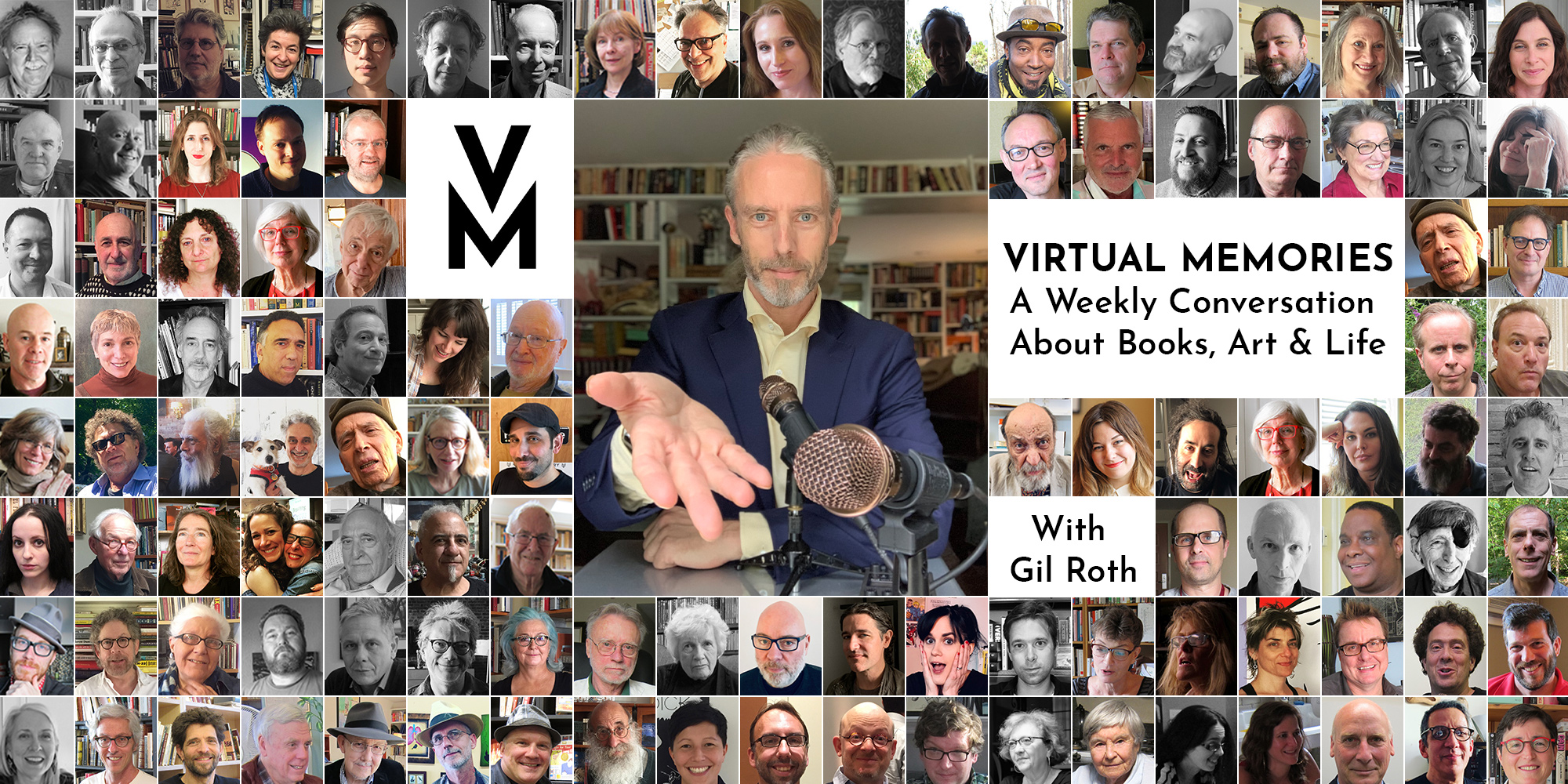
It’s time for our year-end Virtual Memories tradition: The Guest List! I reached out to 2015’s podcast guests and asked them about the favorite book(s) they read in the past year, as well as the books or authors they’re hoping to read in 2016! More than 30 responded with a dizzying array of books. (I participated, too!) So now that you’ve got your Hanukkah and/or Christmas gelt, the Virtual Memories Show offers up a huge list of books that you’re going to want to read! Get ready to update your wish lists!
This year’s Guest List episode features selections from nearly 3 dozen of our recent guests! So go give it a listen, and then visit our special Guest List page where you can find links to the books and the guests who responded.
(Also, check out the 2013 and 2014 editions of The Guest List for more great book ideas!)

Podcast: Play in new window | Download
Subscribe: Spotify | TuneIn | RSS | More
Follow The Virtual Memories Show on iTunes, Twitter, Facebook, Tumblr, and RSS!
About our Guests
The guests who participated in this year’s Guest List are Derf Backderf, Anthea Bell, John Clute, Michael Dirda, Matt Farber, Jonathan Galassi, Brad Gooch, Langdon Hammer, Liz Hand, Jennifer Hayden, Ron Hogan, Dylan Horrocks, David Jaher, Kathe Koja, Jonathan Kranz, Peter Kuper, Lorenzo Mattotti, JD McClatchy, Scott McCloud, Michael Meyer, Dan Perkins (a.k.a. Tom Tomorrow), Summer Pierre, Witold Rybczynski, Dmitry Samarov, Elizabeth Samet, Liesl Schillinger, Posy Simmonds, Levi Stahl, Rupert Thomson, Irvine Welsh, Warren Woodfin, Jim Woodring, Claudia Young, and me, Gil Roth! Check out their episodes at our archives!
Credits: This episode’s music is Nothing’s Gonna Bring Me Down by David Baerwald, used with permission from the artist. Most of the episode was recorded at Virtual Memories Manor on a Blue Yeti USB Microphone

 ) and her first two books (
 and
and  ), her house-on-fire list of books to save, her quarrel with Plato, and her adoration of Simeon’s Maigret novels. Bonus: I tell a long, awful and emotional story from last weekend (it starts around the 75:00 mark, so feel free to stop long before that).
 – Rick Atkinson
 – Rick Atkinson
 – Rick Atkinson
 – Michael Chabon
 – Charles Dickens
 – George Eliot
 – Ulysses S. Grant
 – Vassily Grossman
 – Vassily Grossman
 – Joseph Heller
 – Homer (tr. Fagles)
 – Homer (tr. Fagles)
 – Henry Marsh
 – David Mitchell
 – Montaigne
 – Plutarch
 – Shakespeare
 – Shakespeare
 – Tolstoy
 – Tolstoy
 – Tolstoy
 – Virgil (tr. Fagles)
 – Evelyn Waugh

 feeding into a
  digital recorder. I recorded the intro and outro on a
  . Processing was done in Audacity and Logic Pro. Formal photo of Prof. Samet by Bachrach; bookshelf photo of Prof. Samet by me.
 (Henry Holt).We talk about what it means to miss New Jersey, what makes The Shore different from any other seaside amusement region, what he learned while writing for the YA category, what he unlearned from his copywriting day-job, the value of

 and
and  ), the author who started him on his path, his balance between writing fiction and essays, how readers read and misread his work, his methods for fusing the personal and the critical, why students should read some of his essays before taking his classes, whether he considered going Hollywood, why and how he assembled
  anthology, and who his favorite New York Met is. (I was surprised by his answer to that last one.)
 ,
,  ,
,  ,
,  , and
, and  ,, as well as several novels and novellas, and three poetry collections, and has edited several anthologies, including
  . His essays, fiction, poetry, film and architectural criticism have appeared in The Best American Short Stories, The Best American Essays, several Pushcart Prize annuals, The Paris Review, Harper’s, Vogue, Esquire, Film Comment, Threepenny Review, Double Take, New York Times, Harvard Educational Review, Preservation, Cite, 7 Days, Metropolis, Conde Nast Traveler, and many other periodicals and anthologies. He is the director of the nonfiction graduate program at Columbia University, where he also teaches writing. His two most recent books are the personal essay collection
  . The intro and outro were recorded in my home office on a