Episode 136 – J.D. McClatchy

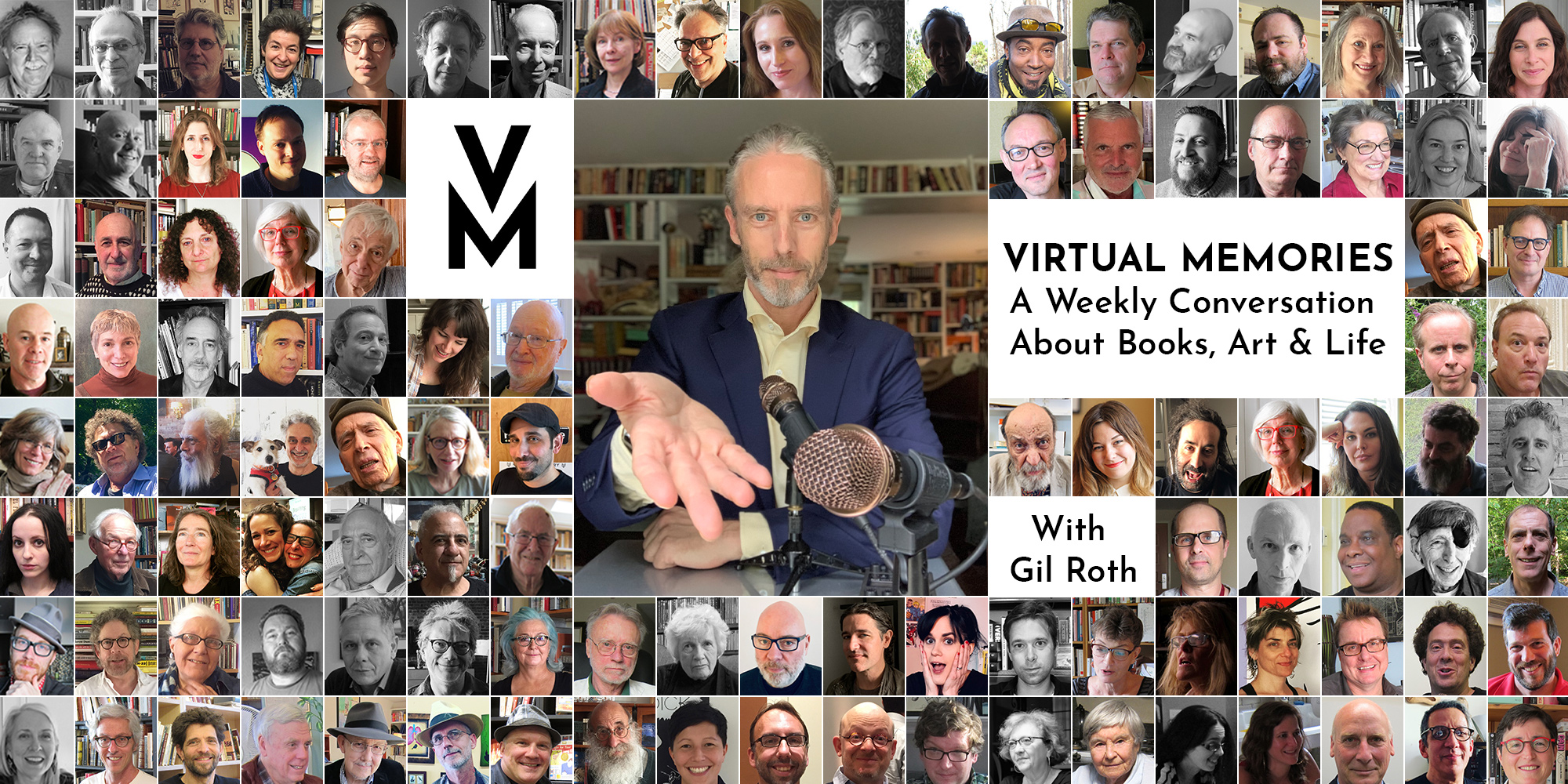
A podcast about books, art & life — not necessarily in that order

Virtual Memories Show #134:
Warren Woodfin – Angel, Lion, Ox, Eagle
Podcast: Play in new window | Download
Subscribe: Spotify | TuneIn | RSS | More
“From my youth, I knew I wanted to be a medievalist of some sort or another. Byzantium was always lurking off to the side, and I thought, ‘There has to be something there.'”
 Warren Woodfin joins the show to talk about guest curating Liturgical Textiles of the Post-Byzantine World installation at the Metropolitan Museum of Art (running through Nov. 1 2015). We talk about how he became a medieval art historian, the great tragedy of his high school years (it involves a Byzantine fresco at the Menil Collection artwork in Houston), what it’s like working on a Ukrainian burial mound and dealing with Soviet methods of archeological excavation, the secret fear of every Ph.D. candidate, and more! Give it a listen!
“It was the beauty of Byzantine art that got me first, and then wanting to understand where this beauty came from.”
We also talk about why art history gets a bum rap from the STEM proponents, the problem with centuries-old textile samples turning terminally brown, why Queens is the most Hellenic of the five boroughs, how new technologies have affected his work, the schisms that exist in the field, how he used to lay out “improved” versions of medieval monuments as a kid, and what the benefits of an art history education really are.
“I’m afraid that we’re embracing the view that those who can afford to pay for a quality education can major in liberal arts, while those whose educations are supported by the public should be limited to studying things we deem to be for the good of society.”
Podcast: Play in new window | Download
Subscribe: Spotify | TuneIn | RSS | More
We mention a few books in this episode. Here’s they are:
 – Maureen C. Miller
 – Donna Tartt
 – Timothy Snyder
Enjoy the conversation! Then check out the archives for more great episodes! You might like:
Follow The Virtual Memories Show on iTunes, Twitter, Facebook, Tumblr, and RSS!
About our Guest
Dr. Warren Woodfin‘s research focuses on the art and archaeology of Byzantium and its cultural sphere in the 11th through 15th centuries. Since 2006, he has been collaborating with a research team of U.S.- and Ukraine-based scholars to study a medieval burial complex in the Black Sea steppe. The site, called the Chungul Kurgan, yielded a trove of medieval textiles, precious metalwork, and other artifacts interred with a nomadic leader of the thirteenth century. His recent article on the textiles from the burial (co-authored with Renata Holod and Yuriy Rassamakin) appeared in Ars Orientalis 38 (2010); a further article on a silver cup from the burial will appear in The Art Bulletin in 2016.
Warren has also published articles in the journals Gesta and Dumbarton Oaks Papers, and has contributed essays to various edited volumes. He is also the co-editor (with Mateusz Kapustka) of Clothing the Sacred: Medieval Textiles as Fabric, Form and Metaphor

Prior to joining the faculty at Queens College as Kallinikeion Assistant Professor of Byzantine Studies, Warren held teaching and research posts at Duke, Princeton, the University of Pennsylvania, the Metropolitan Museum, and, most recently, a European Research Council-sponsored fellowship at the University of Zurich. In the spring semester of 2016, he will be a resident Fellow at the Israel Institute for Advanced Studies in Jerusalem.
Credits: This episode’s music is Nothing’s Gonna Bring Me Down by David Baerwald, which seems to have become our unofficial theme song. The conversation was recorded at Prof. Woodfin’s apartment on a pair of Blue enCORE 200 microphones


Virtual Memories Show #132:
Christopher Bollen – Rootless People
Podcast: Play in new window | Download
Subscribe: Spotify | TuneIn | RSS | More
“I wanted to be a writer since I knew that I couldn’t be a detective.”
 We close out the summer of 2015 with a great summer novel, Orient

“Remember how you could totally judge a stranger by what they were reading? Now we’ve totally lost that cue, thanks to e-books.”
We also talk about Christopher’s impending 40th birthday, his reverse mid-life crisis, “kids today,” the people he now realizes he should’ve been nervous about interviewing when he was young, the allure of detective stories, why childhood bookish shut-ins have great skin when they get older, how I once nearly blew up a shopping mall back in my high school years, and whether the actual inhabitants of Orient were peeved about his new novel.
“You don’t interview Fran Lebowitz; it’s more like you’re her audience.”
Podcast: Play in new window | Download
Subscribe: Spotify | TuneIn | RSS | More

We talk about some books and movies in this episode. Here’s a list of ’em (Note: if I ever go to a Patreon crowdfunding model for the show, this is the first thing that goes subscriber-only):
– Christopher Bollen – Christopher Bollen – Rachel Kushner
 – Ron Rosenbaum
 – F. Scott Fitzgerald
 – F. Scott Fitzgerald
 – Nelson DeMille
 – Bret Easton Ellls
 – Michael Dirda
 – Alex Garland
 – DH Lawrence
Enjoy the conversation! Then check out the archives for more great episodes! You might like:
Follow The Virtual Memories Show on iTunes, Twitter, Facebook, Tumblr, and RSS!
About our Guest
Christopher Bollen is a writer who lives in New York City. He regularly writes about art, literature, and culture. His first novel, Lightning People
Credits: This episode’s music is Nothing’s Gonna Bring Me Down by David Baerwald, which seems to have become our unofficial theme song (I’ll ask DB if it’s okay to make it official). The conversation was recorded at Mr. Bollen’s apartment on a pair of Blue enCORE 200 microphones
Virtual Memories Show #130:
Elizabeth Samet –
The Cult of Experience and the Tyranny of Relevance
Podcast: Play in new window | Download
Subscribe: Spotify | TuneIn | RSS | More
“How do you learn things? How do you acquire the patience to admit when you don’t know things? I think those are really important things for an Army officer to know.”
 Elizabeth D. Samet has been a professor of English at West Point since 1997. We talk about the tension between education and training at the military academy, the importance of books to soldiers and officers serving overseas, learning West Point’s unique argot, preparing her students to be unprepared, trying (and failing) to convince Robert Fagles that Hector is the moral center of the Iliad, why she doesn’t teach Henry V to plebes, how not to get caught up in the tyranny of relevance, why she balked at learning the fine art of parachuting, and more! Give it a listen!
“The question I’m endlessly fascinated with is, what do we call war and what do we call peace and can we draw these nice distinctions? It seems to me right now that we can’t.”
NOTE: The opinions Elizabeth Samet expresses in this interview are her own and do not necessarily reflect those of West Point, the Department of the Army, or the Department of Defense.
We also talk about teaching students who are both future Army officers and 18-year-old kids, how West Point and the student body changed after 9/11, her new anthology (Leadership


Podcast: Play in new window | Download
Subscribe: Spotify | TuneIn | RSS | More
“I have this idea about Plato: no one loves Plato who does not already think himself a guardian.”
We talk about a lot of of books in this episode. Here’s a list of ’em (Note: if I ever go to a Patreon crowdfunding model for the show, this is the first thing that goes subscriber-only):
– Elizabeth Samet – Elizabeth Samet – Elizabeth Samet – Rick Atkinson
 – Rick Atkinson
 – Rick Atkinson
 – Michael Chabon
 – Charles Dickens
 – George Eliot
 – Ulysses S. Grant
 – Vassily Grossman
 – Vassily Grossman
 – Joseph Heller
 – Homer (tr. Fagles)
 – Homer (tr. Fagles)
 – Henry Marsh
 – David Mitchell
 – Montaigne
 – Plutarch
 – Shakespeare
 – Shakespeare
 – Tolstoy
 – Tolstoy
 – Tolstoy
 – Virgil (tr. Fagles)
 – Evelyn Waugh
Enjoy the conversation! Then check out the archives for more great episodes! You might like:
Follow The Virtual Memories Show on iTunes, Twitter, Facebook, Tumblr, and RSS!
About our Guest
 Elizabeth D. Samet is the author of No Man’s Land: Preparing for War and Peace in Post-9/11 America
Credits: This episode’s music is On, Brave Old Army Team by West Point Marching Band. The conversation was recorded at Prof. Samet’s apartment on a pair of Blue enCORE 200 microphones
Virtual Memories Show #129:
Amanda Filipacchi – Donkey Skin
Podcast: Play in new window | Download
Subscribe: Spotify | TuneIn | RSS | More
“I love the notion of great beauty hidden in ugliness. Or vice versa.”
 Amanda Filipacchi joins this week’s show to talk about her latest novel, The Unfortunate Importance of Beauty: A Novel
“My big life obsession is my lack of productivity and my constant struggle to be more productive. . . . In theory, I have a routine, but I don’t find myself sticking to it.”
Also, I make a pretty amazing bookstore discovery in the airport in Milwaukee, and give (as expected) heady praise to Clive James’ new essay collection, Latest Readings
Podcast: Play in new window | Download
Subscribe: Spotify | TuneIn | RSS | More
We talk about a bunch of books in this episode. Here’s a list of ’em (Note: if I ever go to a Patreon crowdfunding model for the show, this is the first thing that goes subscriber-only):
– Amanda Filipacchi – Amanda Filipacchi
 – Kazuo Ishiguro
 – Siri Hustvedt
 – Marcel Proust
 – Primo Levi
 – Edith Wharton
 – Charlotte Bronte
 – Dostoevsky
 – Oscar Wilde
 – F. Scott Fitzgerald
 – Shirley Jackson
 – Jane Austen
 – Haruki Murakami
 – Walter Kirn
 – Walter Kirn
 – Lionel Shriver
 – Lionel Shriver
 – A.M. Homes
 – Roxana Robinson
Enjoy the conversation! Then check out the archives for more great episodes! You might like:
Follow The Virtual Memories Show on iTunes, Twitter, Facebook, Tumblr, and RSS!
About our Guest
Amanda Filipacchi is the author of four novels: Nude Men

Born in Paris, France, Amanda Filipacchi was educated in both France and the US, and has lived in New York since the age of seventeen. She earned a BA from Hamilton College and an MFA in creative writing from Columbia University. She lives in Manhattan with Richard Hine, also a novelist.
Credits: This episode’s music is Head in a Box by Lori Carson. The conversation was recorded at an undisclosed location on a pair of Blue enCORE 200 microphones
Virtual Memories Show #128:
Rhonda K. Garelick – Impecunious Nobles
Podcast: Play in new window | Download
Subscribe: Spotify | TuneIn | RSS | More
“Chanel was trying to gift herself to women, and give them something that would lend them an allure that would be useful.”
 Rhonda K. Garelick, author of Mademoiselle: Coco Chanel and the Pulse of History
“I remain certain that there is no one else who has had this sort of aesthetic influence.”
We also talk about Chanel’s pleasure in hiring fallen royalty to work in her boutiques and factories, the need for myth-making in fashion, the challenges of getting Chanel’s associates to talk to her, the psychological similarities of fashion and fascism, and the decision to structure Mademoiselle around Chanel’s relationships. Also, I make the major mistake of letting Rhonda ask me a question, which sends the conversation utterly off the rails.
Podcast: Play in new window | Download
Subscribe: Spotify | TuneIn | RSS | More
We talk about a couple of books in this episode. Here’s a list of ’em (Note: if I ever go to a Patreon crowdfunding model for the show, this is the first thing that goes subscriber-only):
– Rhonda K. Garelick – Walter Isaacson
 – Ta-Nehisi Coates
 – Scott Herring
 – Jonathan Strauss
Enjoy the conversation! Then check out the archives for more great episodes! You might like:
Follow The Virtual Memories Show on iTunes, Twitter, Facebook, Tumblr, and RSS!
About our Guest
 Rhonda K. Garelick writes on fashion, design, performance, art, literature and cultural politics. Her books include Rising Star: Dandyism, Gender, and Performance in the Fin de Siècle


She is a Guggenheim fellow and has also received awards from the NEA, the NEH, the Getty Research Institute, the Dedalus Foundation, the American Association of University Women, the Whiting Foundation, and the American Council of Learned Societies. Prof. Garelick received her B.A. and Ph.D. in comparative literature and French from Yale University. She splits her time between Lincoln, Nebraska and her hometown of New York City.
At the University of Nebraska-Lincoln, she is Professor of Fine and Performing Arts and English, as well as the founder and director of the Interdisciplinary Arts Symposium. For the academic year 2015-2016, Rhonda will be the Stanley Kelly, Jr. Visiting Professor of Distinguished Teaching in Comparative Literature at Princeton University. Garelick has also had a long career as an international business consultant, specializing in the fields of fashion, media, and journalism.
Credits: This episode’s music is Cri de Coeur by Edith Piaf. The conversation was recorded at an undisclosed location on a pair of Blue enCORE 200 microphones
Virtual Memories Show #126:
Liz Hand – People From Away
Podcast: Play in new window | Download
Subscribe: Spotify | TuneIn | RSS | More
“When I was young, I always wanted to be a writer, but I thought that one could write science fiction and then also write ‘serious’ literature . . . that I could be Samuel R. Delany, but I could also be F. Scott Fitzgerald. That I could be Dorothy Parker, and I could be Angela Carter. But I found that you tend to get pigeonholed.”
 Award-winning author Elizabeth Hand joins the Virtual Memories Show to talk about her new novel, Wylding Hall
“In the ’70s, I really wanted to be a photographer. I wanted to be a lot of things that I wasn’t. I wanted to be Lester Bangs. I wanted to be Patti Smith. I wanted to be all these things, but I had no talent for any of them. I was in the position of being the fan, the participant observer.”
The conversation also covers the changing models and markets of genre writing, the importance of fan interaction, why she loves coming to Readercon (where we recorded this episode), why it ultimately paid off to opt in favor of experience over college classes, and why her protagonist Cass Neary is like her “if my brake lines had been cut when I was 20 years old and I’d never been able to come back.”
Podcast: Play in new window | Download
Subscribe: Spotify | TuneIn | RSS | More
We talk about a lot of books in this episode. Here’s a list of ’em:
 – Jennifer Marie Brissett
 – Julian Cope
 – Pamela Des Barres
 – Daryl Gregory – Liz Hand
 – Liz Hand
 – Liz Hand
 – Liz Hand
 – Liz Hand
 – Thomas Harris
 – Greill Marcus
 – Sally Mann
 – Legs McNeil
 – Kem Nunn
 – Jean Stein, George Plimpton
 – John Steinbeck
 – JRR Tolkien
 – Laura van den Berg
 – Rob Young
Enjoy the conversation! Then check out the archives for more great episodes! You might like:
Follow The Virtual Memories Show on iTunes, Twitter, Facebook, Tumblr, and RSS!
About our Guest
 Elizabeth Hand is the bestselling author of 13 genre-spanning novels and four collections of short fiction. Her work has received the World Fantasy Award (four times), Nebula Award (twice), Shirley Jackson Award (twice), International Horror Guild Award (three times), the Mythopoeic Award, and the James Tiptree, Jr. Award, among others, and several of her books have been New York Times and Washington Post Notable Books. Her recent, critically acclaimed novels featuring Cass Neary, “one of literature’s great noir anti-heroes” (Katherine Dunn) — Generation Loss
Credits: This episode’s music is Three Hours by Nick Drake. The conversation was recorded at the Boston Marriott Burlington on a pair of Blue enCORE 200 microphones
Virtual Memories Show #125:
Dan Perkins (Tom Tomorrow) – Signal Boost
Podcast: Play in new window | Download
Subscribe: Spotify | TuneIn | RSS | More
“This Kickstarter, this is me, having seen my incredibly negative narrative and hopeless sense of the future just blasted out of the water. I feel like this week has changed my life.”
 Dan Perkins (better known as Tom Tomorrow) is celebrating 25 years of his weekly political cartoon, This Modern World, with a kick-ass Kickstarter project to collect all of his strips in a two-volume, slipcased edition! Shockingly (to him, but not the rest of us), his fans hit his funding target in less than 24 hours, and more than doubled it by press time. (It’s open through August 4, 2015, so there’s time to make a contribution!) I caught up with a flabbergasted Perkins to talk about the resounding level of fan support for the project, the detective/archeologist work of compiling 25 years’ worth of his strips, the trepidation he had about looking at his early work, how This Modern World changed after the advent of the internet, the ways in which his cartoons work as a coded diary of his life, how the validation of this Kickstarter experience has changed his view of the future, and more! Give it a listen! (If you want to skip my rambling intro, you should jump to the 8:45 mark.)
“Charles Schulz said if he were a better writer, he’d be a novelist, and if he were a better artist, he’d be a painter, but he’s kinda good at both, so he’s a cartoonist. I’ve always held onto that.”
We also talk about his cartooning influences, his early attempt at doing a mainstream daily comic strip, his favorite contemporary political cartoonists (and his apologies for any influence he had on them), what he wants to do next, how he fights against burnout on a weekly basis, why having to make a comic about a terrible event is like sewer-work, why a Trump presidential candidacy is no fun for his comics, the way This Modern World served as a pirate radio signal, and why Pearl Jam lent him a hand on his Kickstarter (which, as I mentioned, is open through August 4, if you want to take part)!
“The internet has given mankind low-grade telepathy. We are now in this low-grade hive-mind where we have access to the darkest and most disturbing thoughts of many of our fellow humans. I think it used to be easier to maintain illusions about humanity.”
Podcast: Play in new window | Download
Subscribe: Spotify | TuneIn | RSS | More
Enjoy the conversation! Then check out the archives for more great episodes! You might like:
Follow The Virtual Memories Show on iTunes, Twitter, Facebook, Tumblr, and RSS!
About our Guest
 Tom Tomorrow’s (Dan Perkins’) weekly cartoon, This Modern World, appears online at The Nation, and Daily Kos, and in approximately 80 papers across the country. His cartoons have also been featured in The New York Times, The New Yorker, The Nation, U.S. News & World Report, Esquire, The Economist, and numerous other publications.
He was the 2013 recipient of the Herblock Prize, and was awarded the first place Robert F. Kennedy Journalism Award for Cartooning in 1998 and again in 2003. He was also a finalist for the Pulitze Prize in 2015. He has also been awarded the first place Media Alliance Meritorious Achievement Award for Excellence in Journalism, the first place Society of Professional Journalists’ James Madison Freedom of Information Award, the James Aronson Award for Social Justice Journalism, and the Association for Education in Journalism Professional Freedom and Responsibility Award. He is the author of 10 cartoon anthologies and one children’s book, and in 2009 collaborated with the band Pearl Jam to create the artwork for their Backspacer album.
Credits: This episode’s music is Just Breathe by Pearl Jam. The conversation was recorded at Mr. Perkins’ home on a pair of Blue enCORE 200 microphones


Virtual Memories Show:
Lorenzo Mattotti – Laboratory of Imagination
Podcast: Play in new window | Download
Subscribe: Spotify | TuneIn | RSS | More
“In my work, I always try to arrive at a new level of capacity. To do that, you must be ready spiritually. When I arrive at that level, there is a fear. You have to break your knowledge to arrive at that level.”

Lorenzo Mattotti is one of my favorite artists (and cartoonists and illustrators), so it was a thrill to sit down to record with him during Toronto Comic Arts Festival! We talked about his newest book, Hansel and Gretel
“I’m always curious to look back at my early work, because sometimes I’m so depressed and so lost that I need to go back and say, ‘Look at this! You were able to do that! Go on!’ And sometimes I look at my work and think it was another person who did that.”
 We talk about the interaction between his comics, paintings, and commercial illustration work, the thread of transformation myths in his comics, how he’s learned to improvise after mastering a controlled style, why he prefers working with writers over writing stories by himself, what fashion taught him about technique and glamour, his “poor parents'” reaction to his comics, his need to find new artistic challenges, how he does those amazing New Yorker covers, who he’s reading, and more!
“[Pinocchio] became a laboratory of imagination. I see how I can return to it year after year and make new interpretations of it.”
Podcast: Play in new window | Download
Subscribe: Spotify | TuneIn | RSS | More
Enjoy the conversation! Then check out the archives for more great episodes! You might like:
Follow The Virtual Memories Show on iTunes, Twitter, Facebook, Tumblr, and RSS!
About our Guest

Lorenzo Mattotti is a highly sought-after illustrator (with frequent appearances in and on The New Yorker) and acclaimed graphic novelist. His books include Fires


Credits: This episode’s music is Optical Sound by Human Expression. The conversation was recorded at the Toronto Marriott Bloor Yorkville on a pair of Blue enCORE 200 microphones
