Episode 114 – Roller Coaster

A podcast about books, art & life — not necessarily in that order

Virtual Memories Show:
Michael Meyer – Palimpsest
Podcast: Play in new window | Download
Subscribe: Spotify | TuneIn | RSS | More
“When you look at the history of northeast China, it’s all successive regimes that have tried to import their version of civilization into this area, and they’ve all failed.”
 When he was a kid in Minnesota, Michael Meyer papered his walls with National Geographic maps. A Peace Corps stint in 1995 began his 20-year odyssey in China, yielding two books, true love, and a unique perspective on the world’s most populous country. We talk about his latest book, In Manchuria: A Village Called Wasteland and the Transformation of Rural China
“China isn’t a billion-plus people marching in lockstep. Nor is it some mastermind sitting in some opulent room in Beijing and declaring, ‘Now we will do this!'”
We also get into the time the Beijing police took Michael in so he could teach them American curse-words, why it’s safe to be a writer but not to be a journalist, China’s transition from individual farms to an agribusiness model, why the time to write a book is when the book you want to read doesn’t exist, the differences in storytelling modes between Americans and Chinese, his debts to Bruce Chatwin, Pearl S. Buck, and Ian Frazier, and how tens of thousands of Jews wound up in the town of Harbin.
Podcast: Play in new window | Download
Subscribe: Spotify | TuneIn | RSS | More
Enjoy the conversation! Then check out the archives for more great episodes! You might like:
Follow The Virtual Memories Show on iTunes, Twitter, Facebook, Tumblr, and RSS!
About our Guest
Michael Meyer is the author of the acclaimed nonfiction book The Last Days of Old Beijing: Life in the Vanishing Backstreets of a City Transformed
Credits: This episode’s music is Life in a Northern Town by Dream Academy. The conversation was recorded at the Bloomsbury offices on a pair of Blue enCORE 200 microphones


Virtual Memories Show:
Witold Rybczynski –
Thru’ These Architect’s Eyes
Podcast: Play in new window | Download
Subscribe: Spotify | TuneIn | RSS | More
“An architect doesn’t build something just because he wants to build it. But as a writer, you can say, ‘I have an idea for a book.'”
 Witold Rybczynski joins the show to talk about architecture! The renowned writer, scholar, and former architect discusses his newest book, How Architecture Works: A Humanist’s Toolkit
“There was an enormous excitement about concrete in the early 20th century.”
We also talk about the joys of architecture school, why he got out of the practice, the farthest he’s ever traveled to see a building, how he got started as a writer, his favorite period for American architecture, and how architectural criticism differs from that of other forms (and why it’s a pointless exercise)!
“[The impact of digital technology on teaching and practicing architecture] is like reinventing the English language. You know what a disaster Esperanto was.”

Podcast: Play in new window | Download
Subscribe: Spotify | TuneIn | RSS | More
Enjoy the conversation! Then check out the archives for more great episodes! You might like:
Follow The Virtual Memories Show on iTunes, Twitter, Facebook, Tumblr, and RSS!
About our Guest
Witold Rybczynski was born in Edinburgh, of Polish parentage, raised in London, and attended Jesuit schools in England and Canada. He studied architecture at McGill University in Montreal, where he also taught for twenty years. He is Emeritus Professor of Urbanism at the University of Pennsylvania.
Mr. Rybczynski has designed and built houses as a registered architect, as well as doing practical experiments in low-cost housing, which took him to Mexico, Nigeria, India, the Philippines, and China. He has written for the Atlantic, New Yorker, New York Review of Books, and the New York Times, and has been architecture critic for Saturday Night, Wigwag, and Slate. From 2004 to 2012 he served on the U. S. Commission of Fine Arts. His most recent book is How Architecture Works: A Humanist’s Toolkit


He lives with his wife Shirley Hallam in an old stone house, the Icehouse, in Chestnut Hill in Philadelphia. He says, “I don’t think of myself as someone with hobbies — I garden under pressure — but the artifacts I’ve owned for longest are well-used hand-tools. I don’t collect anything, but I have a lot of books.” He is on Twitter at @witoldr.
Credits: This episode’s music is I’m Goin’ Home by The Rolling Stones (because Witold wrote the book, Home
. Processing was done in Audacity and Logic Pro. Photo of Mr. Rybczynski by me.
Virtual Memories Show:
Yasmina Reza – Silence in Translation
Podcast: Play in new window | Download
Subscribe: Spotify | TuneIn | RSS | More
“When you write a novel with a classical structure, you’re writing horizontally. [In Happy Are The Happy, I can] speak as a character, and the character is also somewhere in the spirit of another. It allows you to see the characters in many ways that naturalism would not allow.”
 Playwright and author Yasmina Reza joins the show to talk about her new book, Happy are the Happy

“A play is good if it can be seen in different cultures, in different languages, different actors. That’s the strength of a play. Just to be played in Paris would have been for me a kind of failure.”
Podcast: Play in new window | Download
Subscribe: Spotify | TuneIn | RSS | More
Enjoy the conversation! Then check out the archives for more great episodes! You might like:
Follow The Virtual Memories Show on iTunes, Twitter, Facebook, Tumblr, and RSS!
About our Guest
Yasmina Reza is a playwright and novelist whose works have been translated into more than 30 languages and include Art and God of Carnage, both winners of the Tony Award for Best Play. The film adaptation of the latter, Carnage, was directed by Roman Polanski in 2011. She has written six books, including Dawn Dusk or Night: A Year with Nicolas Sarkozy
Credits: This episode’s music is The Paris Match by Style Council. The conversation was recorded on a pair of Blue enCORE 200 microphones
Virtual Memories Show:
Claudia Young – The Sprinter
Podcast: Play in new window | Download
Subscribe: Spotify | TuneIn | RSS | More
“Being in a wheelchair didn’t change me; it just made things harder to do.”

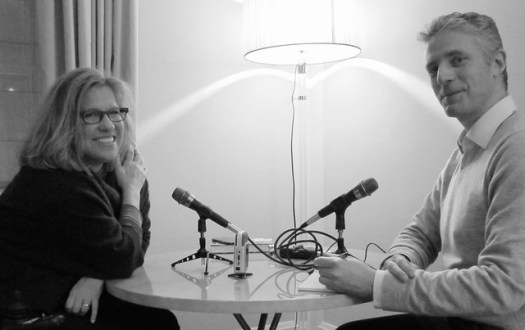
From the Flora-Bama to Vietnam, Claudia Young has sprinted through life. We got together to talk about running songwriting workshops in Nashville, redesigning the menu for the hippest bar in Cleveland, living in the Chelsea Hotel as a teen, and being confined to a wheelchair for the past 35 years. We also talk about food-blogging, southeast Asia’s pull on her, the place she regrets she’ll never visit, what she’s reading, and getting the sear on a scallop! It’s a fascinating conversation, so give it a listen!
Podcast: Play in new window | Download
Subscribe: Spotify | TuneIn | RSS | More
Enjoy the conversation! Then check out the archives for more great episodes! You might like:
Follow The Virtual Memories Show on iTunes, Twitter, Facebook, Tumblr, and RSS!
About our Guest
Claudia Young used to blog at CookEatFret. She should probably get back to that.
Credits: This episode’s music is The Wheel by Roseann Cash. The conversation was recorded on a pair of Blue enCORE 200 microphones
Virtual Memories Show: Nina Bunjevac –
Time’s Bomb
Podcast: Play in new window | Download
Subscribe: Spotify | TuneIn | RSS | More
“Fatherland is really about who my father was, getting to understand him, and also an attempt to explain how politics can tear a family apart, just like they tore apart the people of Yugoslavia in the 1990s.”

 Nina Bunjevac‘s new book, Fatherland

Podcast: Play in new window | Download
Subscribe: Spotify | TuneIn | RSS | More
“When I got to Canada when I was 16, I saw an issue of Raw, and that pretty much did it.”
Enjoy the conversation! Then check out the archives for more great episodes! Related conversations:
Follow The Virtual Memories Show on iTunes, Twitter, Facebook, Tumblr, and RSS!
About our Guest
 Nina Bunjevac started her art training in Yugoslavia, at the Djordje Krstic School for Applied Arts; in 1990 she moved to Toronto, Canada, where she continued her studies in art at the Art Centre of Central Technical School; in 1997 she graduated from OCAD in the Drawing and Painting department. Formerly a painter, a sculptor and an art teacher, Nina found her calling in sequential arts, a form that seemed to naturally evolve out of the narrative component in her sculpture installation work. Pen and ink became her medium of choice.
Nina’s comics have appeared in a number of local and international publications: Komikaze (Croatia), Black (Italy), GIUDA (Italy), Stripburger (Slovenia), Zone 5300 (Netherlands), Stripolis (Serbia), ArtReview (UK), Asiatroma/Le Dernier Cri (France), Broken Pencil, Exile, Taddle Creek (Canada) and Mineshaft (USA). Her debut collection of comics, Heartless
Fatherland: A Family History
Photo of Nina Bunjevac by David Hawe.
Credits: This episode’s music is Bomba by King Africa (I make no apologies). The conversation was recorded at the Marriott Bloor in Toronto on a Zoom H2n

Virtual Memories: Linn Ullmann pt. 1 – Lady with a Dog
Podcast: Play in new window | Download
Subscribe: Spotify | TuneIn | RSS | More
“You can hide writer’s block, but you cannot hide that you have no control over your dog.”
I thought Linn Ullmann and I were going to sit down and record a little conversation about her new novel, The Cold Song (Other Press)
“I wanted to write a love story not about the beginning of love or the end of love, but the middle of love, where it’s broken, and where the harmless little secrets turn out not to be as harmless as you thought.”
Podcast: Play in new window | Download
Subscribe: Spotify | TuneIn | RSS | More
Enjoy the conversation! Then check out the archives for more great episodes! Related conversations:
Follow The Virtual Memories Show on iTunes, Twitter, Facebook, Tumblr, and RSS!
About our Guest
Linn Ullmann is a literary critic and the author of five novels: Before You Sleep


Credits: This episode’s music is Sweetheart Like You by Bob Dylan. The conversation was recorded at the Other Press offices on a pair of Blue enCORE 200 microphones

Virtual Memories – season 4 episode 10 – The Stars Have Anemia
Podcast: Play in new window | Download
Subscribe: Spotify | TuneIn | RSS | More
“There’s a sort of romance in riding a bicycle across the country. It’s something that some people would fantasize about, and when they saw me ride into their town, it brought them back to their own dreams, their own wishes about what they wanted to fill their life with.”
Maya Stein is a poet, a teacher, a photographer, and more. We sat down in her restored trailer, M.A.U.D.E. (Mobile Art Unit Designed for Everyone), to talk about her life as an artist, how she built an audience for her work over the years with her 10-Line Tuesdays, how she got the idea to ride a bicycle (towing a typewriter, folding table and folding chair) from Massachusetts to Wisconsin, and how she got that Type Rider journey funded on Kickstarter.
“I think about ‘making a living’ as ‘making a life’. I don’t think about money being the driving force behind the decisions I make as a writer or artist.”
We also talk about writing prompts, her new initiative to build Little Free Libraries via Type Rider II, and her epiphany in Elkhart, Indiana. And you get to hear my theory on how the internet makes us all normal (except for the crazy people)! Give it a listen!

Podcast: Play in new window | Download
Subscribe: Spotify | TuneIn | RSS | More
Enjoy the conversation! Then check out the archives for more great episodes! Related conversations:
Follow The Virtual Memories Show on iTunes, Twitter, Facebook, Tumblr, and RSS!
About our Guest
Maya Stein is a Ninja poet, writing guide, and creative adventuress. Among her latest escapades are a 1,200-mile bicycle journey with a typewriter, a cross-country poetry trip, a French crepe stand at a Massachusetts farmers market, a relocation from San Francisco to suburban New Jersey and most recently, a collaboration — Food for the Soul Train — turning a vintage trailer into a mobile creative workshop space. (She also ran a catering business for six years and specialized in hors d’oeuvres and the finer points of napkin folding.) Her favorite body part is her left hand, as it has gifted her with the ability to sink a nearly invincible hook shot, peel a whole apple without a break, and transcribe the poems living in her heart. You can learn more about Maya’s adventures at www.mayastein.com.
Credits: This episode’s music is Typewriter (Tip Tip Tip) by Kisore Kumar & Asha Bhosle. The conversation was recorded at M.A.U.D.E on a pair of Blue enCORE 200 microphones

Virtual Memories – season 4 episode 2 – A Place To Rest
Podcast: Play in new window | Download
Subscribe: Spotify | TuneIn | RSS | More
“We reach for stories to be able to take risks.”
Emily Raboteau, author of Searching for Zion: The Quest for Home in the African Diaspora
“As my husband told me, ‘You can’t valorize the oppressed just because they were oppressed. It doesn’t make them saintly; more often than not, it makes them want to step on someone else to elevate themselves.'”
We also talk about churchgoing in New York City, what it’s like to travel to Antarctica, why the story of Exodus is so pivotal in the black American experience, why Jewish book reviewers thought she was pulling a bait-and-switch, why she chose to explore her black roots instead of her white ones for this book, what motherhood means, and what it was like to give a talk about faith on behalf of Bobby McFerrin.
Podcast: Play in new window | Download
Subscribe: Spotify | TuneIn | RSS | More
Enjoy the conversation! Then check out the archives for more great episodes! Related conversations:
Follow The Virtual Memories Show on iTunes, Twitter, Facebook, Tumblr, and RSS!
About our Guest
Emily Raboteau is the author of a novel, The Professor’s Daughter
Credits: This episode’s music is Promised Land by Johnnie Allan. The conversation was recorded at the home of a friend of Emily’s on a pair of Blue enCORE 200 microphones

