It’s 2018! That means it’s time for my giganto chronological writeup of all the books I finished in 2017! (Not including comics/graphic novels. Oh, and (re) means it’s a reread.)

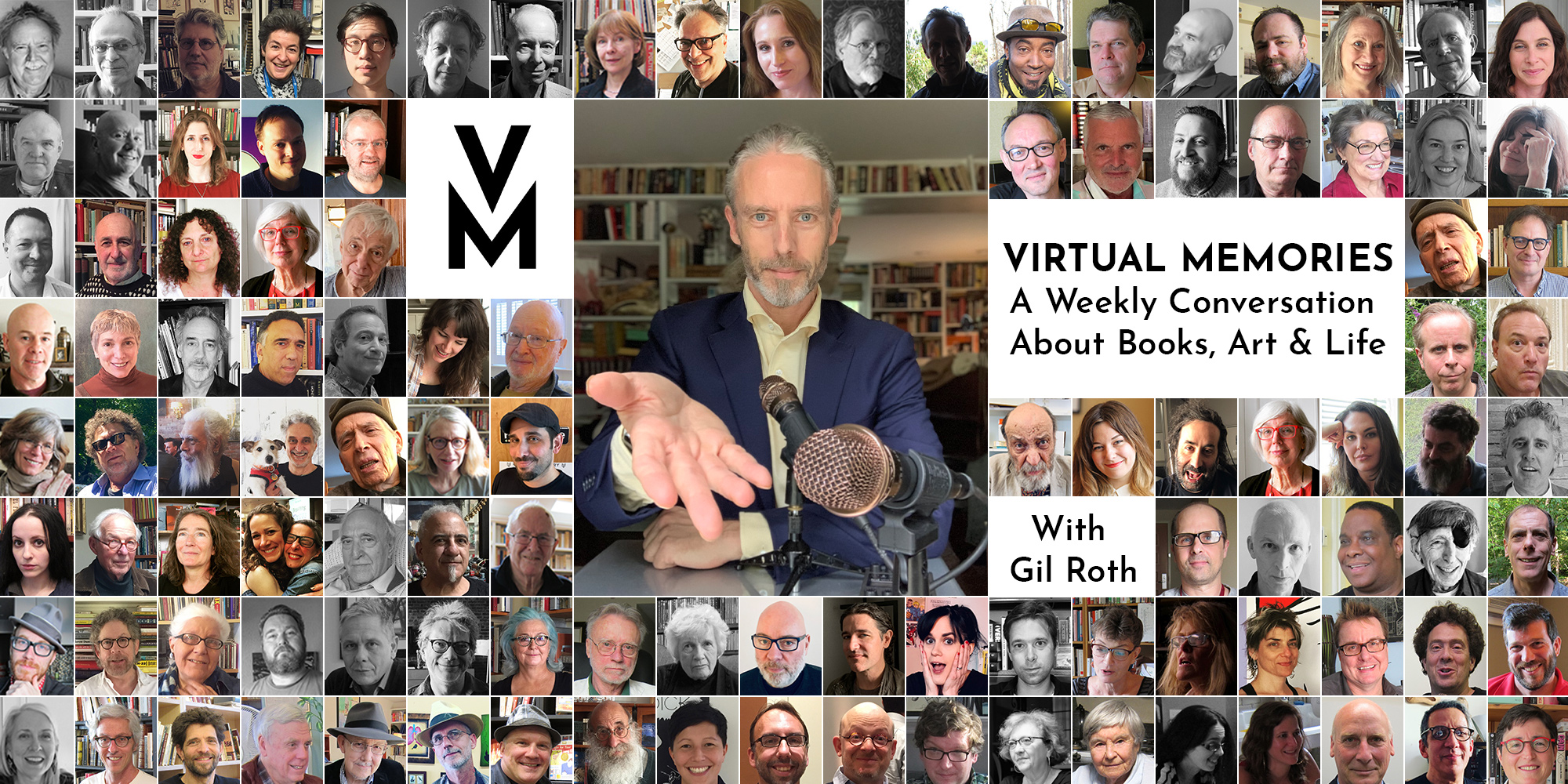
Click pic to embiggen
Thanks to the resources of my county’s libraries, I was able to get hard copies of all the books I read as e-books/e-proofs for the big group picture above, except for Bad Monkeys, by Matt Ruff.
(Go check out the past editions of this recap: 2011, 2012, 2013, 2014, 2015, 2016)
* * *
Rumi’s Secret: The Life of the Sufi Poet of Love – Brad Gooch – This is a biography of the thirteenth century Islamic poet, Rumi, as well as a rescue-salvage operation for his contemporary new-age/wind-chime reputation. The author does a wonderful job of research, culling the various writings by and on Rumi to find a story that’s both mystical and mundane. He manages gets at the beauty of Rumi’s poems and his progression into Sufism, but also captures some of the day-to-day aspects of life that somehow remain universal. Rumi led a remarkable life (hence, the volume of stories about him that survive to today), and seemed to propose inclusive visions of religion that we could all probably learn from nowadays. Gooch also provides new translations of some of Rumi’s verse, making Rumi’s Secret even more of a joy. • Listen to our podcast (and listen to our 2015 podcast)
The Dead Ladies Project: Exiles, Expats, and Ex-Countries – Jessa Crispin – I love me some literary pilgrimages, so Jessa Crispin’s travelogue about “exiles, expats and ex-countries” was right up my alley. She opened my eyes to a lot of literary figures and artists I knew little to nothing about. She also ties her own personal meltdowns into the story, and if that sorta thing bothers you, then steer clear. But I liked reading about her crackups and relationship failures and how they fueled this project. Sure, it can get a little dramatic, but that’s sorta the point, especially with chapters devoted to wives/partners of Great Writers, and the restrictions they had to deal with. It’s an illuminating book, gracefully written, and filled with lives that’ll show you what it can really cost to make great art. • Listen to our podcast (and listen to our 2014 podcast)
The B Side: The Death of Tin Pan Alley and the Rebirth of the Great American Song – Ben Yagoda – This worked as a compliment to Ed Ward‘s History of Rock & Roll that I read a few weeks earlier (at the end of 2016). It covers popular music from a songwriting perspective, focusing on the Tin Pan Alley writers and the music industry as it developed in New York City. Yagoda has a clean, lively prose and offers up his well-thought-out opinions, not just the facts, on the trends and waves in popular music. He centers on the notion of the Great American Songbook, and details the efforts of Jerome Kern, Richard Rodgers, Oscar Hammerstein, Cole Porter, and others. If there’s a working thesis, it’s to ask, “Why were such amazing, long-lived songs being written in the first half of the 20th century, and why isn’t anything remotely that good being written now?” I devoured this one, on the strength of subject matter and writing style. • Listen to our podcast
Why I Am Not A Feminist: A Feminist Manifesto – Jessa Crispin – I dug it, but I don’t think I’m qualified to judge it, exactly. I mean, I just don’t have the perspective. I could try picking into the logic of her argumentation, but that’s really just a technique people use to invalidate an entire worldview because of a lack of airtight logic, not to engage and debate. And it seems like she wants engagement and debate about the unfortunate directions that feminism has undertaken. I will say that the book provided me with some perspective on the systemic challenges women face, beyond the theoretical ideas I had on that, and it sorta validated my feeling that “everything is feminist because I’m a woman and I say so” is an empty construct. It’s not an overly prescriptive book, which I think is for the best. I’m interested in re-reading it in the post-Weinstein/#metoo era. • Listen to our podcast (and listen to our 2014 podcast)
Memoir: A History – Ben Yagoda – I didn’t get it. It’s what it says it is, a history of the memoir, but somehow I felt like it was missing some integral component of what the memoir is. A little while after reading it, I mentioned it to a heavy-duty memoir writer who said, “No, he’s missing the point. You’re right.” But that conversation was a while back and I don’t remember what else the writer told me. • Listen to our podcast
A Mother’s Tale – Phillip Lopate – Phillip Lopate is the Michael Jordan of writing personal essays, by which I don’t just mean, “he’s really good,” but, “he writes personal essays better than just about anyone does whatever they do.” More than 30 years ago, Lopate (brother of WNYC interviewer Leonard Lopate) recorded a series of interviews with his mother. He listened to the tapes in 2015 for the first time and began transcribing them. That evolved into this extended essay about his mother. It includes a lot of swathes of their dialogue, which somehow adds to the poignancy of the project; Lopate mentions at the outset that his mother in 1984 may have felt that having her words on tape would protect her from what she felt were the exaggerations of previous essays Lopate had written about her. His authorial perspective from 2016 — he’s older now than his mother was when they recorded — creates an even more complex portrait of his mother and their relationship. She had a fascinating, Dreiser-esque life, in terms of the social forces arrayed against her and her husband, and it’s an absolute joy to read 41-year-old Phillip’s attempts at drawing our her story and 72-year-old Phillip’s attempts at understanding and converting it all. Of course, I say that as someone who has a Jewish mother. • Listen to our podcast (and listen to our 2013 podcast)
Note Book – Jeff Nunokawa – A professor of English literature at Princeton, Jeff began posting through Facebook’s quasi-blogging Notes feature 10 years ago, using the medium to write brief essays about books and life — not necessarily in that order. Some of the entries are just a sentence long, some a few paragraphs, accompanied by a photo, and this 2015 book collects 250 of them. The Notes are personal without being hyper-specific, and beautifully illustrate a life in process and a love of great books. Nunokawa’s prose style is easy and flowing, likely a result of deeply incorporating great literature but rejecting academic jargon. He still posts every day, so you can follow him on FB and start reading the new ones. One of the fascinating things about Facebook’s Notes feature is that you can’t add hyperlinks; the only linked text is names of other FB members. This limitation — tying the internet’s hand behind its back — permits more self-contained writing than the standard blog format, where writers compulsively link out to supporting materials, jokes, etc. (I do it all the time). Paradoxically, this limitation makes the “web-to-book” aspect of note book — a phenomenon I otherwise detest — perfectly normal. Admittedly, the book still suffers from exclusion; I’m sure Nunokawa could have come up with 250 worthy alternate posts to replace the ones collected here. Still, it’s a beautiful work, filled with meditations on literature, family, and an unhealthy obsession with Fernando Torres. • Listen to our podcast
Private Citizens: A Novel – Tony Tulathimutte – This is a debut novel by someone far younger than me, so of course I was prepared to hold it in disdain. It turned out to be awfully good, fueling my chagrin at not being the voice of my literary generation. It’s about 4 Stanford graduates in 2007-2008, only a few years after graduation. Even pre-financial crash, their lives are not what they’d hoped for. While the lead characters represent types — writer, scientist, coder, activist — they seem to struggle with the expectations of those identities, as though they suspect they might be better off doing something else. The various plots are entertaining, the characters are very distinct and memorable, and there’s a zeitgeist-y quality to the novel that I enjoyed. But what I found most rewarding was my own knowledge that this experience wasn’t any different than what I and my pals went through in the mid-’90s as we started our post-school careers. Sure, the technology is more advanced, but the mindset, the realization that everything you prepared for or studied in school might not help in the real world, isn’t “millennial”; it’s human. In 2002, I spoke on a panel at my college, a hippie, design-your-own-curriculum institution in western Massachusetts. My big advice, 9 years after my graduation was, “Don’t focus all your efforts in one narrow field, because even if you get a job in that area after you graduate, you’re probably going to hate it by the time you’re 25. Learn to learn, and you’ll probably be a lot happier.” No idea how the students took it. I doubt I was the most sympathetic figure to them; after all, I may be the only graduate in the history of that institution who says, “I’m a lobbyist for the pharmaceutical industry,” but that’s the nature of youth. My point is, Private Citizens captures that moment of free-fall beautifully, and evokes the time and place of mid-previous-decade San Francisco without being so specific it couldn’t also be about Generation X in Seattle. • Listen to our podcast
What Belongs to You – Garth Greenwell – It’s a very interior, observed novel narrated by an openly gay American teacher in Bulgaria. The “plot” is that he meets a hustler and struggles with his feelings for him; bad news from America sends him on a reverie about his youth while he walks through the city of Sofia. But really, this novel is about desire, shame, the scars of youth and how we carry them all our days, and what words mean to us. Greenwell brings us into his narrator’s mind and memories, as perfectly captures the uprootedness one feels in a foreign country, where one barely knows the language. In his narrator’s case, there’s a universal language of queer culture that allows him to communicate even though his Bulgarian is sparse. It’s deeply intense, brief book that evokes the tensions that exist in life and love (gay or straight or otherwise). • Listen to our podcast
Snowed Under – Antje Ravic Strubel – I don’t remember enough of this one, sad to say, to tell you anything substantial. I read it in prep for a podcast with the author, one of the guests of the 2017 Festival Neue Literatur (for which I recorded with Garth Greenwell (above) and Barbara Epler, the publisher at New Directions). I worked up some questions, and headed into NYC for our session on a Sunday morning. At a traffic light about 10 minutes from home, I checked my e-mail, and got a note from her saying that she’d been struck with laryngitis; we wouldn’t be able to record, since she also had to do a panel that afternoon and needed to save her voice until then. So. It’s about people living and visiting a ski resort in eastern Europe, a few years after the reunification of Germany. It’s told through interlocking short stories, but sorta centers on a gay female couple, one of whom gets lost after an argument with her partner. There were some entertaining segments, like with the pre-Fall postal spy who keeps spying on the mail because he doesn’t know what else to do, but I’m afraid that it didn’t stick with me very much.
Welcome to Your World: How the Built Environment Shapes Our Lives – Sarah Williams Goldhagen – In the late 1980s, one of my favorite comic books was Mr. X, a science fiction story about an art deco city whose architecture was driving its inhabitants insane. So I was primed for this book, which explores the way architecture and the built environment influence our behavior, including the ways bad design can damage our mental and physical health. Goldhagen builds on discoveries in cognitive neuroscience to examine how the best and worst landscapes and buildings affect us, and provides wonderful descriptions of the good, the bad and the ugly. Her section on the Salk Institute for Biological Studies (designed by Louis I. Kahn), and the subtleties that went into its design, are worth the price of admission alone. It’s a wonderfully engaging book (and not focused on experts in architecture or neurocognition) about the importance of design in day-to-day life, and what the means for buildings and landscapes, as opposed to an iPhone or a Michael Graves tea-kettle. If you’ve got a limited visual imagination like I do, you’ll be happy to find that there are a ton of photos and illustrations that accompany the text. This book will make you see your lived world differently (although it may make you lament that your built environment is pretty banal). • Listen to our podcast
The Sun Also Rises – Ernest Hemingway (re) – This was a re-read, because it was on my Kindle when I was between new books and I thought, “That’ll work for some bedtime reading.” According to All The Books I’ve Read Since 1989, this is the 4th time I’ve read it, yet I’m still surprised that Romero doesn’t get killed in the big bullfight scene. Apparently, when I read it in 2012, I thought the prose was flat and ineffective, but this time around, I was drawn in more by Jake’s not-quite-hardboiled depiction of his circle’s antics in Paris and Pamplona between the wars. Their desperation felt clearer to me, especially as it contrasts with the more legit enthusiasm the locals have for the fiesta around St. Fermin. Having it rendered by a narrator who was unmanned during the war gave it a greater degree of tension that I’d previous recognized. It’s not quite like measuring myself against re-readings of Anna Karenina or The Iliad, but this does make for a pretty good touchstone.
Moving the Palace – Charif Majdalani – This is a beautiful little (200 pages) novel that just knocked me out. It’s about a Lebanese explorer in the early 20th century who spends years in Sudan working for the British, buys a palace that was disassembled and carried by a caravan across north Africa, and endeavors to get back to Beirut with it. It’s absolutely enchanting, reminding me alternately of some of my favorite novels, like The Leopard, Invisible Cities, and Sword of Honor, but never to the point of pastiche. I was utterly gripped by it and devoured it over a weekend (like I said, only 200 pages, but hey). It’s almost a fairy tale, but too grounded in the history of colonialism and the 1914-1918 War to be fanciful. Narrated by the explorer’s grandson, we know how it will turn out until we realize we don’t. I have a feeling I’ll be foisting this book on people for quite a while. • Listen to our podcast
Toscanelli’s Ray – Wallis Wilde-Menozzi -This is a novel mainly set in Florence, Italy, and taking place over about 15 hours during the summer solstice in 1994. It revolves around a dissolute Italian botanist, his American ex-wife, a Nigerian prostitute and her toddler, and the lives they touch (including that of a toad living in a garden). The author is primarily a poet, and her intense, compressed use of language has to stretch to accommodate the narrative needs of a novel. It’s got sections of great beauty, and the interweaving of the characters’ lives is handled deftly. Wilde-Menozzi brings us into the everyday life of Florence — its political scandals, its echoes of WWII and the ’66 flood, the church, the sufferings of its immigrants and refugees, petty office squabbles — while also connecting us to the eternal. It took me some time to get into it, and I weirdly identified more with the male characters and their practical problems (how to get out of a conversation with a family friend, which slides to use in a presentation, when to confront a neighbor over her illegal archeological dig) than the more undirected/existential concerns of the women. Which probably says more about me than the book. • Listen to our podcast (and listen to our 2013 podcast)
Stranger in a Strange Land: Searching for Gershom Scholem and Jerusalem – George Prochnik – During the Bush administration, the New York Sun, a slim neoconservative newspaper, began tagging along with our office’s Wall Street Journal subscription. It was usually tossed out unread, but I opened it up on a whim one morning, only to find facing articles on the publication of Gershom Scholem’s notebooks and the potential impact of Pau Gasol’s trade to the LA Lakers. I thought, “Is it possible that I’ve gone Tyler Durden, and when I think I’m asleep I’m actually editing this newspaper’s culture section?” That’s a little of how I felt when I saw this book was coming out. Scholem is a famed scholar of the Jewish mystical tradition of Kabbalah, and a pre-independence settler in Palestine. Prochnik writes about Scholem’s development as a thinker, his intricate and frustrating relationship with doomed thinker Walter Benjamin, the historical sweep of Europe beginning in World War I, and the evolution of Zionism as a concept and a reality. Prochnik also closes out each chapter with his own story about moving to Israel in the 1980s with his wife, starting a family, trying to become a scholar, and how Scholem’s work affected him during that time. He doesn’t shirk from depicting the willful blindness to Palestinians’ lives, but also frames it in the Jerusalem that Scholem lived in, from the mid-’20s until his death in 1982. It’s a fascinating life, and Prochnik is careful not to draw too many parallels to his own experience. The book does make a frustrating chronological jump near the end and doesn’t go too deeply into Scholem’s reaction to post-1948 Israel, beyond his contention that the government should have returned the West Bank to Jordan afer the war in ’67. But it’s a wonderful book that taught me a lot about the mystical tradition in Judaism, the guy who was responsible for making it a subject of academic study, and the limits of human imagination in the time leading up to the Holocaust. I’ll wait for Prochnik’s follow-up on the Gasol era in LA. • Listen to our podcast! (and listen to our 2014 podcast)
Dear James: Letters to a Young Illustrator – R.O. Blechman – This is a wonderful little book along the lines of Rilke’s Letters to a Young Poet. Blechman is a legendary figure in illustration, advertising, and cartooning; his signature wavy line has been aped for decades, but his wit is impossible to copy. This book consists of letters to a fictitious up-and-coming illustrator, providing career advice, relationship tips and other wisdom accumulated over the decades (it was published in 2009 shortly before Blechman turned 80). The prose style will sweep you along, and Blechman’s combination of graphic and prose influences are on full display throughout the work. Even though I’m not an illustrator, I enjoyed it immensely and took away plenty about my own artistic pursuits, although it also made me a little wistful about untraveled roads earlier in my career. Blechman is a treasure and this book is a true gift. • Listen to our podcast
Mary Astor’s Purple Diary: The Great American Sex Scandal of 1936 – Edward Sorel – A delightful, brief work about the 1936 sex scandal involving the actress Mary Astor (born Lucile Vasconcellos Langhanke). The author, illustrator Ed Sorel, fell into her story in the mid-’60s and got around to making a book about it 50 years later. It features dozens of Sorel’s wonderful illustrations and tells the story of Astor’s awful custody battle (along with plenty of editorial interjections). The dozens of illustrations are gorgeous, and the whole project leaves me wondering if Sorel should’ve been making hybrid books like these for years, rather than launching into the project in his 80s. On the other hand, Jules Feiffer was in his mid-80s when he figured out the long-form graphic novel was his metier, so sometimes we just need time. I’m still waiting to find mine, but I suspect it’s “idle chitchat with people who are far more creative and disciplined about their art than I am.”
Mrs. Dalloway – Virginia Woolf – One of my embarrassing literary admissions is that I’ve never been able to finish a Virginia Woolf book. In high school, a progressive humanities teacher foisted The Waves on us, and I was so turned off by that book that I didn’t even give Woolf a try until a few years ago. When I did, with To The Lighthouse, it felt like something assigned to me, not something that I wanted to read. In the interest of full disclosure, I was concerned that this might be a weird chauvinistic response on my part, because I do tend to read many more books by men than women. Still, I just couldn’t go on with that one, and put it aside. Inspired by my conversation R.O. Blechman, I gave Mrs. Dalloway. It’s only 200 pages, so I was able to finish it by Sunday. There were portions I enjoyed, but it’s a book I respected more than liked. On the plus side, I don’t think it’s because of a bias against women’s writing, but an exhaustion with high modernism. The book is layered pretty deeply with literary allusions, and while they’re not overbearing, they do tend to make the point of, “If you’re not well-educated, you’re going to miss a lot of what’s going on in this book.” Woolf does manage to create some wonderfully sad and frustrated characters, so I’m not saying that it’s simply a “novel of ideas” or just a construct of erudition, but at the same time, I had a sense of distance from the whole narrative. I’m guessing I’d feel the same way if I went back to Joyce or the other modernists, alienated by that Olympian perspective on human life, even after I gave myself points for catching the references and laughing at the wordplay. Man, have my literary tastes gotten weird. . . .
This Is How You Lose Her – Junot Diaz – I thought this was a novel when I started it on my Kindle, but it turned out to be a collection of (connected) short stories, which made the jump from between the first two stories pretty jarring. I liked but resented Diaz’ first novel, feeling it to be a little too unacknowledgedly reliant on the comics of Los Bros. Hernandez (he acknowledged that debt in subsequent press). This collection is about love-gone-wrong, focusing on the Dominican, pop-culture enthused characters Diaz loves best. The back cover has a blurb from Oprah’s magazine that just says, “Vulgar, brave, and poetic,” which sums it up pretty well. I like reading the lives Diaz evokes, the coarseness of their desires and the strangeness of their lives in the DR and how they integrate (and fail to) in the US. His prose ranges from cool vernacular to brief high-blown flights, and manages to keep a rhythm throughout. I was less resentful about his work after finishing this one.
This Is What a Librarian Looks Like: A Celebration of Libraries, Communities, and Access to Information – Kyle Cassidy – Several years ago, photojournalist Kyle Cassidy attended a midwinter meeting of the American Librarians Association to photograph and interview several of the attendees. The results were published on Slate.com and went super-viral. That led to a bigger project at the ALA’s national meeting, along with trips to a variety of unconventional libraries across the country. Combine that with new essays on the importance of libraries from authors like Neil Gaiman, Jude Deveraux, Cory Doctorow, and George R.R. Martin, and you’ve got a fantastic book. Cassidy’s portraits are lovely, capturing a broad range of people and quickly dispensing with the cliches and stereotypes about librarians. He accompanies each portrait with a quote from that subject’s interview, and intersperses the book with the aforementioned essays, along with his own pieces about those libraries that he visited. It’s a wonderful book that champions a critical (and underfunded) component of civic life in America. If you haven’t been to your local library in a while, you may be surprised at the role it plays in your community, especially for less privileged people. • Listen to our podcast (and listen to our 2012 podcast!)
Lovecraft Country: A Novel – Matt Ruff – Uproariously entertaining novel about Lovecraftian horror, cults, and — oh, yeah — race relations in America. It takes place in 1954-55 and centers on an African-American family in Chicago. There’s a hidden legacy in their family history that attracts the attention of a coven of “natural philosophers” that want to cleanse the world. Each chapter dives into a different sub-genre of horror and science fiction, sort of like the work of H.P. Lovecraft, and the chapters overlap and culminate in a heist tale of sorts. The writing isn’t beautifully poetic, but propels each story along masterfully. Now, there is a caveat that I should offer up. As I mentioned, the book is about a black family in mid-century America, and how they deal with racism is just as important as how they deal with shoggoths. In one chapter, a character discovers that she can temporarily become caucasian (The Jekyll in Hyde Park), and is made painfully aware of the structural advantages of that world. I had some misgivings/uneasiness over the fact that the book’s author is white, because I’m pretty sure a black author would have a deeper set of experiences to draw on. That said, the book never descends into white-guilt bathos, but treats its protagonists like human beings who are trying to make their way in a world where even the pentagrams are redlined. For all that, it’s a heck of a good novel. • Listen to our podcast
AREA X: The Southern Reach Trilogy: Annihilation; Authority; Acceptance – Jeff VanderMeer – I don’t know where to start. My mind was pretty blown by AREA X (a.k.a. The Southern Reach Trilogy). This series of novels — Annihilation, Authority, and Acceptance — is about a mysterious ecological/environmental “disaster” in which a zone in northern Florida becomes cut off from human contact. An invisible barrier of sorts separates the area from us, with only a single known entry point. The government establishes a base next to it (the Southern Reach), and for the next several decades, expeditions are sent in to explore it. Very few of them come back, and those who do are . . . changed. The first book is the journal of a member of the last expedition, while the second and third books are about the aftermath of that trip. It’s a page turner, whether you’re reading about the mysteries of the zone’s inimicalness to human life and technology, the bizarre topographical anomaly filled with a strange sermon-like text, the office politics of the Southern Reach, or the found texts and journals of past expeditions. It’s an amazing novel, and if my description’s a little reminiscent of my past writeup about Stanislaw Lem’s Solaris, it’s not accidental. The alienness of Area X, the shortcomings of human communication and intelligence, the weird dopplegangers the zone creates, are all threads that VanderMeer picks up from Lem’s book (and presumably a lot of other SF that I haven’t read), but without seeming derivative in the slightest. An amazing achievement.
Bad Monkeys: A Novel – Matt Ruff – This is a delightfully twisted novel about a woman who may work for a secret organization dedicated to ridding the world of evil. She may also be nuts. In the psychiatric wing of a Las Vegas jail, she spins her tale to a doctor, unreliably narrating her journey into the world of The Department for the Final Disposition of Irredeemable Persons, aka “Bad Monkeys”. The narrator could easily have fallen into stock “tough girl” cliches, but Ruff instead creates a striking and intriguing character with a weird but unerring moral compass. It’s a thrill-ride of a book, with some amazing twists and turns. The ending runs up all at once in a Philip K. Dick-ian inversion of layer upon layer of reality, but it all fits together wonderfully. • Listen to our podcast
KA: Dar Oakley in the Ruin of Ymr – John Crowley – I’m going to go with what Liz Hand said in this year’s Guest List episode: “KA follows the adventures of an immortal crow whose myriad lifetimes dovetail with those of various humans, from Neolithic Northern Europe to near-future America. It’s a beautiful, haunting meditation on the emergence of human consciousness, on death, the afterlife, and our increasingly tenuous relationship with the natural world. Crowley is a brilliant writer, and this is one of his very finest novels.” I was all set for it to be my favorite book in 2017, until I came across The Peregrine (see below). That means it’s not even my favorite bird-related book in 2017. Still, it’s an amazing novel that reminded me how good contemporary writing can be. If Crowley was talking straight during our podcast last summer about how KA is the last major work of his career, that’s a hell of a capstone for the guy who wrote Little, Big, the Aegypt quartet, and Engine Summer. • Listen to our podcast (and listen to our 2013 one)
Totalitopia – John Crowley – Some previously uncollected stories and columns by Crowley, along with a new story and a Q&A that helped inform my recent podcast with him. Even Crowley’s minor work is worth reading, and it’s a fine, small collection. I enjoyed the title piece, with its intriguing model for developing SF ideas, and his essay on Paul Park reminds me that I really need to sit down and record with Paul sometime. I’m glad the publisher is putting this series out. • Listen to our podcast (and listen to our 2013 one)
Playboy Laughs: The Comedy, Comedians, and Cartoons of Playboy – Patty Farmer – I wanted to like this one, but it didn’t quite work. This book is the mid-point of a trilogy about the impact of Playboy — the magazine, the clubs, the brand — on culture. The previous book was about music, while this one is about comedy, both the comedians who played the circuit of Playboy Clubs and Resorts, and the cartoonists and illustrators who appeared in its pages. The author did a ton of interviews with both of those cohorts, and faithfully renders their stories. The problem (for me) is, the book isn’t set up as an oral history, just running quotes, but it also doesn’t have enough non-quoted material to make it cohere, so it winds up consisting of six or seven consecutive paragraphs of quotes, followed by a line or two of exposition, then more extended quotes. I’d have preferred to see it edited and synthesized into a fuller narrative, maybe intercutting different speakers when their stories cover the same area. Which was my other problem, especially with the comedians section: too many of them tell the same stories, tending to revolve around the rule against dating Bunnies who worked at the club. That said, I’m more of a cartooning nerd than a comedy nerd, so I enjoyed the stories in that portion of the book, which included long-time artists like Al Jaffee, Arnold Roth, and Jules Feiffer. Those cartoonists speak fondly of their experience with the magazine, and the great editing they received from Hugh Hefner (who never made it as a cartoonist but clearly knew the art form inside and out). So I applaud Ms. Farmer’s drive to capture these stories and explore the greater cultural significance of Hugh Hefner’s vision, but I wish it was a better organized and edited work. • Listen to our podcast
After Henry: Essays – Joan Didion – It’s weird to start my reading of Didion with this lesser-known collection, but there was a Kindle sale, and on a whim one morning I thought, “I really should start reading her.” This one came out in 1992 and parts of it focus on the ’88 election. Lately, I’ve been fascinated by the coverage of past elections, and how apocalyptic each one seemed. I used to say that the worst part of the Bush/Cheney years was the terrible protest art that came out of it. Now I look at the way Bush vs. Dukakis was treated like the end of the world, and can only laugh, because they had no idea how bathings would get. Of course, that implies that we’ve hit rock bottom here, and that 20 years on, there won’t be people saying, “How naive those commentators were in 2017. . .” Anyway, her prose lived up to its reputation for being lean and incisive. I really got into the California/LA section, and need to read more of her earlier work in that area. I read her long closing piece on the Central Park Five with some trepidation, out of concern that the subsequent exoneration of the convicted/railroaded rapists would invalidate her thesis. (I mean, it’s not like she was taking out full-page ads in the New York Times calling for their execution, but I didn’t know going in if she was going to take their guilt as a given and springboard from there; she didn’t.) This may be a minor collection of hers, but it’s just fine as a starting point for me.
The Year of Magical Thinking – Joan Didion – This is a harrowing story about her daughter’s coma-inducing illness and her husband’s sudden death by heart attack, and how the author coped and didn’t in the following year. The writing isn’t as graceful as Didion’s essays, but the events are too immediate and too damaging. One simply can’t plumb those depths with the same tools one brings to bear on the greater world, so it’s a different book than her other work. It’s heart-rending without being sentimental, laying bare the losses she suffers in short order. I’ve read a bunch of books this about those losses that age implies (and reread Roth’s Everyman as a topper), and this one captures the particularities and universalities best, I think.
The Merchant of Venice – William Shakespeare – Reread it for the first time in a bazillion years after reading a Roger Greenblatt essay in The New Yorker about it and his experience as a Jew at Yale in the early ’60s. I don’t know what I thought about it the first time around, but I feel like Shylock’s justified in his rage and his demand for a pound of Antonio’s flesh, after Antonio missed the deadline to pay back his loan. Between making the loan and its term date, Shylock lost his daughter and a chunk of his money and possessions to a young gentile swell. If she had run off without taking a ducat, it might be a tougher sell, but taking the money and jewels with her makes it easy for Shylock to think, “A gentile wooed my daughter so he could steal my money,” as opposed to, “My daughter so loved this man that she gave up her legacy to marry him.” Just because the daughter isn’t mentioned in the court scene doesn’t mean she isn’t weighing on him, and with her the Christian world’s persecution of him. So even though Antonio’s friends try to repay his debt after it’s come due, I can understand Shylock becoming more unreasonable than he was when he first signed the bond with Antonio. He lost his only child, a ring his wife gave him, and more besides. Taking the money — two, three, six times the original loan — would make him less of a man, not more. And the legal proceedings and trickery that end his case only serve to support the opinion that the Christian world is biased against him. When I told my wife about this — she hasn’t read the play — she said I’m reminded her of Chris Rock’s take on OJ: “I’m not saying he should’ve killed her, but I’m saying I understand.”
Survival In Auschwitz – Primo Levi – This was my first time with Levi, embarrassing to admit. I bought the slipcase edition of his complete work shortly after finishing this. Levi’s depiction of Auschwitz is, of course, soul-shattering: the brutal conditions, the arbitrariness of life and death, the matter-of-fact elimination of hope. It tore me to shreds, and yet in the middle of it all, there’s this beautiful chapter in which Levi is trying to recite portions of Dante to another prisoner. He’s trying to restore a higher meaning to the world, and share it with another, which makes it the most beautiful thing I read this year.
For the Relief of Unbearable Urges: Stories – Nathan Englander – I never read Englander when he first made waves in the ’90s. His author photo looked too dramatic, and that was enough for me. I was a lot dumber then, or so I like to believe. A friend turned me on to him this fall, and I read all 4 of his books in short order: collection, novel, collection, novel. I think this is my fave of his, even though it’s at the beginning of his career. The stories were a hybrid of Bruce Jay Friedman and Philip Roth, but among religious Jews, which is territory that neither of those authors ever really handled well. Like Eddy Portnoy’s nonfiction work, Bad Rabbis (see below), I enjoyed reading out “alien” Jews who have much the same yearnings and foibles as the less observant, more assimilated set. Englander’s prose is unshowy and clear throughout, and I’m sorta kicking myself for not having read this ~20 years ago.
The Hue and Cry at Our House: A Year Remembered – Benjamin Taylor – A beautiful, sad short memoir about the year around JFK’s assassination, as experienced by the author around the age of 11. Besides that event, he contends the period is an arbitrary choice, that any year could have stood in for the whole, and he’s probably correct: the family tensions, his homosexuality and life in the arts, Jewishness and the American experience. The book stretches beyond that year, and beyond Taylor’s own experience, uniting the boy he was with the man he’d become. I regret reading it so quickly (in one afternoon) and hope to revisit it more slowly in 2018.
The Ministry of Special Cases – Nathan Englander – A pretty audacious idea for Englander’s first novel, jumping from his short stories about orthodox Jews in the US and Israel to Argentina’s dirty was in the ’70s. It remains a tale of Jews and our déclassé roots; the lead character’s job is to sneak into the old Jewish cemetery and chisel away the names of criminals whose descendants are now part of respectable society. His son, a college-age semi-radical, is disappeared by the government and his wife goes mad trying to wrest his release from the bureaucrats. It’s got some beautiful, haunting scenes and dives into the issue of what it means to be a diaspora Jew. As I open it at random now, the first line to jump out is the lead character’s wife saying, “We are Jews, Kaddish. You can choose not to be one yourself, but you are to them. You are to the government and to the people who have our son.” I enjoyed it immensely.
What We Talk About When We Talk About Anne Frank: Stories – Nathan Englander – I didn’t like this one as much as Englander’s first collection (see above). Too much artifice, too much narrative trickery and postmodern tropes. As a reader, I felt as though the author was trying to keep from repeating himself, but wound up being too smart for his own good. It’s understandable, because successful authors tend to be damned if they do/don’t: they’re either seen as one-trick ponies or they disappoint their audience by going in a radically different direction. In this case, the stories just felt too self-conscious.
The Peregrine – JA Baker – It took me several weeks to read this book, which is under 200 pages. Part of that was because of how busy I was with work, but I think even if I hadn’t been so busy, I wouldn’t have rushed through it. It’s one of the strangest, most beautiful books I’ve ever read, and I’m not sure how to explain its allure. It’s nonfiction nature writing about a fall-to-spring stretch in eastern England in the mid-’60s. The book chronicles the writer’s days of keeping an eye on a pair of peregrines, and that’s it. We learn nothing about his life or his motivation, although his misanthropy suffuses the book; he’s clearly happier in the world-without-men. The thing is, the book has some of the most amazing prose I’ve ever read. The author turns astonishing phrases, evoking inhuman majesty out of the tooth-and-claw lives of birds of prey. Throughout, he aspires not to make the peregrine his familiar, but to become the familiar of the peregrine, so that the bird recognizes him as one of its own. It’s just breathtaking, the way the quotidian aspects of watching birds build into this pagan shift in consciousness. It’ll stick with me for a long time.
Three Floors Up – Eshkol Nevo – This was a novel about three people who live in an apartment building near Tel Aviv, and the way their lives do and don’t intertwine. It’s skillfully written; each of the three characters narrate to a different listener/reader, one unspooling a monologue to a pal, another writing a long letter to a friend in the US, and the third leaving answering machine messages to her dead husband. The stories are quintessentially Israeli, but still relatable to someone who hasn’t been to Israel since his bar mitzvah (1984). It’s less about the beauty of the prose than the deft storytelling and the tension each of the three stories evokes. While I enjoyed it, some of that tension or drama felt contrived, and there were some segments where the narrators were deliberately teasing in a way that can be frustrating to a reader. Anyway, decent novel. • Listen to our podcast
Behind Her Eyes – Sarah Pinborough – It’s a spooky psychological thriller taking place in London. It’s about a psychiatrist and his deeply bent wife, and the secretary he has an affair with, but it’s so much creepier than that. Similarly, one of the narrators holds back key info or occasionally refers to something obliquely just to tease the reader, but the payoff is all worth it. Really entertaining page-turner of a book, with a requisite twist.
A Man Lies Dreaming – Lavie Tidhar – This one’s an alt-history noir SF about a world in which Hitler gets deposed in ’33 and goes into hiding as a gumshoe detective in London. It’s intercut with the story of an inmate at Auschwitz in the “real” world, a trash writer who may be constructing the alt-history story in his head as a way of escaping the horrors of the concentration camp. (Primo Levi has a cameo in the book.) The noir plot that Hitler/Wolf falls into is convoluted, but it gives the author a vehicle to visit all sorts of torments on Hitler: circumcision, anal rape, and a final twist of comic irony that I laughed over. It reminded me a bit of Timur Vermes’ novel, Look Who’s Back, in which Hitler wakes up in modern-day Berlin and has to figure out what happened since 1945, in the process becoming a comedy star. The key difference is that Vermes is a gentile and Tidhar is an Israeli Jew, and I’m still undecided on whether it’s okay to laugh at Hitler when it’s a Jew making the joke, but not when a gentile does (or at least, not someone from another of the demographics that were condemned to the camps). I know we’re either supposed to say, “Comedy should have no limits” or “Respect victims’ perspectives,” but of course I fall somewhere in between. Anyway, I enjoyed this one, but I also went to an opening-day matinee of Inglourious Basterds so I could get an early start on watching Nazis get scalped by Jewish soldiers.
Central Station – Lavie Tidhar – It doesn’t add up to a full novel, but that wasn’t the author’s intent. I didn’t realize going in that it’s a “mosaic novel”, collecting and threading together a series of stories about a shared environment. It takes place mainly at the base of a space station in Tel Aviv, which sorta reminded me of the unofficial Central Bus Depot during my last visit there (c.1984). It’s overloaded with SF concepts, but Tidhar handles them deftly, shifting among perspectives rooted in AI, VR/AR, cyborgs, etc. Know going in that it doesn’t deliver as a fully-formed novel, and you’ll enjoy the heck out of it.
Lastingness: The Art of Old Age – Nicholas Delbanco – This is a collection of essays about artists’ late work, or more precisely, the art late in their life and what happens to artists as they age. Delbanco focuses on music, visual arts and literature, and it’s not all “great late work from great artists”. He draws on examples of artists whose work grew weaker or more primitive alongside, say, Yeats, who continued to achieve major work in his later life. The book is a kaleidoscope of artists and artworks, and reading it left me looking forward to meeting the cultured guy who has command of so many lives. At no point did it leave me thinking, “I can put off art-making until my later days and Show Them All!”, since the common thread for his subjects is their constant level of work over the course of their lives. I was glad that he managed to sneak Giuseppe di Lampedusa into the book, even though he really only had one book, published posthumously. • Listen to our podcast
Curiouser and Curiouser: Essays – Nicholas Delbanco – This collects several of Delbanco’s essays from the 21st century. It starts off with a wonderful piece about restoring his father-in-law’s Stradivarius cello, and also features pieces on museum-going, his process of revising an early trilogy of novels, and a 15-year update of his autobiographical sketch. They’re all wonderful pieces. The center of the book is an essay I don’t want to give away anything about, although you might figure out what it is based on the book’s title and the color of the cover. He’s a graceful, thoughtful writer, and the workmanship of every sentence is apparent. I don’t mean they’re overworked, but that their flow is considered and worked out, with nothing loose or extraneous. As opposed to, you know, every thing I write. I started this before the previous Delbanco book, so it served as my intro to his work. I’m hoping to spend more time with his fiction in the next few years, podcast-reading-schedule willing. • Listen to our podcast
The Years – Nicholas Delbanco – It’s a recent novel about a man and woman who were college sweethearts, fell apart after the man’s graduation, and bump into each other more than 40 years later, rekindling their relationship. The story alternates between their present together and their mutual-then-divided lives. It’s premised on the idea that one’s first love is one’s last, which I don’t exactly agree with (my wife & I met in our mid-30s), but it’s a beautiful novel about the what time does to us and how we sometimes struggle to find continuity. It bore echoes of Philip Roth’s Everyman — which I re-read every year or two because I like to be reminded that I will be an old Jew who dies (if lucky) — in terms of people looking back at their lives and trying to understand and correct their mistakes in the time they have left. • Listen to our podcast
The Art of Youth: Crane, Carrington, Gershwin, and the Nature of First Acts – Nicholas Delbanco – This is a series of biographical sketches about three artists (a writer, a painter, and a composer) who died before they were 40, and how we try to assess artistic achievement when the artist’s arc gets cut off. I don’t like Delbanco’s writing style in this one, nor in the sorta companion book, Lastingness (see above), because it’s more reliant on sketches and less on developing his own arguments about artistic development. Still, it was a rewarding read, especially for someone who didn’t even get back to writing until after he was 40 (I’ll send you one of my post-40 short stories if you ask, but I’m not exactly going to quit my day job). • Listen to our podcast
The Man Who Made the Movies: The Meteoric Rise and Tragic Fall of William Fox – Vanda Krefft – I devoured this one in about a week. It’s 950 pages long (the last 200 pages notes), so that’s no mean feat. It’s a fantastic book about one of the men who launched the movie industry in America (and the world). Even though the name of his studio is one of the leading global media brands, his own story left him almost forgotten to history. Ms. Krefft does a fantastic job of telling Fox’s story, from his hardscrabble childhood to his days as a proto-tycoon of movies to his collapse following a battle with Wall Street and AT&T after the financial crash of 1929. She manages to balance the stories of movie-making, technology wars, financial engineering, and personal conflicts as she assembles the life of a largely forgotten but pivotal figure in 20th century America. I started out thinking I’d read 30-35 pages a day, but averaged 100+, because it’s so compulsively readable. If you’re interested in how the movie industry began and how it wove together entertainers, real estate magnates, crooked judges and the phone company, give this one a read. • Listen to our podcast
Bad Rabbi: And Other Strange but True Stories from the Yiddish Press – Eddy Portnoy – Eddy Portnoy collects stories from the Yiddish papers of Poland and New York from the 1880s to the 1930s or so, delving into the seedy, wacky underworld of Jewish culture. It’s uproariously entertaining, with crazy stories about bigamist rabbis, 600-lb. Jewish wrestlers, Hatfield-and-McCoy-like rivalries between religious sects, Jewish beauty pageants, and all sorts of crime, seediness and misbegotten behavior that my people tend not to get associated with nowadays. It’s a delight to read, filled with pictures from the Yiddish papers, including cartoons that commented on the stories. It’s fun to see what tabloid culture was like in those places and eras, and it’s good to remember that, no matter how much we’re considered The People of the Book, sometimes life goes off the rails. • Listen to our podcast
Cartoon County: My Father and His Friends in the Golden Age of Make-Believe – Cullen Murphy – The author’s dad was John Cullen Murphy, the artist who succeeded Hal Foster on the Prince Valiant comic strip, and the book is about his father’s life and the incredible community of cartoonists, illustrators, and other artists who lived in the southeast corner of Connecticut in the 1950s and 60s. Cullen writes affectionately about his father’s career as an artist, from his training to his time in the military, to his stint drawing Big Ben Bolt, a strip I will admit I’d never heard of before I read this book. At the same time, the book is about a specific time and place, where syndicated comic strips could support an artist’s and his family, and leave time for lots of rounds of golf. The book renders those days and the camaraderie among the so-called Connecticut School in a way that sorta mirrors Prince Valiant’s ascension to the knights of the round table. It’s also filled with a mind-blowing selection of cartoons, paintings, letters, and other visual material. It’s an absolutely gorgeous production and a lovely tribute to a lost time and place. • Listen to our podcast
Dinner at the Center of the Earth: A novel – Nathan Englander – This new novel is about an Israeli spy in a secret prison. He felt remorse over the results of his first operation, and spilled the beans to a Palestinian. The book shifts in time and perspective, exploring his life on the run, the guard who’s been overseeing him for a dozen years, the general who imprisoned him (Ariel Sharon, although he’s never named explicitly) who’s been in a coma for a decade, the general’s aide who keeps lonely watch over him, and a female spy who interacted with the prisoner after that first botched operation. It’s generally deftly handled, albeit not a Le Carre-level thriller. Englander explores some tough questions of what Israel does to survive (and he lived there for years, so he’s not just an American Jew declaiming Israel from afar), and what the prospects of peace are. The structure’s a little unbalanced, with a romance cropping up in the last quarter that should have been spaced throughout but can’t, due to storytelling dynamics. Still, it’s an engaging, quick novel that will leave you considering its ramifications after you finish the last page.
Are We Rome?: The Fall of an Empire and the Fate of America – Cullen Murphy – The thesis is right there in the title: is America mirroring the decline of ancient Rome? Murphy, a former managing editor of The Atlantic Monthly and current editor-at-large at Vanity Fair, studied medieval history in college, and brings a wealth of knowledge to the topic. He draws parallels and dissimilarities between the two empires, and speculates on how the US can avoid some recurring traps. Like just about every work of its kind, the proscriptive portion is a mess. That’s not a knock on him: even Jane Jacobs’ The Death and Life of Great American Cities falls to pieces when she tries to offer a new model for urban life. Also, the book at times focuses too much on details about Rome, without drawing them back into contemporary issues, getting lost in minutiae like a college professor losing the thread of a lecture. Like I said about that Didion collection above, it’s weird to read this sort of thing and transport myself back to when it was written: 2008. That is, Murphy’s framework is 8 years of the Bush/Cheney administration, which people are nowadays concluding maybe wasn’t that bad. . . . • Listen to our podcast
How to Read Nancy: The Elements of Comics in Three Easy Panels – Paul Karasik & Mark Newgarden – Almost 30 years ago, these cartoonists wrote an essay using a single daily Nancy strip (August 8, 1959) to elucidate many of the principles that go into making and reading comics. They’ve expanded that into a gorgeous full-length book, supplemented with biographical info on Nancy creator Ernie Bushmiller and a vivid selection of other Nancy strips that help demonstrate their points on comics. The bulk of the book is 44 two-page spreads that analyze different aspects of that single three-panel strip. They show the reader how carefully crafted a joke can be, performing close reading on something that only contains three words, spoken three times: “Draw, you varmint”. The joke of the strip manages not to die despite dissection, and their exploration of Bushmiller’s work illuminates how comics work. Since reading Scott McCloud’s Understanding Comics back in 1993, I’ve understood that what differentiates comics from other narrative and graphic forms is what happens between the panels. Karasik and Newgarden explode that gap and show how every single element of a comic can work in unison on what seems like a momentary, throwaway gag. The book is beautifully designed and a joy to read. (Note: I was never a particular fan of Nancy.)
Happiness Is a Choice You Make: Lessons from a Year Among the Oldest Old – John Leland – This is adapted from/inspired by a series Leland wrote at The New York Times, where he profiled people aged 85+. He explores the outlook of people who’ve outlived most of their cohort, and what passes for wisdom in our present age. It’s not just a series of anecdotes; Leland also brings in research about aging and speaks to several gerontologists about the physical, mental and emotional changes people tend to go through as they reach that “oldest old” category. The real kicker is that Leland brings his own experience to the table — in his 50s, newly divorced, struggling with a lack of meaning in his life — and explores the lessons he learns about living during the process of writing these profiles.
Exit Ghost – Philip Roth (re) – As mentioned earlier, I usually re-read Philip Roth’s Everyman near the end of every year, but when I went to pick it up on Dec. 27, I decided to pick up the book beside it on my shelf: Exit Ghost, Roth’s last Nathan Zuckerman novel. I’d read that novel in 2008 under trying conditions: on an early Kindle, mostly during a 7-hour flight delay in Belfast “International” Airport, and hated it. This time I reading it in print, and blazed through half of it that night and the rest in the morning. I’m glad I gave it another chance. I’ll admit that Zuckerman’s immediate, massive infatuation with the female author was off-putting in our post-Weinstein era, but I know that’s part of the point of NZ’s character, especially at that point in his life, where prostate cancer has left him impotent and incontinent, and where his memory is starting to go. The setting — New York City in the days before and after George W. Bush’s re-election — is accidentally resonant, in the way that Cullen Murphy’s Are We Rome? seems to come from a more innocent time. All the vitriol from the 30-year-old characters about Bush & Cheney somehow seems quaint in this era. But this is really more about the end of Nathan Zuckerman, Roth’s main stand-in, and the perils of equating an author’s fiction with his life. That said, Zuckerman is so dead-set against the project of a biography of his literary hero, E.I. Lonoff, that I’m curious as to how Blake Bailey approached Roth about writing his bio. The prose flows easily, including the segments written as stage dialogue where Zuckerman imagines conversations with the busty female author. I’d also completely forgotten the segment about George Plimpton, which dovetails a bit with a project I’d love to write. Exit Ghost came out after Everyman, the book that began Roth’s final books, the Nemesis quartet, but I feel like it’s of a piece with that cycle, both in terms of subject and form.
Everyman – Philip Roth (re) – My annual year-end read. I’ve been reading a lot of books about age and mortality this year, so this caps it off. It didn’t affect me as much this time, but I’d just read Exit Ghost like 5 minutes earlier. I found myself paying more attention this time to the structure, or the integumentary material, the stitching that brings together the life of the unnamed lead character. It’s the first time I’ve read it in print, rather than Kindle, for a while, and that was also a different experience. I’m still hoping to record with Roth someday, and all this talk about death and Jews makes me think I need to get on that sooner rather than later.



 Kathy Bidus was born and raised in Philadelphia and attended Kutztown university before moving to New York City, where she met her husband, artist Drew Friedman. Bids is a published poet, and in collaboration with Friedman, has written illustrated humor pieces for The New Yorker, The New York Times Magazine, and The New York Observer, among many others. For the last twenty years, she has raised champion show beagles. She currently resides in rural Pennsylvania with Drew.


 Novelist Matt Ruff joins the show to talk about how his fantastic novel Lovecraft Country began as a TV pitch 10 years ago, and is now on its way to becoming an HBO series. We get into cultural appropriation issues (Matt’s white and LC‘s about a black family dealing with racism and the supernatural in 1950s Chicago), the pros and cons of genre-hopping, the differences between mid-century racism in the North and the South, growing up over the course of his first three novels and learning to be happy with his voice, becoming friends with one of his favorite authors (past and future pod-guest John Crowley), his ambivalence toward HP Lovecraft and Philip K. Dick and his affinity for their imitators, why he loved the descriptions of late Heinlein novels but was disappointed by the books themselves (when he was 12!), bucking his family’s religious traditions, missing his opportunity to babysit Thomas Pynchon’s kid, and more! Give it a listen! And go buy Lovecraft Country
 Comedy writer, journalist and screenwriter Ben Schwartz joins the show to talk serious laughs. We discuss his work on American humor between the wars, writing for Billy Crystal on the Oscars and his contributions to David Letterman’s monologues, the profundity of Jack Benny and the importance of Bob Hope, his amazing (but unproduced) screenplay about Bob Hope and Larry Gelbart in Korea, how Jaime Hernandez’ comics prepared him to move to LA, his take on Charlie Hebdo, and what it’s like having the same name as the actor who played Jean-Ralphio on Parks & Rec! Give it a listen!