“There are thresholds or shelves where we go from having incremental change to systemic moments of transformation.”
In the ’90s, Sven Birkerts cautioned us about the impact of technology on reading with The Gutenberg Elegies. In 2017, we mute our iPhones to talk about his new book, Changing the Subject: Art and Attention in the Internet Age (Graywolf Press). We dive into the impact of digital technology on perception and identity, but also get into the way life becomes a thematic puzzle in middle age, why he stepped down from his role directing the low-residency MFA program at Bennington, the joy of bringing his favorite writers in as instructors (and the ones he regrets not getting), the challenge of interviewing fiction writers, his big literary 0-fer and what I’m missing about Virginia Woolf, how he’s adapting to a year-long sabbatical and how he understands his writing life, what he’s learned editing the literary magazine AGNI, and why the prerequisite for anything he’s reading is that it has to be more interesting to him than whatever it is he’s vaguely brooding about. Give it a listen! And go buy his new essay collection, Changing the Subject!
“When I was your age, I discovered the doubling over of one’s own experience. . . . Themes, recurrences and motifs in my life began to manifest. Then as if on command, the whole sunken continent of memory began to detach from the sea-floor.”
“The ’60s were a time of explosive interaction and learning of radical ideas. The thing was, I thought they were sensible, not radical.”
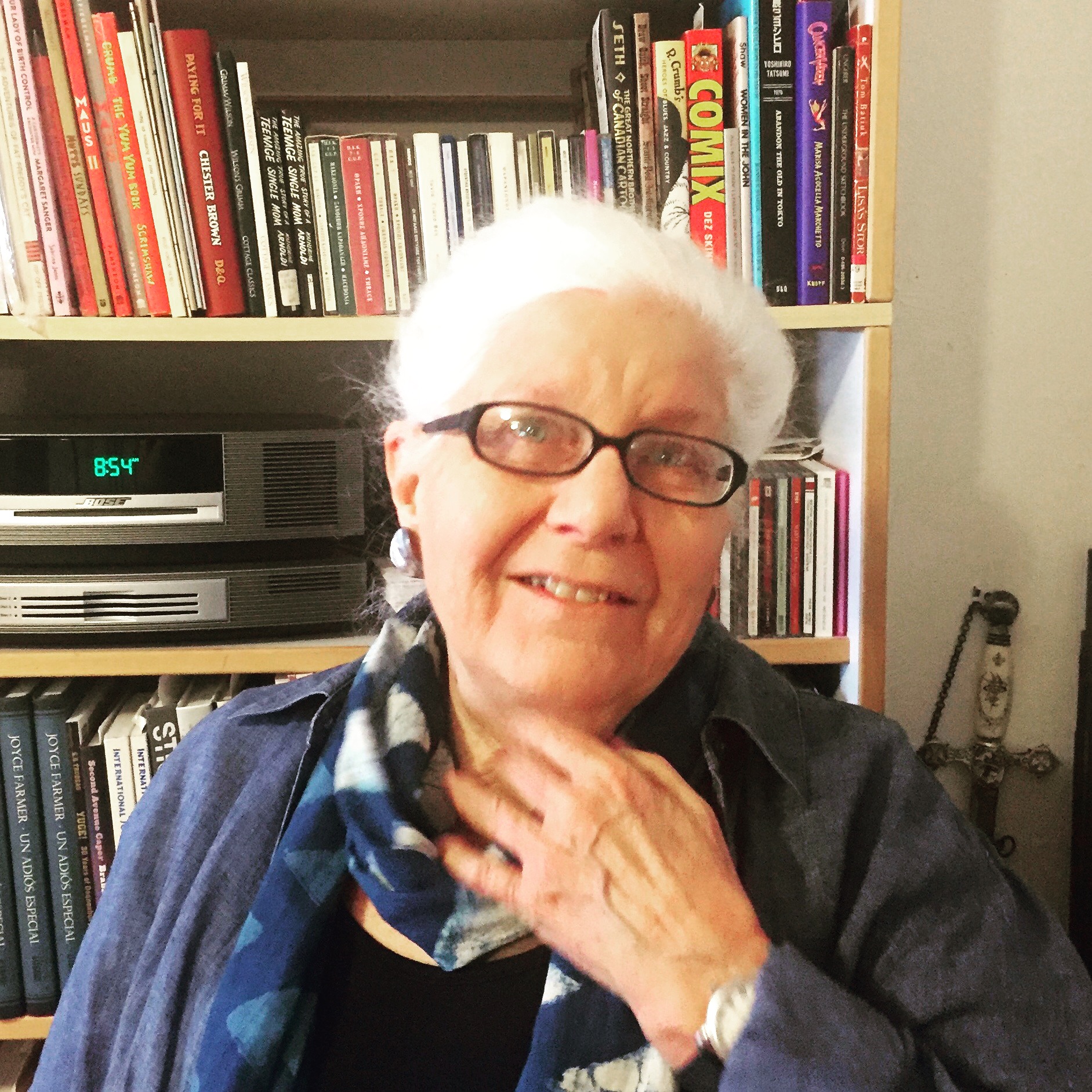
Joyce Farmer joins the show to talk about her transition from housewife to underground comics legend, the adventure of disposing of 40,000 copies of her comic when the state of California was trying to pinch her and her partner, traveling the world and landing in Greece, making Special Exits (Fantagraphics), the heartbreaking comic memoir about the death of her folks after a decade or two away from cartooning, and why she could swear and curse just as much as her male underground peers. Give it a listen! And go buy Special Exits!
“I’m not interested in doing something if it isn’t groundbreaking.”
Joyce Farmer, born in 1938 in Los Angeles, is a pioneering underground comics cartoonist. She and Lyn Chevli wrote and drew controversial feminist humor, starting in 1972, publishing the titles Pandora’s Box, Abortion Eve, and Tits and Clits Comix. Farmer has also been published in Wimmen’s Comix, Mama! Dramas, Itchy Planet, Energy Comics, Zero Zero, and the notorious women’s sex comic Wet Satin. Her work has been exhibited internationally, including Austria and Italy. Her most recent book is Special Exits.
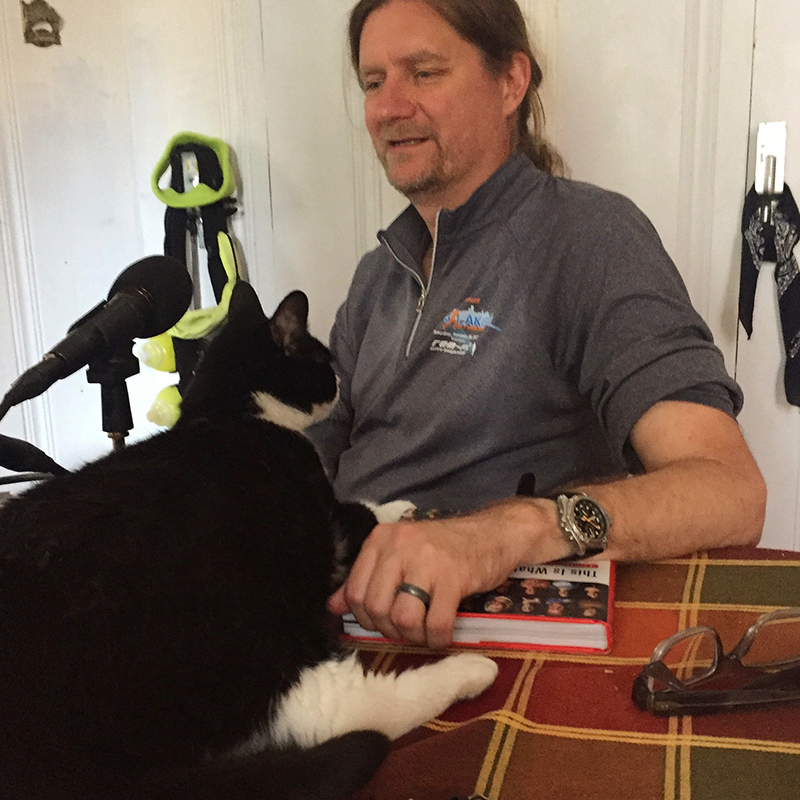
“It inspires me to see scientists spending their entire lives — in the shadows, unheralded for the most part — doing something that advances our knowledge.”
Kyle Cassidy has been documenting American culture for more than two decades. He has photographed Goths, Punks, Cutters, Politicians, Metalheads, Dominatrices, Scholars, and Alternative Fashion, in addition to less prosaic subjects. In recent years his projects have extended abroad to Romania, where he captured the lives of homeless orphans living in sewers; and to Egypt, where he reported on contemporary archaeological excavations. His publications include several books on information technology, as well as a regular appearance as contributing editor for Videomaker magazine. His Photo-A-Week blog was one of the first photo blogs on the internet. His work has appeared in The New York Times, Barron’s Financial, Photographers Forum, Asleep by Dawn, Gothic Beauty and numerous other publications.
“Proust tried to explain how we live in subjective time. Both our work is about the transformation of society, but he seems nostalgic about the time before. I’m not nostalgic for that period. I’m more interested in how societies reach their peak and then fall down.”
Charif Majdalani has been called the Lebanese Proust, thanks to his series of novels chronicling the modern history of his home country. He joins the show this week to celebrate the first American publication of his wonderful novel, Moving the Palace (New Vessel Press). We talk about the the dynamic of French and Arabic languages, Lebanon’s fixation on the eternal present and its sense of living under the volcano, his process of escaping his literary influences, why he needed to get away to France to gain perspective on home, and what he wants to do on his first trip to America. Give it a listen! And go buy Moving the Palace!
“Lebanon is living through repetitive history. Problems never find resolution, so we go from crisis to crisis.”
“The problem with New York is that everyone who comes here has an image or idea of New York that comes from the movies. We try to find it, but we have to adjust to the real New York.”
Charif Majdalani, born in Lebanon in 1960, is often likened to a Lebanese Proust. Majdalani lived in France from 1980 to 1993 and now teaches French literature at the Université Saint-Joseph in Beirut. The original French version of his novel Moving the Palace won the 2008 François Mauriac Prize from the Académie Française as well as the Prix Tropiques.
“We’re shoulder to shoulder with a lot of people, and we assume we know them in a way that we don’t, but we don’t assume that we don’t know them in the way that we should.”
Poet, novelist and essayist Wallis Wilde-Menozzi returns to the show to talk about her novel, Toscanelli’s Ray, the ways Italy has changed in her four decades there, her recent work in narrative medicine, survival tips from living through the Berlusconi era, writing a polyphonic novel of Florence in the ’90s and hearing how those voices have changed, differences between her Italian and American students, balancing poetry and prose, her favorite book of the Divine Comedy (we also get into why I like a different one), accidentally winning a DAR award when she was a schoolgirl, what foods she misses when she’s in the US, thinking in Italian, and more! Give it a listen! And go buy Toscanelli’s Ray and The Other Side of the Tiber: Reflections on Time in Italy!
“To be a writer, you have to write something that in a way no one else could write.”
Poet and writer Wallis Wilde-Menozzi grew up in Wisconsin and resides in Parma, Italy, where she has participated in Italian life for more than 30 years. Her memoir, Mother Tongue: An American Life in Italy, was published by North Point Press to critical acclaim. In 2013, she published The Other Side of the Tiber: Reflections on Time in Italy, from Farrar Straus Giroux, and Toscanelli’s Ray, from Cadmus Editions. A collection of her prize-winning essays appeared in Italian in 2011: L’oceano e denture di not, Moratti e Vitalli. She’s a founding member of the international Ledig Rowohlt Writers Residence in Lavigny, Switzerland, and she is at work on a new book. (Here she is with her husband, Paolo.)
“The built environment is not inert. It’s an active agent in the shaping of people’s lives.”
Why are our buildings crushing our quality of life? Sarah Williams Goldhagen joins the show to talk about her new book, Welcome to Your World (Harper), and how we can live in a better built environment. We get into cognitive neuroscience and the theory of mind-body-environment consciousness, the perils of lowest-common-denominator construction and design, the perils of the “starchitect” phenomenon, the limits of Jane Jacobs’ urban proscriptions, the experience of going on urban planning vacations as a kid with her dad, how she and her family wound up living in a converted church in East Harlem, the challenges of architecture criticism, how her book was predicted by one of my favorite 1980s comics, the planning process a year-long around-the-world trip, and more! Give it a listen! And go buy Welcome to Your World!
“It’s all architecture, and it all needs to be as well-designed as you can make it. And at any level of investment, you can make a better building or a worse building.”
Sarah Williams Goldhagen taught at Harvard University’s Graduate School of Design for ten years and was the New Republic‘s architecture critic until recently. Currently a contributing editor at Art in America and Architectural Record, she is an award-winning writer who has written about buildings, cities and landscapes for many national and international publications, including the New York Times, The American Prospect, and Harvard Design Magazine. She lives in New York City. (There’s a more extensive bio at her site.)
“Speaking a language inexpertly makes language visible, and malleable. You become aware of language not just as a medium but as matter itself, as something you manipulate, as something you have to work with.”
Garth Greenwell joins the show to talk about the poetics of cruising (and cruising’s great leveling potential) both in his life and in his debut novel What Belongs to You, the hyper-masculine culture and homophobia of Bulgaria, his concern that contemporary English-language writers don’t read in other languages (or read in translation), his role chairing the 2017 Festival Neue Literatur, the dangers of LGBTQ mainstreaming, the fragility of cosmopolitanism, the state of queer fiction, and our mutual admiration of Samuel R. Delany! Give it a listen! And go buy What Belongs to You: A Novel!
“I wanted in this book to create a space where I could think about what shame feels like to an open and proud gay man.”
Bonus:This episode is also part of our media partnership with Festival Neue Literatur, which is taking place March 2-5 in New York City! Garth’s the chairperson for the event! Go attend! Maybe I’ll see you there!
Garth Greenwell is the author of What Belongs to You, which was longlisted for the National Book Award and shortlisted for the Center for Fiction First Novel Prize and the LA Times Book Prize. A New York Times Book Review Editor’s Choice, it was named a Best Book of 2016 by The New York Times, The New Yorker, Publishers Weekly, and over 50 other publications. His work has appeared in The Paris Review, The New Yorker, the London Review of Books, and elsewhere. He lives in Iowa City.

 In the ’90s, Sven Birkerts cautioned us about the impact of technology on reading with The Gutenberg Elegies


 ! Along the way, we also talk about photography, his love letter to America, the difference between knowledge and information, the heroism of


 !


 and
 !
 , was published by North Point Press to critical acclaim. In 2013, she published


 (Harper), and how we can live in a better built environment. We get into cognitive neuroscience and the theory of mind-body-environment consciousness, the perils of lowest-common-denominator construction and design, the perils of the “starchitect” phenomenon, the limits of Jane Jacobs’ urban proscriptions, the experience of going on urban planning vacations as a kid with her dad, how she and her family wound up living in a


 , the hyper-masculine culture and homophobia of Bulgaria, his concern that contemporary English-language writers don’t read in other languages (or read in translation), his role chairing the