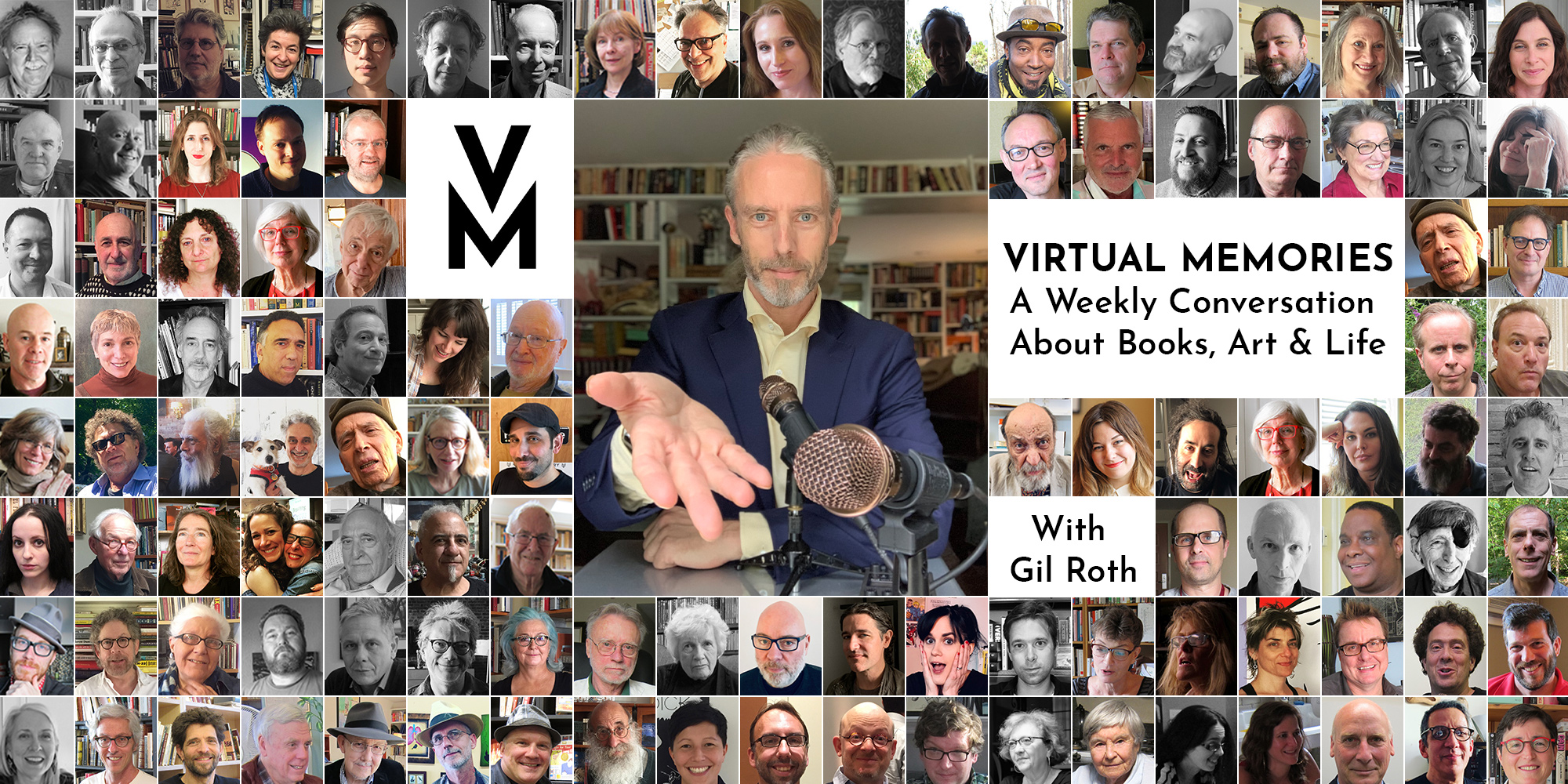
Episode 110 – Thru’ These Architects’ Eyes

Virtual Memories Show:
Witold Rybczynski –
Thru’ These Architect’s Eyes

“An architect doesn’t build something just because he wants to build it. But as a writer, you can say, ‘I have an idea for a book.'”

how-architecture-worksWitold Rybczynski joins the show to talk about architecture! The renowned writer, scholar, and former architect discusses his newest book, How Architecture Works: A Humanist’s Toolkit, and talks about that humanist approach to buildings, the problems with Brutalist architecture, the importance of having a canon of great buildings, the ways that digital technology are changing the practice of architecture, why there’s no such thing as a ‘theory of architecture’, the reasons Philadelphia has such marvelous buildings, what it means to ‘review’ a building, why the ‘Starchitect’ phenomenon doesn’t make for better buildings, and whether it’s possible to improve the appearance of malls. Give it a listen!

“There was an enormous excitement about concrete in the early 20th century.”

We also talk about the joys of architecture school, why he got out of the practice, the farthest he’s ever traveled to see a building, how he got started as a writer, his favorite period for American architecture, and how architectural criticism differs from that of other forms (and why it’s a pointless exercise)!

“[The impact of digital technology on teaching and practicing architecture] is like reinventing the English language. You know what a disaster Esperanto was.”

Witold Rybczynski on The Virtual Memories Show

Enjoy the conversation! Then check out the archives for more great episodes! You might like:

Follow The Virtual Memories Show on iTunes, Twitter, Facebook, Tumblr, and RSS!

About our Guest

Witold Rybczynski was born in Edinburgh, of Polish parentage, raised in London, and attended Jesuit schools in England and Canada. He studied architecture at McGill University in Montreal, where he also taught for twenty years. He is Emeritus Professor of Urbanism at the University of Pennsylvania.

Mr. Rybczynski has designed and built houses as a registered architect, as well as doing practical experiments in low-cost housing, which took him to Mexico, Nigeria, India, the Philippines, and China. He has written for the Atlantic, New Yorker, New York Review of Books, and the New York Times, and has been architecture critic for Saturday Night, Wigwag, and Slate. From 2004 to 2012 he served on the U. S. Commission of Fine Arts. His most recent book is How Architecture Works: A Humanist’s Toolkit, and he is the author of many other books, including, Home: A Short History of an Idea, The Most Beautiful House in the World, A Clearing In The Distance: Frederick Law Olmsted and America in the 19th Century, Looking Around: A Journey Through Architecture, and My Two Polish Grandfathers: And Other Essays on the Imaginative Life.

He lives with his wife Shirley Hallam in an old stone house, the Icehouse, in Chestnut Hill in Philadelphia. He says, “I don’t think of myself as someone with hobbies — I garden under pressure — but the artifacts I’ve owned for longest are well-used hand-tools. I don’t collect anything, but I have a lot of books.” He is on Twitter at @witoldr.

Credits: This episode’s music is I’m Goin’ Home by The Rolling Stones (because Witold wrote the book, Home, and because this song shuffled up on my iPod while I was driving to his home). The conversation was recorded at Mr. Rybczynski’s home on a pair of Blue enCORE 200 microphones feeding into a Zoom H5 digital recorder. I recorded the intro and outro on a Samson Meteor Mic USB Studio Microphone
. Processing was done in Audacity and Logic Pro. Photo of Mr. Rybczynski by me.

Podcast 104 – It Came From Gen X!

Virtual Memories Show:
Ron Hogan & Josh Alan Friedman – It Came From Gen X!

“You grow up imagining all these writers live in mansions and have their private, elegant writing rooms. But the working reality for most writers is not that different from the working reality for working class to middle class people.”

Ron Hogan on the Virtual Memories Show

Editor, book-blogger and podcaster Ron Hogan joins the show to talk about his 20-year history with the literary internet, launching Beatrice.com, interviewing his favorite writers, podcasting Life Stories, taking the wrong lessons from the work of Harlan Ellison, defending Hudson Hawk, retaining his inner fanboy, discovering romance fiction, overcoming gender/race imbalances in publishing (and podcasting), using Foucault as cover for being a pugnacious asshole, getting to meet James Ellroy, Norman Mailer, Gore Vidal, and Cornel West, and generally trying to overthrow the hegemony. Give it a listen!

“We severely underestimated the ability of corporate media to assimilate challenges to it.”

IMG_1689But first, Josh Alan Friedman offers us his reminiscences and reflections on the great Joe Franklin, who passed away last weekend at the age of 88. Josh wrote a wonderful piece on Joe in 2012, so I called him down in Texas and invited him to tell us about this legendary celebrity fixture of New York. (That’s “Handsome Dick” Manitoba” with Joe in March 2014.) (Oh, and check out our first Josh Alan Friedman episode over here!)

Enjoy the conversation! Then check out the archives for more great episodes! You might like:

Follow The Virtual Memories Show on iTunes, Twitter, Facebook, Tumblr, and RSS!

About our Guest

Ron Hogan helped create the literary Internet by launching Beatrice.com in 1995. He is currently an editor at Regan Arts, acquiring both fiction and nonfiction titles. He maintains an active presence in New York City’s literary scene, hosting and curating events such as Lady Jane’s Salon, the first monthly reading series dedicated to romance fiction. (Previously, he curated a series of conversations between authors and bloggers at Brooklyn’s Greenlight Bookstore.)

He was a columnist at Shelf Awareness, and has written book reviews and feature stories for publications like Tor.com, the Dallas Morning News, Buzzfeed and The Daily Beast. He spent several years writing about the business side of publishing as a senior editor for GalleyCat, then briefly worked with Houghton Mifflin Harcourt as their director of e-marketing strategy. He speaks frequently at book festivals and publishing conferences about how to make the best use of social networking tools, advances in digital publishing, and other transformative trends in the publishing industry.

Credits: This episode’s music is Here and Now by Letters to Cleo, on account of all the Gen X references we made. The conversation was recorded on a pair of Blue enCORE 200 microphones feeding into a Zoom H5 digital recorder. I recorded the intro and outro on a Blue Yeti USB Microphone. Processing was done in Audacity and Logic Pro. Photo of Mr. Hogan by me.

Podcast – Simple Tricks and Nonsense (ep. 101)

Virtual Memories Show:
Levi Stahl – Simple Tricks and Nonsense

“The biggest thing I learned editing The Getaway Car is that a working writer’s work is never done.”

Let’s kick off 2015 with a podcast about one of the 20th century’s great America writers, Donald Westlake! Our guest, Levi Stahl, is the editor of The Getaway Car: A Donald Westlake Nonfiction Miscellany (University of Chicago Press). We talk about his history with Westlake’s crime novels, why Parker is Westlake’s greatest achievement, why the author wrote under so many pseudonyms, what it was like to be a working writer and how that concept may not exist nowadays, and what Westlake project he’d love to bring into print.

Levi Stahl on The Virtual Memories Show

We also talk about Levi’s day job as publicity manager for U of Chicago Press, his advice for people looking to get into publishing, why he loves twitter, how the internet has helped and hurt book criticism, what makes him put a book down, what he’s learned about book marketing over the years, his favorite menswear store in NYC, how he can support both the St. Louis Cardinals and the Chicago Cubs, and more! Give it a listen!

Enjoy the conversation! Then check out the archives for more great episodes! You might like:

Follow The Virtual Memories Show on iTunes, Twitter, Facebook, Tumblr, and RSS!

About our Guest

Levi Stahl is the publicity manager for the University of Chicago Press. He has served as the poetry editor for the Quarterly Conversation, and has written for the Poetry Foundation, the Chicago Reader, the Second Pass, the Bloomsbury Review, the Front Table, the New-York Ghost, the New York Moon, and McSweeneys Internet Tendency. He tweets at @levistahl

Credits: This episode’s music is Life of Crime by The Triffids. The conversation was recorded on a pair of Blue enCORE 200 microphones feeding into a Zoom H5 digital recorder. I recorded the intro and outro on a Blue Yeti USB Microphone. Processing was done in Audacity and Logic Pro. Photo of Mr. Stahl by me.

Anniversary Call

I went to my former company’s Christmas party this past Friday. It’s sort of a tradition, if you don’t leave on bad terms, to come back your first year out. I was glad to see my old coworkers, and I was reminded of all the dread I had about making the jump. Looking back, I was more nervous about breaking the news to my bosses than I was about undertaking my new gig.

Today’s the one-year anniversary of when I got serious about quitting my job and launching a new business. I’d been considering the move for a few weeks, and when I was at the office Christmas party a day earlier, I found myself looking around the banquet hall and thinking, “Is this the last time I’m going to be at this?”

The next day, I called one of the advertisers in my trade magazine to ask him three questions:

  1. Do you really believe your industry needs a trade association?
  2. Do you believe I can build it and run it?
  3. Do you think you can convince your company to join and provide start-up funding?

He said, “Yes,” to all three, but he’s also a good pal of mine, so I wasn’t 100% convinced that I should do it. I mean, I wondered if our friendship affected his judgement about my abilities to do this. But, because he’s a good friend, I knew I could trust him not to spill the beans while I started reaching out to more companies.

I called another advertiser-pal a few days later — I’ve made a bunch of good friends from the nearly 15 years I spent on the magazine, which has helped me launch this new biz — and asked him the same three questions. I got the same answers.

In the next few weeks, I called on three more companies, getting farther from my friend zone with each call. The fifth company was a major player in the industry, but I had no close relationship with anyone there. My contact enthusiastically told me they’d be on board and would forward me funds if I needed them to get things off the ground. That meant I was five-for-five, and that’s when I knew It Was On. Fewer than four weeks after I made that first call, I gave notice at my job and started this crazy ride.

I think I’ve gotten used to having a job that doesn’t yield a tangible product like a magazine (quite a transition, since I’d been doing this for 19 years), and I’m still working out the kinks of being my own boss, but I can’t forget that first call a year ago, that first time I said to someone besides my wife, “I’m thinking of quitting the magazine.” Did I need to say it to believe that I was really going to do it?

My pal wasn’t in when I called that Saturday, but he rang back that evening while I was at our neighbors’ place. I took the call out on their enclosed deck, watching the headlights on Skyline Drive through the trees while we discussed my future. We talked about our businesses, and our midlife crises, and how long he’d been waiting for me to make some sort of change. (The second pal I called said, “FINALLY!” when I told him I was thinking of leaving.)

I don’t have much to add; I just want to mark the anniversary.

Podcast – Look Day

Virtual Memories Show:
Sam Gross – Look Day

“One thing I tell young cartoonists: a magazine is like going out on a date, and a book is like getting married. If you’re going out on a date, you don’t need a lawyer. If you’re doing a book, you get a lawyer.”

Sam Gross’ gag panels warped me at a young age, so it was an honor to get him on mic to talk about his nearly six-decade cartooning career. We sat down in his studio to discuss the serious business of gags, how he went from drawing a Saul Steinberg nose to drawing a Sam Gross one, how he continues in his 80s to come up with a week’s worth of new gags for Look Day, how he once got a Vanishing New York tour from Charles Addams, how he revels in the “humor of the handicapped”, and the magazine he misses the most. Give it a listen!

“I don’t know where I’m gonna go next. I’m not a finished product.”

Sam Gross on the Virtual Memories Show

Enjoy the conversation! Then check out the archives for more great episodes! Related conversations:

Follow The Virtual Memories Show on iTunes, Twitter, Facebook, Tumblr, and RSS!

About our Guest

Sam Gross has been publishing cartoons since the 1950s. His cartoons have appeared in The New Yorker since 1969. He served as the cartoon editor of National Lampoon and Parents magazines, and was president of the Cartoonists Guild. He has published numerous collections, including I Am Blind and My Dog is Dead. You can buy reproductions of his art at the Conde Nast Store.

Sam in his studio, October 11, 2014

Credits: This episode’s music is Funny Little Frog by Belle & Sebastian. The conversation was recorded at Mr. Gross’ studio on a pair of Blue enCORE 200 microphones feeding into a Zoom H5 digital recorder. The intro and outro were recorded on a Blue Yeti USB Microphone. Processing was done in Audacity and Garage Band. Photo of Mr. Gross by me.

Podcast – Much Abides

Virtual Memories Show:
Ashton Applewhite – Much Abides

“Knowing that things are finite gives life meaning. Avoiding mortality means you’re avoiding living, not avoiding dying. Aging is living.”

Ashton Applewhite on The Virtual Memories Show

Ashton Applewhite is on a crusade against ageism (lack of gray hair notwithstanding). She joins the show to discuss the myths and roots of ageism and her talk series, This Chair Rocks. We also discuss her Yo Is This Ageist site, why she scoffs at the Life Extension crew, how her critique of ageism intertwines with her critique of capitalism, what it’s like to suffer from analexophobia, why we should all consider ourselves old people in training, and how she launched the Truly Tasteless Jokes empire. Give it a listen!

And if you’re in NYC, you can go hear Ashton’s This Chair Rocks talk on October 27! Details here!

Bonus: my yearbook picture from 1989!

“It drives me crazy when I get the AARP bulletin and the only gray-haired person in it is Bill Clinton.”

Enjoy the conversation! Then check out the archives for more great episodes! Related conversations:

Follow The Virtual Memories Show on iTunes, Twitter, Facebook, Tumblr, and RSS!

About our Guest

The voice of This Chair Rocks and Yo Is This Ageist, Ashton Applewhite is a Knight Fellow, a New York Times Fellow, and a Columbia Journalism School Age Boom Fellow. She is the author of Cutting Loose: Why Women Who End Their Marriages Do So Well, media liaison to the board of the Council on Contemporary Families, and a staff writer at the American Museum of Natural History.

Credits: This episode’s music is Golden Years by David Bowie (it was either that or Never Get Old). The conversation was recorded at Ms. Applewhite’s home on a pair of Blue enCORE 200 microphones feeding into a Zoom H5 digital recorder. The intro and outro were recorded on a Blue Yeti USB Microphone. Processing was done in Audacity and Garage Band. Photo of Ms. Applewhite by me.

Podcast – 35 Cents & a Stamp

Virtual Memories Show: John Porcellino –
35 Cents & A Stamp

“I managed to go 43 issues before I hit the paralyzing grip of self-doubt and self-consciousness [from realizing that I had an audience]. I feel lucky that I had all those years to write comics in essentially a vacuum. I can’t imagine what it would be like to be 20 years old and trying to write comics in this world with the internet’s immediate response.”

John Porcellino on The Virtual Memories Show

John Porcellino has been publishing his King-Cat Comics & Stories mini-comics for 25 years, but I managed not to check them out until last month. BIG mistake on my part! Turns out the critics were right; John P.’s one of the best autobio cartoonists out there, as well as “a master at miniature poignance” (Entertainment Weekly). We sat down at SPX 2014 to talk about publishing his new work, The Hospital Suite, as a standalone book and developing the skill and courage to tackle longer stories, his disdain for “the culture of like”, overcoming the shame and stigma of his OCD, the process of discovering an audience for his work, the pitfalls of autobiographical comics, discovering the power of negative space, turning his life into a narrative, how comics enabled him to communicate with people, and, most importantly, being an NFL bigamist. Give it a listen!

“If things didn’t get better, I was going to be the guy wandering down an alley in my underwear with tinfoil wrapped around my arms.”

Bonus: Roger Langridge gives us a few minutes at SPX to talk about his new book, Jim Henson’s The Musical Monsters of Turkey Hollow!

“To me, the best cartooning is the kind that has in place what needs to be there: nothing more and nothing less.”

Enjoy the conversation! Then check out the archives for more great episodes! Related conversations:

Follow The Virtual Memories Show on iTunes, Twitter, Facebook, Tumblr, and RSS!

About our Guest

John Porcellino was born in Chicago in 1968, and began drawing and writing at an early age, compiling his work into handmade booklets. His acclaimed self-published zine, King-Cat Comics and Stories, begun in 1989, has found a devoted worldwide audience and is one of the most influential comics of the past 25 years. His newest book is The Hospital Suite, and he is the subject of a new documentary, Root Hog or Die. His work has been collected in several editions, including King-Cat Classix, Map of My Heart, Perfect Example, and Diary of a Mosquito Abatement Man. He is also the author of Thoreau at Walden and The Next Day: A Graphic Novella.

Credits: This episode’s music is Theater is the Life of You by The Minutement (John’s a fan). The conversation was recorded at the Bethesda North Marriott Hotel on a pair of Blue enCORE 200 microphones feeding into a Zoom H5 digital recorder. The intro and outro were recorded on a Blue Yeti USB Microphone. Processing was done in Audacity and Garage Band. Photo of Mr. Porcellino by me.

Podcast – The Peace Poet

#NJPoet on The Virtual Memories Show

Virtual Memories Show: Charles Bivona – The Peace Poet

“I think people are experiencing a lot of things in America that they just don’t have the words for. If I’m going to run around and wave this POET flag, then my job is to jump into the difficult situations and try to put them into words.”

Charles Bivona‘s business card reads, “Poet, Writer, Professor,” but he’s a lot more than that. Over the course of an hour, we talked about what it means to be known as NJPoet, his theory on the transmissibility of PTSD (based on the first-hand evidence of his father’s Vietnam War trauma being visited on his family), the value of building a massive Twitter network, the lessons of growing up poor, how Walt Whitman saved him on one of the worst days of his life, the virtues of a gift economy, and why getting bumped out of academia for blogging may have been the best thing for him.

“I think the core of my project is asking you, ‘What do you think your children think about what you’re doing right now?'”

We also discuss the role of poetry in America today and the poets who saved him in his youth, why he doesn’t publish poetry online, whether Twitter is more like The Matrix or The Watchmen, how his responses to Occupy Wall Street and Hurricane Sandy elevated his online presence, and why it’s important not to put yourself in an ideological cocoon.

“If you relax your ego, and say, ‘I’m here as a student and a teacher,’ you’ll get a lot out of social media.”

Enjoy the conversation! Then check out the archives for more great episodes! Related conversations:

Follow The Virtual Memories Show on iTunes, Twitter, Facebook, Tumblr, and RSS!

Luz & NJ Poet

About our Guest

Charles Bivona (pictured above with his wife, Luz Costa), has the following on his About page:

Charles Bivona would tell you that he’s just trying to help his creative friends figure out ways to reach their goals, to help them in any way he can—writing letters, Twitter endorsements, all-out social media campaigns, word-of-mouth networking. Whatever helps. Otherwise, he’s reading, tweeting, listening to alternative news media, producing blog posts, and writing the first of hopefully several Kindle books and paperback poetry collections.

If you push him to be more philosophical, to talk more specifically about the social media strategy that built his audience, he frames his work as a Zen Buddhist approach to engagement based on mindfulness and honesty. With this in mind, he’s gathered an artistic social network that simmers with creativity, compassion, and humor. The writing itself, the poetic prose on his website, is also clearly informed by a Buddhist literary theory, rooted in practical teaching, mindfulness, and a vivid social reporting.

“It’s more of a life philosophy and a daily practice than a marketing plan,” Charles often says. “I’m using the web to make an attempt at Buddhist Right Livelihood, to try to make a living as a working poet in the United States.”

Credits: This episode’s music is Ladder of Success by Ted Hawkins. The conversation was recorded at Charles’ home on a pair of Blue enCORE 200 microphones feeding into a Zoom H5 digital recorder. The intro and outro were recorded on a Blue Yeti USB Microphone. Processing was done in Audacity and Garage Band. Photo of Charles Bivona and me by Luz Costa. Photo of Charles and Luz Costa by me.

Podcast: Buddy Rich’s Teeth and the Corruption of Reality

Ron Slate on The Virtual Memories Show

Virtual Memories: Ron Slate – Buddy Rich’s Teeth and the Corruption of Reality

“It’s said that the sources of writing are mysterious, but the sources of not writing are pathological.”

slatecoversRon Slate spent more than two decades in the corporate world before returning to poetry and writing an award-winning collection praised by the likes of Robert Pinsky. We talk about his roots in poetry, how those “lost” years weren’t so lost, what it’s like to be the guy who sees things late, and how his life was forever changed the day he saw Buddy Rich’s teeth.

“Poetry is always battling invention over assertion, over statement. That’s the tug-of-war. I love poets whose work suggests that tension. I look for that battle between ‘words can do so much’ and ‘words are ineffectual.'”

We also explore why he bailed on his Ph.D., how Ted Leonsis asked him the greatest job interview question ever, what it’s like to get poetry-stalked by Louise Glück, and why he’s trying his hand at fiction. Plus, he reads us a poem from his second book!

Enjoy the conversation! Then check out the archives for more great episodes! Related conversations:

Follow The Virtual Memories Show on iTunes, Twitter, Facebook, Tumblr, and RSS!

About our Guest

Ron Slate was born in Quincy, Massachusetts in 1950. He earned his Masters degree in creative writing from Stanford University in 1973 and did his doctoral work in American literature at the University of Wisconsin, Madison. He started a poetry magazine, The Chowder Review, in 1973 which was published through 1988. In 1978, he left academia and was hired as a corporate speechwriter, beginning his business career in communications and marketing. From 1994-2001 he was vice president of global communications for EMC Corporation. More recently he was chief operating officer of a biotech/life sciences start-up and co-founded a social network for family caregivers. Since 2007 he has been reviewing poetry and prose at his popular homepage called On the Seawall. He lives in Milton, MA.

His poems have appeared in The New Yorker, The Paris Review, Slate, and many other magazines and sites. The Incentive of the Maggot, his first book of poems, was published by Houghton Mifflin in 2005. The collection was nominated for the National Book Critics Circle poetry prize and the Lenore Marshall Prize of the Academy of American Poets. The collection won the Breadloaf Writers Conference Bakeless Poetry Prize and the Larry Levis Reading Prize of Virginia Commonwealth University. The Great Wave, his second book, was published by Houghton in April 2009.

Credits: This episode’s music is Poet by Sly and the Family Stone. The conversation was recorded in Mr. Slate’s home on a pair of Blue enCORE 200 microphones feeding into a Zoom H4n recorder. The intro and outro were recorded on Blue Yeti USB Microphone. Processing was done in Audacity and Garage Band. Photo of Mr. Slate by me.

Podcast: Fail Better

David Baerwald

Virtual Memories: David Baerwald – Fail Better

“Artistically, LA’s a disaster. It’s full of amazing stories. But as a city, it’s not a city. Nobody but bus-drivers see the whole place.”

Singer-songwriter, musician, inventor, dad, reader, and writer David Baerwald joins the show to talk about the ups and downs of his career in the music biz, his crazy family history, the perils of grafting personalities onto up-and-coming musicians, and why he doesn’t trust happiness. We also talk about the Watchmen-like trail of destruction that followed Sheryl Crow’s breakthrough album, why the drug business is notoriously filled with short-tempered people, how being a script analyst for a movie studio taught him how to write a song, and why he’s a firm believer in the notion that to tell a big story, you have to tell a small one.coverblock

“You just want to do something decent when you make a record, but then it becomes a whole thing. It becomes an industry, and you’re always on display and people are tearing you apart psychologically, and you just feel like a buffoon.”

We also get into the difference between writing poems and writing songs, the writers who inspired his work on the David + David album, Boomtown, and why he thinks Thomas Pynchon understood things about the world that people are only now coming to grips with. (BONUS: I clean up some loose ends from last week’s podcast with Merrill Markoe)

Enjoy the conversation! Then check out the archives for more great episodes! Related conversations:

Follow The Virtual Memories Show on iTunes, Twitter, Facebook, Tumblr, and RSS!

About our Guest

David Baerwald was one half of David + David (along with David Ricketts), a band whose one album, Boomtown, scored a gold record. They split up and Baerwald put out several solo records — Bedtime Stories, Triage and Here Comes The New Folk Underground — between 1990 and 2002. He’s written songs for plenty of acts you know, and he wrote many of the songs on Sheryl Crow’s breakthrough album, which is a story he gets into in our conversation. He’s also done a lot of work in movies and TV, both scoring music and writing songs. David’s IMDB page lists many of his songwriting credits, including Come What May, the love song for Moulin Rouge, which was nominated for a Golden Globe award. He also wrote Supermodel, for the movie Clueless, which proves he’s not ALL grim and gloomy.

Credits: This episode’s music is Welcome to the Boomtown (David + David), Colette (David Baerwald), If (David Baerwald), and Heroes (David + David). The conversation was recorded in Mr. Baerwald’s home on a pair of Blue enCORE 200 microphones feeding into a Zoom H4n recorder. The intro and outro were recorded on Blue Yeti USB Microphone. Processing was done in Audacity and Garage Band. Photo of Mr. Baerwald by me.